
Filter
1800
Text search:
healthcare
provider
Featured
173
508
Language
Document type
856
315
271
139
71
64
45
15
10
6
5
1
1
1
Countries
105
102
102
75
49
47
47
41
39
29
28
27
27
27
26
26
25
24
22
22
22
21
16
11
11
10
9
9
8
8
8
8
8
8
7
7
7
7
7
6
6
5
5
5
4
4
4
4
4
3
3
3
3
3
3
3
2
2
2
2
2
2
2
2
2
2
2
2
1
1
1
1
1
1
1
1
1
1
1
1
1
1
1
1
1
1
1
1
1
1
1
1
1
1
1
1
1
1
Authors & Publishers
Publication Years
Category
817
146
132
129
74
42
11
Toolboxes
122
118
115
115
102
59
43
40
32
32
31
31
28
28
21
20
19
17
17
14
13
7
6
6
6

The development of the Country Cooperation Strategy (CCS) was based on a consultative and participatory process with strong commitment and support from the Ministry of Health of Ghana. The CCS draws on lessons from the implementation of the first, and second generation CCSs, the country focus strate
...

The South African WHO Country Cooperation Strategy (CCS) 2023–2027 focuses on four key strategic priorities based on the country’s health needs and disease epidemiology, while also considering the need for building resilient health systems for UHC and health security in the post pandemic period.
...

Trachoma is the leading infectious cause of blindness worldwide. In April 2023, it was a public health problem
in approximately 40 countries, with an estimated 116 million people at risk and 1.5 million people affected
by the late blinding stage of the disease (1). About 84% of those at risk of tr
...

The guidelines are primarily intended for health-care professionals working in first- or second-level health-care facilities, including emergency, inpatient and outpatient services. They are also directed at policy-makers, health-care planners and programme managers, academic institutions, non-gover
...

The document outlines essential steps and provides guidance to countries on the adoption and deployment of c-IPTp so that it is integrated into the existing health system. It draws upon best practices and lessons learned from pilot implementation experiences in eight African countries and targets st
...

This Implementation Kit (I-Kit), developed by the Health Communication Capacity Collaborative (HC3), helps national and local stakeholders to design country-specific social and behavioural change communication (SBCC) campaigns that address the threat posed by substandard, spurious, falsified and fal
...

Report of a virtual meeting 21–23 June 2022

Meeting report, Kampala, Uganda,
7–8 November 2023

4th edition, Reference Manual

These guidelines promote the delivery of people-centred health services for STIs by providing evidence-based recommendations related to decentralization, integration, task sharing and digital health. These recommendations complement existing WHO guidelines for STI testing, treatment and management,
...

The Rwanda Malaria Strategic Plan 2020–2024 outlines Rwanda’s national strategy to reduce malaria morbidity and mortality by at least 50% compared to 2019 levels. The vision is a malaria-free Rwanda contributing to socioeconomic development.
The plan includes strengthening prevention through lo
...

This document highlights the latest WHO recommendations designed to optimize health outcomes, streamline delivery and address persistent barriers to prevention and care. It especially focuses on people often left behind in service delivery, including adolescents and young people, key populations and
...

This publication provides guidance for planning country-specific programming to achieve the triple elimination of mother-to-child (or vertical) transmission of HIV, syphilis and hepatitis B virus. It is based on the WHO Triple Elimination Framework, which promotes an integrated, person-centred appro
...
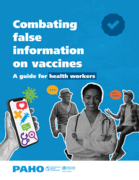
The document "Combating False Information on Vaccines: A Guide for Health Workers" is designed to help health workers address vaccine misinformation. It begins by defining misinformation and explaining why it spreads rapidly, often due to its emotional appeal and simplistic explanations. The guide i
...

Access to safe, effective and quality-assured health products and technologies is crucial for achieving universal health coverage and primary health care goals. The continued growth of the aging population; increasing burden of noncommunicable diseases; growing burden of mental health issues; climat
...

To guide the provision of quality palliative care services across the African region, the African Palliative Care Association (APCA) has developed a framework of core palliative care competencies that can be used by service providers, educators and other stakeholders to guide programmes development.
...
These guidelines have been developed in simple, user-friendly language and they explain the procedures for patients’ access to and the safe management of Schedule I and II drugs that are necessary for the treatment and relief of moderate to severe pain. They provide both procedures for acquisition
...

To contribute to the availability of basic knowledge and skills for the provision of palliative care in
the African region, the African Palliative Care Association (APCA) has developed a competencybased core curriculum framework for use in introductory training on palliative care. The curriculum
...

The African Palliative Care Association is pleased to publish the first edition of Palliative Care Standards for Africa. The development of these standards was achieved through wide consultation with service beneficiaries and providers, and they have been developed to suit different levels of
...

The health impacts of climate change are no longer a distant threat. They are being felt here and now and becoming more extreme.
To address these threats, the WHO Asia-Pacific Centre for Environment and Health in the Western Pacific Region (ACE) was established in 2019 through a partnership with
...
