
Filter
3249
Text search:
emergency
situations
Featured
415
835
Language
3064
194
71
55
40
25
16
15
9
7
6
5
5
5
5
4
4
4
4
4
4
3
3
3
3
3
3
3
3
3
3
3
3
3
2
2
2
2
2
2
1
1
1
1
1
1
1
1
1
1
1
1
1
1
Document type
1664
568
412
281
147
71
57
27
8
7
5
1
Countries
146
140
77
69
63
63
58
57
57
57
54
50
48
46
44
38
38
38
37
35
31
28
27
25
23
22
22
21
21
21
21
20
19
17
16
16
16
15
14
14
13
13
12
12
12
12
11
11
10
10
9
9
8
8
8
8
7
7
7
6
6
6
6
6
5
4
4
4
4
4
4
4
4
4
3
3
3
3
3
3
3
3
3
3
3
2
2
2
2
2
2
2
2
2
2
2
2
2
2
2
2
1
1
1
1
1
1
1
1
1
1
1
1
1
1
1
1
1
1
1
1
1
1
1
1
1
1
1
1
Authors & Publishers
453
139
79
75
69
69
64
38
34
27
24
23
23
20
19
19
19
19
19
19
18
16
16
15
14
14
13
13
12
12
12
12
12
12
12
11
11
11
11
11
11
10
10
10
10
10
9
9
9
9
8
8
8
8
8
8
8
7
7
7
7
7
7
7
7
7
7
7
7
7
6
6
6
6
6
6
6
6
6
6
6
5
5
5
5
5
5
5
5
5
5
5
5
5
5
5
5
5
5
5
5
5
5
5
4
4
4
4
4
4
4
4
4
4
4
4
4
4
4
4
4
4
4
4
4
4
4
4
4
4
4
4
4
4
4
4
4
4
3
3
3
3
3
3
3
3
3
3
3
3
3
3
3
3
3
3
3
3
3
3
3
3
3
3
3
3
3
3
3
3
3
3
3
3
3
3
3
3
3
3
3
3
3
3
3
3
3
3
3
3
3
3
3
3
3
3
3
3
3
3
3
2
2
2
2
2
2
2
2
2
2
2
2
2
2
2
2
2
2
2
2
2
2
2
2
2
2
2
2
2
2
2
2
2
2
2
2
2
2
2
2
2
2
2
2
2
2
2
2
2
2
2
2
2
2
2
2
2
2
2
2
2
2
2
2
2
2
2
2
2
2
2
2
2
2
2
2
2
2
2
2
2
2
2
2
2
2
2
2
2
2
2
2
2
2
2
2
2
2
2
2
2
2
2
2
2
2
2
2
2
2
2
2
2
2
2
2
2
2
2
2
2
2
2
2
2
2
2
2
2
2
2
2
2
2
2
2
2
2
2
2
2
2
2
2
2
2
2
2
2
2
2
2
2
2
2
2
2
2
2
2
2
2
2
2
2
2
2
2
2
2
2
2
2
2
2
2
2
2
2
2
2
2
2
2
2
2
2
2
2
2
2
1
1
1
1
1
1
1
1
1
1
1
1
1
1
1
1
1
1
1
1
1
1
1
1
1
1
1
1
1
1
1
1
1
1
1
1
1
1
1
1
1
1
1
1
1
1
1
1
1
1
1
1
1
1
1
1
1
1
1
1
1
1
1
1
1
1
1
1
1
1
1
1
1
1
1
1
1
1
1
1
1
1
1
1
1
1
1
1
1
1
1
1
1
1
1
1
1
1
1
1
1
1
1
1
1
1
1
1
1
1
1
1
1
1
1
1
1
1
1
1
1
1
1
1
1
1
1
1
1
1
1
1
1
1
1
1
1
1
1
1
1
1
1
1
1
1
1
1
1
1
1
1
1
1
1
1
1
1
1
1
1
1
1
1
1
1
1
1
1
1
1
1
1
1
1
1
1
1
1
1
1
1
1
1
1
1
1
1
1
1
1
1
1
1
1
1
1
1
1
1
1
1
1
1
1
1
1
1
1
1
1
1
1
1
1
1
1
1
1
1
1
1
1
1
1
1
1
1
1
1
1
1
1
1
1
1
1
1
1
1
1
1
1
1
1
1
1
1
1
1
1
1
1
1
1
1
1
1
1
1
1
1
1
1
1
1
1
1
1
1
1
1
1
1
1
1
1
1
1
1
1
1
1
1
1
1
1
1
1
1
1
1
1
1
1
1
1
1
1
1
1
1
1
1
1
1
1
1
1
1
1
1
1
1
1
1
1
1
1
1
1
1
1
1
1
1
1
1
1
1
1
1
1
1
1
1
1
1
1
1
1
1
1
1
1
1
1
1
1
1
1
1
1
1
1
1
1
1
1
1
1
1
1
1
1
1
1
1
1
1
1
1
1
1
1
1
1
1
1
1
1
1
1
1
1
1
1
1
1
1
1
1
1
1
1
1
1
1
1
1
1
1
1
1
1
1
1
1
1
1
1
1
1
1
1
1
1
1
1
1
1
1
1
1
1
1
1
1
1
1
1
1
1
1
1
1
1
1
1
1
1
1
1
1
1
1
1
1
1
1
1
1
1
1
1
1
1
1
1
1
1
1
1
1
1
1
1
1
1
1
1
1
1
1
1
1
1
1
1
1
1
1
1
1
1
1
1
1
1
1
1
1
1
1
1
1
1
1
1
1
1
1
1
1
1
1
1
1
1
1
1
1
1
1
1
1
1
1
1
1
1
1
1
1
1
1
1
1
1
1
1
1
1
1
1
1
1
1
1
1
1
1
1
1
1
1
1
1
1
1
1
1
1
1
1
1
1
1
1
1
1
1
1
1
1
1
1
1
1
1
1
1
1
1
1
1
1
1
1
1
1
1
1
1
1
1
1
1
1
1
1
1
1
1
1
1
1
1
1
1
1
1
1
1
1
1
1
1
1
1
1
1
1
1
1
1
1
1
1
1
1
1
1
1
1
1
1
1
1
1
1
1
1
1
1
1
1
1
1
1
1
1
1
1
1
1
1
1
1
1
1
1
1
1
1
1
1
1
1
1
1
1
1
1
1
1
1
1
1
1
1
1
1
1
1
1
1
1
1
1
1
1
1
1
1
1
1
1
1
1
1
1
1
1
1
1
1
1
1
1
1
1
1
1
1
1
1
1
1
1
1
1
1
1
1
1
1
1
1
1
1
1
1
1
1
1
1
1
1
1
1
1
1
1
1
1
1
1
1
1
1
1
1
1
1
1
1
1
1
1
1
1
1
1
1
1
1
1
1
1
1
1
1
1
1
1
1
1
1
1
1
1
1
1
1
1
1
1
1
1
1
1
1
1
1
1
1
1
1
1
1
1
1
1
1
1
1
1
1
1
1
1
1
1
1
1
1
1
1
1
1
1
1
1
1
1
1
1
1
1
1
1
1
1
1
1
1
1
1
1
1
1
1
1
1
1
1
1
1
1
1
1
1
1
1
1
1
1
1
1
1
1
1
1
1
1
1
1
1
1
1
1
1
1
1
1
1
1
1
1
1
1
1
1
1
1
1
1
1
1
1
1
1
1
1
1
1
1
1
1
1
1
1
1
1
1
1
1
1
1
1
1
1
1
1
1
1
1
1
1
1
1
1
1
1
1
1
1
1
1
1
1
1
1
1
1
1
1
1
1
1
1
1
1
1
1
1
1
1
1
1
1
1
1
1
1
1
1
1
1
1
1
1
1
1
1
1
1
1
1
1
1
1
1
1
1
1
1
1
1
1
1
1
1
1
1
1
1
1
1
1
1
1
1
1
1
1
1
1
1
1
1
1
1
1
1
1
1
1
1
1
1
1
1
1
1
1
1
1
1
1
1
1
1
1
1
1
1
1
1
1
1
1
1
1
1
1
1
1
1
1
1
1
1
1
1
1
1
1
1
1
1
1
1
1
1
1
1
1
1
1
1
1
1
1
1
1
1
1
1
1
1
1
1
1
1
1
1
1
1
1
1
1
1
1
1
1
1
1
1
1
1
1
1
1
1
1
1
1
1
1
1
1
1
1
1
1
1
1
1
1
1
1
1
1
1
1
1
1
1
1
1
1
1
1
1
1
1
1
1
1
1
1
1
1
1
1
1
1
1
1
1
1
1
1
1
1
1
1
1
1
1
1
1
1
1
1
1
1
1
1
1
1
1
1
1
1
1
1
1
1
1
1
1
1
1
1
1
1
1
1
1
1
1
1
1
1
1
1
1
1
1
1
1
1
1
1
1
1
1
1
1
1
1
1
1
1
1
1
1
1
1
1
1
1
1
1
1
1
1
1
1
1
1
1
1
1
1
1
1
1
1
1
1
1
1
1
1
1
1
1
1
1
1
1
1
1
1
1
1
1
1
1
1
1
1
1
1
1
1
1
1
1
1
1
1
1
1
1
1
1
1
1
1
1
1
1
1
1
1
1
1
1
1
1
1
1
1
1
1
1
1
1
1
1
1
1
1
1
1
1
1
1
1
1
1
1
1
1
1
1
1
1
1
1
1
1
1
1
1
1
1
1
1
1
1
1
1
1
1
1
1
1
1
1
1
1
1
1
1
1
1
1
1
1
1
1
1
1
1
1
1
1
1
1
1
1
1
1
1
1
1
1
1
1
1
1
1
1
1
1
1
1
1
1
1
1
1
1
1
1
1
1
1
1
1
1
1
1
1
1
1
1
1
1
1
1
1
1
1
1
1
1
1
1
1
1
1
1
1
1
1
1
1
1
1
1
1
1
1
1
1
1
1
1
1
1
1
1
1
1
1
1
1
1
1
1
1
1
1
1
1
1
1
1
1
1
1
1
1
1
1
1
1
1
1
1
1
1
1
1
1
1
1
1
1
1
1
1
1
1
1
1
1
1
1
1
1
1
1
1
1
1
1
1
1
1
1
1
1
1
1
1
1
1
1
1
1
1
1
1
1
1
1
1
1
1
1
1
1
1
1
1
1
1
1
1
1
1
1
1
1
1
1
1
1
1
1
1
1
1
1
1
1
1
1
1
1
1
1
1
1
1
1
1
1
1
1
1
1
1
1
1
1
1
1
1
1
1
1
1
1
1
1
1
1
1
1
1
1
1
1
1
1
1
1
1
1
1
1
1
1
1
1
1
1
1
1
1
1
1
1
1
1
1
1
1
1
1
1
1
1
1
1
1
1
1
1
1
1
1
1
1
1
1
1
1
1
1
1
1
1
1
1
1
1
1
1
1
1
1
1
1
1
1
1
1
1
1
1
1
1
1
1
1
1
1
1
1
1
1
1
1
1
1
1
1
1
1
1
1
1
1
1
1
1
1
1
1
1
1
1
1
1
1
1
1
1
1
1
1
1
1
1
1
1
1
1
1
1
1
1
1
1
1
1
1
1
1
1
1
1
1
1
1
1
1
1
1
1
1
1
1
1
1
1
1
1
1
1
1
1
1
1
1
1
1
1
1
1
1
1
1
1
1
1
1
1
1
1
1
1
1
1
1
1
1
1
1
1
1
1
1
1
1
1
1
1
1
1
1
1
1
1
1
1
1
1
1
1
1
1
1
1
1
1
1
1
1
1
1
1
1
1
1
1
1
1
1
1
1
1
1
1
1
1
1
1
1
1
1
1
1
1
1
1
1
1
1
1
1
1
1
1
1
1
1
1
1
1
1
1
1
1
1
1
1
1
1
1
1
1
1
1
1
1
1
1
1
1
1
1
1
1
1
1
1
1
1
1
1
1
1
1
1
1
1
1
1
1
1
1
1
1
1
1
1
1
1
1
1
1
1
1
1
1
1
1
1
1
1
1
1
1
1
1
1
1
1
1
1
1
1
1
1
1
1
1
1
1
1
1
1
1
1
1
1
1
1
1
1
1
1
1
1
1
1
1
1
1
1
1
1
1
1
1
1
1
1
1
1
1
1
1
1
1
1
1
1
1
1
1
1
1
1
1
1
1
1
1
1
1
1
1
1
1
1
1
1
1
1
1
1
1
1
1
1
1
1
1
1
1
1
1
1
1
1
1
1
1
1
1
1
1
1
1
1
1
1
1
1
1
1
1
1
1
1
1
1
1
1
1
1
1
1
1
1
1
1
1
1
1
1
Publication Years
1017
1819
384
28
1
Category
1021
444
269
221
169
101
28
1
Toolboxes
386
293
200
128
124
120
110
109
100
90
77
73
69
52
51
45
42
34
32
28
25
23
23
17
4
4
2
More than 700 000 people lose their life to suicide every year. A core foundation of suicide prevention is the timely registration and regular monitoring of suicide and self-harm. Surveillance data can be used to show important progress towards reaching global targets, such as reducing the suicide r
...
ate by one third by 2030 as articulated in the UN SDGs and in the WHO Mental Health Action Plan 2013-2030. However, there are considerable discrepancies in the quality of data on suicide and self-harm globally. The aim of this training manual is to equip fieldworkers and supervisors with the skills to collect and manage data on suicide and self-harm in the community via key informants, health-care facilities and police records. In doing so, the value and overall goal is to strengthen the surveillance of suicide and self-harm in communities, particularly in LMICs and hard-to-reach communities where CRVS systems are weak or absent.
more
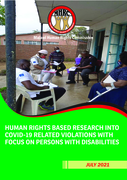
Human Rights based research into COVID-19 related violations with focus on persons with disabilities
The goal of the study was to assess the feasibility of the COVID-19 measures and their resultant impact on Persons with Disabilities in Malawi.
Specifically, the study addressed the following objectives:
a) To evaluate Government’s response to COVID-19 following the adoption of the new measures
...
of COVID-19 in January 2021 in line with principles and norms of human rights. (This includes establishing the extent to which the new measures have been implemented)
b) To assess the extent to which the provision health service delivery specifically access to health for PWDs including vaccine inflammation and facilities.
c) To establish the key COVID-19 related human rights violations during the pandemic period affecting PWDs
d) To assess the extent to which Government (and other nonstate actors) have implemented the recommendations from the preliminary MHRC statement
e) To provide advice and make recommendations to the Executive, Parliament and other stakeholders on how they can improve their response to COVID-19 from a rights perspective with a focus on PWDs.
more

During the 17 years since Surgical approaches to the urogenital manifestations of lymphatic filariasis was first published, there has been heightened awareness of the physical, economic and emotional burden of the genitourinary manifestations of filariasis. With the impetus to provide better guidanc
...
e for care of those suffering from LF, this update was both warranted and timely.
At the outset, the Committee noted that barriers continue to exist in care of patients affected by LF-associated morbidity. These barriers include lack of information for patients as well as for many healthcare providers, including general surgeons and others within health systems
This update offers a new consensus of the Committee regarding the staging of hydroceles caused by LF, also known as “filariceles”. It recommends integrating LF surgery with other efforts to strengthen surgical care by assessing health facilities for their surgical readiness using the WHO surgical assessment tool or “SAT”. It also recommends integratinghernia surgery with hydrocele surgery and integrating standards for prevention of surgical site infection (SSI).
The update revises recommendations for standard procedures and processes, offers an algorithm for diagnosis (including the use of ultrasound) and discusses postoperative care. It recommends collecting data using the staging and grading system described by Capuano and Capuano along with other metrics for public health management of LF.
A multifaceted approach has therefore been recommended to coordinate public health outreach with national surgical planning and local health systems to include supporting partners such as nongovernmental organizations. Surgical camps with mobile teams, as well as training of personnel at DCP3 “first level” or WHO Level II hospitals (depending on region and resources), have important roles for reducing LF morbidity.
more
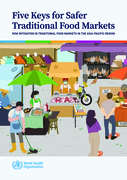
Traditional food markets play important economic, cultural, and social role and are sources of livelihood for millions of people in urban and rural areas. The manual Five keys for safer traditional food markets: risk mitigation in traditional food markets in the Asia-Pacific Region aims to support a
...
nd guide local authorities, market community, and consumers to transform these markets into safer and healthier places through practical risk mitigation measures and community engagement strategies. The manual provides guidance on the implementation of five keys to promote public health and safety, particularly, in the context of food safety, zoonoses diseases, and infectious respiratory diseases.
more

This publication is a compendium of 49 country examples highlighting efforts in improving refugees’ and migrants’ health following the adoption of the WHO Global Action Plan on Promoting the health of refugees and migrants at the seventy-second World Health Assembly, in May 2019.
Global Report on Food Crises 2023
recommended
The Global Report on Food Crises (GRFC) 2023 highlights that the number of people experiencing high levels of acute food insecurity and requiring urgent food and livelihood assistance increased for the fourth consecutive year in 2022. Over a quarter of a billion people were estimated to face acute h
...
unger, with economic shocks and the Ukraine war contributing to the increase. In 2022, around 258 million people across 58 countries and territories faced acute food insecurity at crisis or worse levels (IPC/CH Phase 3-5), up from 193 million people in 53 countries and territories in 2021.
more
Small island developing states (SIDS) are a set of islands and coastal states that share similar sustainable development challenges, as a result of their size, geography and vulnerability to climate change. Thirty-nine WHO member states in four regions – the African Region, the Region of the Ameri
...
cas, the South-East Asian Region, and the Western Pacific region – are classified as SIDS. Whilst the individual countries differ in many respects, collectively they face unique social, economic and environmental challenges.
more

Health financing for the COVID-19 response: Process guide for national budgetary dialogue. ACT-A Health Systems Connector
World Health Organization (WHO), World Bank, Global Financing Facility (GFF) et al.
World Health Organization (WHO)
(2021)
CC
Annual and medium-term budget preparation processes are the platforms through which specific plans are transformed into actual resource allocation decisions. The aim of this Process Guide is to support key stakeholders involved in these processes (such as the Cabinet, Ministries of Finance and Healt
...
h, the Parliament, citizens, media, and civil society organizations) to reorient budgetary arrangements in order to facilitate the ability of national governments to respond to the COVID-19 pandemic by delivering, therapeutics, diagnostics, and vaccine services to their populations. Reorienting budgetary arrangements positions governments to sustain the capacity to mitigate and respond to COVID-19 while concurrently delivering other essential health services and working towards Universal Health Coverage (UHC). The reorientation process is an opportunity to better align budgetary arrangements to sustain systemic capacity to prevent emerging health threats over the short, medium, and long terms.
more
The 2020 Financing for Sustainable Development Report, the fifth report of the Inter-agency Task Force on Financing for Development, provides a comprehensive assessment of the state of sustainable finance. Prepared by more than 60 agencies of the United Nations system and partner international organ
...
izations, the report brings together a wide range of expertise and perspectives. It puts forward a set of policy recommendations to mobilize financing flows, and align them with economic, social and environmental priorities. These recommendations should assist Member States and all other stakeholders as they work toward fully implementing the Addis Agenda and achieve the SDGs.
more
The majority of developing countries will fail to achieve their targets for Universal Health Coverage (UHC)1 and the health- and poverty-related Sustainable Development Goals (SDGs) unless they take urgent steps to strengthen their health financing. Just over a decade out from the SDG deadline of 20
...
30, 3.6 billion people do not receive the most essential health services they need, and 100 million are pushed into poverty from paying out-of-pocket for health services. The evidence is strong that progress towards UHC, core to SDG 3, will spur inclusive and sustainable economic growth, yet this will not happen unless countries achieve high-performance health financing, defined here as funding levels that are adequate and sustainable; pooling that is sufficient to spread the financial risks of ill-health; and spending that is efficient and equitable to assure desired levels of health service coverage, quality, and financial protection for all people— with resilience and sustainability.
more
WHO’s total revenue in 2020 was US$ 4299 million and total expenses were US$ 3561 million, resulting in a surplus of US$ 824 million, which includes finance revenue (e.g. interest and investment income) of US$ 86 million, representing increases of 38% and 15% in revenue and expenses respectively.
...
10. The financial statements report all the Organization’s revenue and expenses. The Organization’s operations are managed under three fund groups: (1) the General Fund, which supports the programme budget, (2) Member States – other, and (3) the Fiduciary Fund (Note 2.18 gives particulars of each of the funds). This segregation of resources facilitates clearer reporting of WHO’s revenues and expenses.
more
Background: Mental health has recently gained increasing attention on global health and development agendas, including calls for an increase in international funding. Few studies have previously characterized official development assistance for mental health (DAMH) in a nuanced and differentiated ma
...
nner in order to support future funding efforts. Methods: Data from the Organisation for Economic Cooperation and Development Creditor Reporting System were obtained through keyword searches. Projects were manually reviewed and categorized into projects dedicated entirely to mental health and projects that mention mental health (as one of many aims). Analysis of donor, recipient, and sector characteristics within and between categories was undertaken cumulatively and yearly.
more

The development of this draft Proposed programme budget 2022–2023 comes at a unique moment for WHO. The world is in the grip of the coronavirus disease (COVID-19) pandemic and faces health, social and economic consequences on an unprecedented scale. Although it is not known when the COVID-19 pande
...
mic will end, recent encouraging vaccine results, in addition to the examples of countries that have achieved good results through public health measures, hold out the prospect of better days ahead. The full impact of the pandemic cannot yet be determined. But whatever its implications, the Secretariat will rise to the challenge and is ready to adapt so that it is fully equipped to support Member States for any eventuality in the future – to make sure that the world will never again have to face this kind of crisis.
more
Cholera remains a significant public health threat in many countries worldwide. In resource-constrained settings, it disproportionately affects thousands of poor and vulnerable population

Cholera is a major health risk in many parts of the world, affecting millions of people every year. Since mid-2021, the world has been facing an acute upsurge of the 7th cholera pandemic, which is characterized by the number, size and concurrence of multiple outbreaks, the spread to areas that had b
...
een free of cholera for decades and alarmingly high mortality rates. The mortality associated with these outbreaks is of particular concern as many countries have reported higher case fatality ratios (CFR) than in previous years
more

Multiple pandemics, numerous outbreaks, thousands of lives lost and billions of dollars of national income wiped out—all since the turn of this century, in barely 17 years—and yet the world’s investments in pandemic preparedness and response remain woefully inadequate. We know by now that the
...
world will see another pandemic in the not-too-distant future; that random mutations occur often enough in microbes that help them survive and adapt; that new pathogens will inevitably find a way to break through our defenses; and that there is the increased potential for intentional or accidental release of a synthesized agent. Every expert commentary and every analysis in recent years tells us that the costs of inaction are immense. And yet, as
the havoc caused by the last outbreak turns into a fading memory, we become complacent and relegate the case for investing in preparedness on a back burner, only to bring it to the forefront when the next outbreak occurs. The result is that the world remains scarily vulnerable.
more
World Humanitarian Data and Trends presents global- and country-level data-and-trend analysis about humanitarian
crises and assistance. Its purpose is to consolidate this information and present it in an accessible way, providing policymakers, researchers and humanitarian practitioners with an evid
...
ence base to support humanitarian policy decisions and provide context for operational decisions.
more

This document presents the World Health Organization Operational framework for building climate resilient and low carbon health systems*. ***The framework's goal is to increase the climate resilience of health systems to protect and improve the health of communities in an unstable and changing clima
...
te, while optimizing the use of resources and implementing strategies to reduce GHG emissions. It aims to contribute to the design of transformative health systems that can provide safe and quality care in a changing climate.
Implementation of the framework's ten components would help health organizations, authorities, and programmes to be better able to anticipate, prevent, prepare for, and manage climate-related health risks and therefore decrease the burden of associated climate-sensitive health outcomes. Implementing low carbon health practices would contribute to climate change mitigation while also improving health outcomes. Achieving these aims is an important contribution to universal health coverage (UHC), global health security, and specific targets within the Sustainable Development Goals (SDGs). The document is a useful resource for decision-makers in health systems, including public health agencies, and other specialized institutions, and for decision-makers in health-determining sectors.
more
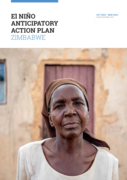
Zimbabwe has, over the years, grappled with the repercussions of the climate crisis, which have led to erratic rainfall patterns characterized by either severe floods or prolonged periods of drought. The nation has experienced a concerning trend of numerous regions reporting rainfall levels below th
...
e usual during what should be "normal" years. The upcoming El Niño event forecasted for 2023-2024, which is associated with drier-than-average rainfall, is poised to exacerbate this predicament. It is expected to intensify aridity, significantly impacting food and animal production across many areas, including those typically classified as "dry regions."
more
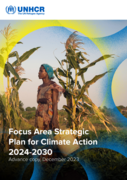
As a central component of the UNHCR Strategic Directions 2022-2026, UNHCR has identified eight focus areas for renewed attention and accelerated action, including Climate Action. This Focus Area Strategic Plan for Climate Action sets out a global roadmap for prioritized action, providing further cla
...
rity on UNHCR’s role and direct contribution, its asks of others, and the immediate actions the organization will take to be optimally calibrated to advance this agenda.
more
