
Filter
2375
Text search:
improved
water
and
sanitation
Featured
203
875
Language
2329
30
29
15
14
12
8
5
4
3
3
3
3
2
2
2
2
2
1
1
1
1
1
1
1
1
1
Document type
1389
431
197
146
119
28
27
25
5
5
2
1
Countries
108
98
98
97
74
68
67
67
64
56
46
44
43
42
39
39
38
37
31
29
23
23
23
23
23
21
20
20
19
18
17
17
16
12
11
10
10
10
9
9
9
9
9
9
8
8
8
7
7
7
6
6
5
5
5
5
5
5
4
4
4
4
3
3
3
3
3
3
3
3
2
2
2
2
2
2
2
2
2
2
2
2
1
1
1
1
1
1
1
1
1
1
1
1
1
1
1
1
1
1
1
1
1
1
1
1
1
1
1
1
1
Authors & Publishers
241
100
75
63
55
54
41
38
29
24
24
22
19
17
16
15
13
12
12
11
11
11
11
10
10
10
10
9
9
8
8
8
8
8
8
8
8
8
8
7
7
7
7
7
7
7
7
7
6
6
6
6
6
6
6
6
6
6
6
6
6
6
6
6
6
5
5
5
5
5
5
5
5
5
5
5
5
5
5
4
4
4
4
4
4
4
4
4
4
4
4
4
4
4
4
4
4
4
4
4
4
4
4
4
4
4
3
3
3
3
3
3
3
3
3
3
3
3
3
3
3
3
3
3
3
3
3
3
3
3
3
3
3
3
3
3
3
3
3
3
3
3
3
3
3
3
3
3
3
3
3
3
3
3
3
3
2
2
2
2
2
2
2
2
2
2
2
2
2
2
2
2
2
2
2
2
2
2
2
2
2
2
2
2
2
2
2
2
2
2
2
2
2
2
2
2
2
2
2
2
2
2
2
2
2
2
2
2
2
2
2
2
2
2
2
2
2
2
2
2
2
2
2
2
2
2
2
2
2
2
2
2
2
2
2
2
2
2
2
2
2
2
2
2
2
2
2
2
2
2
2
2
2
2
2
2
2
2
2
2
2
2
2
2
2
2
2
2
2
2
2
2
2
2
2
2
2
2
2
2
2
2
2
2
2
2
2
2
2
2
2
2
2
1
1
1
1
1
1
1
1
1
1
1
1
1
1
1
1
1
1
1
1
1
1
1
1
1
1
1
1
1
1
1
1
1
1
1
1
1
1
1
1
1
1
1
1
1
1
1
1
1
1
1
1
1
1
1
1
1
1
1
1
1
1
1
1
1
1
1
1
1
1
1
1
1
1
1
1
1
1
1
1
1
1
1
1
1
1
1
1
1
1
1
1
1
1
1
1
1
1
1
1
1
1
1
1
1
1
1
1
1
1
1
1
1
1
1
1
1
1
1
1
1
1
1
1
1
1
1
1
1
1
1
1
1
1
1
1
1
1
1
1
1
1
1
1
1
1
1
1
1
1
1
1
1
1
1
1
1
1
1
1
1
1
1
1
1
1
1
1
1
1
1
1
1
1
1
1
1
1
1
1
1
1
1
1
1
1
1
1
1
1
1
1
1
1
1
1
1
1
1
1
1
1
1
1
1
1
1
1
1
1
1
1
1
1
1
1
1
1
1
1
1
1
1
1
1
1
1
1
1
1
1
1
1
1
1
1
1
1
1
1
1
1
1
1
1
1
1
1
1
1
1
1
1
1
1
1
1
1
1
1
1
1
1
1
1
1
1
1
1
1
1
1
1
1
1
1
1
1
1
1
1
1
1
1
1
1
1
1
1
1
1
1
1
1
1
1
1
1
1
1
1
1
1
1
1
1
1
1
1
1
1
1
1
1
1
1
1
1
1
1
1
1
1
1
1
1
1
1
1
1
1
1
1
1
1
1
1
1
1
1
1
1
1
1
1
1
1
1
1
1
1
1
1
1
1
1
1
1
1
1
1
1
1
1
1
1
1
1
1
1
1
1
1
1
1
1
1
1
1
1
1
1
1
1
1
1
1
1
1
1
1
1
1
1
1
1
1
1
1
1
1
1
1
1
1
1
1
1
1
1
1
1
1
1
1
1
1
1
1
1
1
1
1
1
1
1
1
1
1
1
1
1
1
1
1
1
1
1
1
1
1
1
1
1
1
1
1
1
1
1
1
1
1
1
1
1
1
1
1
1
1
1
1
1
1
1
1
1
1
1
1
1
1
1
1
1
1
1
1
1
1
1
1
1
1
1
1
1
1
1
1
1
1
1
1
1
1
1
1
1
1
1
1
1
1
1
1
1
1
1
1
1
1
1
1
1
1
1
1
1
1
1
1
1
1
1
1
1
1
1
1
1
1
1
1
1
1
1
1
1
1
1
1
1
1
1
1
1
1
1
1
1
1
1
1
1
1
1
1
1
1
1
1
1
1
1
1
1
1
1
1
1
1
1
1
1
1
1
1
1
1
1
1
1
1
1
1
1
1
1
1
1
1
1
1
1
1
1
1
1
1
1
1
1
1
1
1
1
1
1
1
1
1
1
1
1
1
1
1
1
1
1
1
1
1
1
1
1
1
1
1
1
1
1
1
1
1
1
1
1
1
1
1
1
1
1
1
1
1
1
1
1
1
1
1
1
1
1
1
1
1
1
1
1
1
1
1
1
1
1
1
1
1
1
1
1
1
1
1
1
1
1
1
1
1
1
1
1
1
1
1
1
1
1
1
1
1
1
1
1
1
1
1
1
1
1
1
1
1
1
1
1
1
1
1
1
1
1
1
1
1
1
1
1
1
1
1
1
1
1
1
1
1
1
1
1
1
1
1
1
1
1
1
1
1
1
1
1
1
1
1
1
1
1
1
1
1
1
1
1
1
1
1
1
1
1
1
1
1
1
1
1
1
1
1
1
1
1
1
1
1
1
1
1
1
1
1
1
1
1
1
1
1
1
1
1
1
1
1
1
1
1
1
1
1
1
1
1
1
1
1
1
1
1
1
1
1
1
1
1
1
1
1
1
1
1
1
1
1
1
1
1
1
1
1
1
1
1
1
1
1
1
1
1
1
1
1
1
1
1
1
1
1
1
1
1
1
1
1
1
1
1
1
1
1
1
1
1
1
1
1
1
1
1
1
1
1
1
1
1
1
1
1
1
1
1
1
1
1
1
1
1
1
1
1
1
1
1
1
1
1
1
1
1
1
1
1
1
1
1
1
1
1
1
1
1
1
1
1
1
1
1
1
1
1
1
1
1
1
1
1
1
1
1
1
1
1
1
1
1
1
1
1
1
1
1
1
1
1
1
1
1
1
1
1
1
1
1
1
1
1
1
1
1
1
1
1
1
1
1
1
1
1
1
1
1
1
1
1
1
1
1
1
1
1
1
1
1
1
1
1
1
1
1
1
1
1
1
1
1
1
1
1
1
1
1
1
1
1
1
1
1
1
1
1
1
1
1
1
1
1
1
1
1
1
1
1
1
1
1
1
1
1
1
1
1
1
1
1
1
1
1
1
1
1
1
1
1
1
1
1
1
1
1
1
1
1
1
1
1
1
1
1
1
1
1
1
1
1
1
1
1
1
1
1
1
1
1
1
1
1
1
1
1
1
1
1
1
1
1
1
1
1
1
1
1
1
1
1
1
1
1
1
1
1
1
1
1
1
1
1
1
1
1
1
1
1
1
1
1
1
1
1
1
1
1
1
1
1
1
1
1
1
1
1
1
1
1
1
1
1
1
1
1
1
1
1
1
1
1
1
1
1
1
1
1
1
1
1
1
1
1
1
1
1
1
1
1
1
1
1
1
1
1
1
1
1
1
1
1
1
1
1
1
1
1
1
1
1
1
1
1
1
1
1
1
1
1
1
1
1
1
1
1
1
1
1
1
1
1
1
1
1
1
1
1
1
1
1
1
1
1
1
1
1
1
1
1
1
1
1
1
1
1
1
1
1
1
1
1
1
1
1
1
1
1
1
1
1
1
1
1
1
1
1
1
1
1
1
1
1
1
1
1
1
1
1
1
1
1
1
1
1
1
1
1
1
1
1
1
1
1
1
1
1
1
1
1
1
1
1
1
1
1
1
1
1
1
1
1
1
1
1
1
1
1
1
1
1
1
1
1
1
1
1
1
1
1
1
1
1
1
1
1
1
1
1
1
1
1
1
1
1
1
1
1
1
1
1
1
1
1
1
1
1
1
1
1
1
1
1
1
1
1
1
1
1
1
1
1
1
1
1
1
1
1
1
1
1
1
1
1
1
1
1
1
1
1
1
1
1
1
1
1
1
1
1
1
1
1
1
1
1
1
1
1
1
1
1
1
1
1
1
1
1
1
1
1
1
1
1
1
1
1
1
1
1
1
1
1
1
1
1
1
1
1
1
1
1
1
1
1
1
1
1
1
1
1
1
1
1
1
1
1
1
1
1
1
1
1
1
1
1
1
1
1
1
1
1
1
1
1
1
1
1
1
1
1
1
1
1
1
1
1
1
1
1
1
1
1
1
1
1
1
1
1
1
1
1
1
1
1
1
1
1
1
1
1
1
1
1
1
1
1
1
1
1
1
1
1
1
1
1
1
1
1
1
1
1
1
1
1
1
1
1
1
1
1
1
1
1
1
1
1
1
1
1
1
1
1
1
1
1
1
1
1
1
1
1
1
1
1
1
1
1
1
1
1
Publication Years
612
1569
184
10
Category
1184
287
120
113
83
42
2
1
Toolboxes
178
126
117
103
85
77
76
75
72
57
52
47
46
32
31
17
15
14
13
10
8
7
6
4
2
2
1

UNHCR’s Public Health Strategy 2021-2025 is based on the lessons learnt, and builds on the achievements, of the Global Strategy for Public Health 2014-2018.
Progress was made on policies favouring inclusion
...
and integration into national systems3 with 92% of 48 operations surveyed reporting refugees having access to national primary health care facilities under the same conditions as nationals and 96% reporting refugees having access to all relevant vaccines under the same conditions as nationals. While many refugee hosting countries have policies that allow refugees to access national health services, many face partial access, prohibitive out-of-pocket expenditures and other barriers including distance to facilities, language and provider acceptance. Furthermore, more work is needed on strengthening these systems to be able to meet the needs of both host communities and refugees.
more
Global Biodiversity Outlook (GBO) is the flagship publication of the Convention on Biological Diversity (CBD). It is a periodic report that summarizes the latest data on the status and trends of biodiversity
...
and draws conclusions relevant to the further implementation of the Convention.
GBO-5 provides global summary of progress towards the Aichi Biodiversity Targets and is based on a range of indicators, research studies and assessments (in particular the IPBES Global Assessment on Biodiversity and Ecosystem Services), as well as the national reports provided by countries on their implementation of the CBD. The national reports provide rich information about the steps taken in countries worldwide in support of biodiversity conservation, sustainable use, and the fair and equitable sharing of benefits. This body of Information provides a wealth of information on the successes and challenges in implementing the Strategic Plan for Biodiversity 2011-2020 and in reaching the Aichi Biodiversity Targets.
This Outlook draws on the lessons learned during the first two decades of this century to clarify the transitions needed if we are to realize the vision agreed by world governments for 2050, ‘Living in Harmony with Nature’. You can download the report in several languages
more
Almost eight years of active fighting have had profound consequences on the lives of millions of people in the conflict-affected Donetska and Luhanska oblasts of eastern Ukraine. An estimated 2.9 million people are projected to need humanitarian ass
...
istance in 2022, with some 55 per cent living in the non-Government controlled area (NGCA).1 1 According to the national Ukrainian legislation, such areas have been defined as the temporarily occupied territories of Donetska and Luhanska oblasts.
more
This results report for the biennium 2020–2021 presents the progress towards the triple billion targets, outcomes and outputs, based on the GPW 13 results framework and indicators. It uses structu
...
red methodologies, both quantitative and qualitative, for measuring and analysing the achievements and challenges to achieving them, and includes country and impact case studies to exemplify how the Organization’s work is driving health impacts at the country level, where it matters most. For the first time, the WHO Secretariat is reporting on its investments, results and performance through a scorecard methodology for every country or territory it serves.
more

The Disaster Recovery Framework (DRF) Guide for the Health Sector provides guidance on how to implement a comprehensive, integrated, and structured approach to disaster recovery. Its overarching goal is to minimize the impact of the disaster on comm
...
unities and help countries to recover quickly and effectively from disasters, in coordination with key stakeholders.
The DRF Guide for the Health Sector is adapted from the generic DRF Guide, and draws on the Implementation Guide For Health Systems Recovery in Emergencies, the Health Emergency and Disaster Risk Management Framework as well as the Disaster Recovery Guidance Series. The guide also makes links with multi-sectoral, government-led recovery planning processes such as the Post-Disaster Needs Assessment (PDNA), and it supports the implementation of the HDPN.
more

The 2024 edition reviews more than 50 health-related indicators from the Sustainable Development Goals and WHO’s Thirteenth General Programme of Work. It also highlights the findings from the Global health estimates 2021, notably the impact of the
...
COVID-19 pandemic on life expectancy and healthy life expectancy.
more

IDMC's Global Report on Internal Displacement (GRID) is the authoritative source for data and analysis on the state of internal displacement for the previous year.
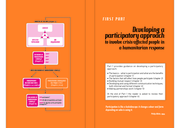
The Participation Handbook for humanitarian field workers contains detailed practical advice on the participation of affected people in humanitarian action. It has three sections:
Developing a participatory approach (main issues, key factors, building mutual respect, communication methods
...
and advice on reviewing your approach);
Implementing your participatory approach at every stage of the project cycle (initial assessment, project design, implementation, monitoring and final evaluation);
A list of tools and additional resources (books, internet sites, etc.)
more
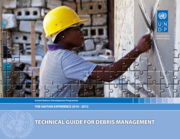
The building damage assessment, conducted between March 2010 and February 2011 by the Government of Haiti and the United Nations system, showed that more than 400,000 buildings were damaged or destr
...
oyed, of which approximately 218,000 could be occupied without repairs (green category), 105,000 were damaged but could be repaired (yellow category), and 80,000 were severely damaged and remained uninhabitable (red category).
The destruction of buildings and infrastructure generated a huge amount of debris, estimated at 10 million cubic meters, blocking streets and land in affected areas. In the absence of a national debris management strategy, debris could, thus, be cleared and disposed of in an uncontrolled manner, hindering relief, recovery and reconstruction activities.
more
The toolkit presents step-by-step guidance that district health teams (DHTs), district leaders, MOH/UNEPI, immunisation partners, and civil society organisations (CSOs) can use to engage NHS and max
...
imise the benefits of their participation in strengthening RI through activities such as community dialogue meetings. Tables and annexes outline this process
more
More than 8 million children have access to distance learning thanks to partnerships with 322 radio stations and 23 TV channels
1.2 million community masks distributed
25 million people reached with key messages on how to prevent COVID-19
...
through mass media channels (300 radio stations and 50 TV channels)
64,283 calls managed by the COVID-19 Hotline
71,532 people (including 21,415 children) affected by COVID-19 and 6,005 frontline workers provided with psychosocial support since the beginning of the epidemic
more
This publication provides an overview of UN Women’s commitments to the humanitarian community guided by the “UN Women strategic plan 2022–2025”. It highlights areas where UN Women has a unique advantage in advancing gender equality and the e
...
mpowerment of women and girls across the humanitarian–development–peace nexus, and in contributing to the Inter-Agency Standing Committee priorities, including localization and accountability to affected people.
The strategy adopts a two-pronged approach:
strengthening accountability towards gender commitments in coordination and implementation of UN-led humanitarian and refugee responses, and
strengthening comprehensive protection and livelihoods support to crisis-affected women and girls.
While taking these approaches, UN Women prioritizes amplifying women’s voices, leadership, and agency as a critical and enabling cross-cutting area.
more
The purpose of this Operational Guideline is to support state health authorities, programme managers and health care professionals with recommendations on appropriate management of children with SAM in the health facilities. Facility based managemen
...
t includes setting up and managing within the health facility premises, a functional space where these children are cared for. This Facility Based Unit is referred to as Nutritional Rehabilitation Centre or NRC in the document. While the scale and design may vary in a given situation, it is intended that the document provide the basis for a consistent set of principles that can be used by all states for facility based management of children with SAM. The Operational Guideline focuses on the Facility/Hospital based approach for the management of SAM children under 5 years of age based on the WHO and revised IAP protocols.
more
Community Health Workers in Sub Saharan Africa
recommended
A booklet on how CHWs were addressing eye health across Africa based on desk research and a survey in 23 countries
The compendium compiles practical case studies on the use of Geospatial Artificial Intelligence (GeoAI) to enhance disaster risk reduction and emergency response across diverse geographic and instit
...
utional contexts.
The compendium features selected case studies submitted by twenty-seven Regional Support Offices (RSOs) working across Asia, Africa, Latin America, and Europe. These examples highlight how GeoAI, is being used to forecast floods, map wildfire risk, assess landslide susceptibility, monitor droughts, and support emergency response. Each project demonstrates how cloud-based platforms and machine learning tools help governments act faster and more precisely when disaster strike.
more
Infectious diseases are constantly in transition. New diseases develop, known dis-eases become widespread or reemerge, and occasionally a disease is eradicated.Infectious diseases such as HIV, tuberculosis,
...
and cholera are significant causes ofillness and death in many parts of the world. Health care personnel are on thefront lines, helping to protect their clients from infectious diseases and treatingthem when infections occur. During the course of their work, health care person-nel perform clinical procedures or other activities that can expose both them andtheir clients to potentially infectious microorganisms. Many of their clients aresick and thus may be more susceptible to infections or may have infections thatcan be transmitted to others. Fortunately, all staff working at health care facilities can perform simple proce-dures to minimize risk—to themselves and clients—and reduce the spread ofinfections. These practices can be integrated at minimal cost into the routineworkday at clinics and hospitals around the world. This reference booklet isspecifically designed for use at all levels of the health care system, from thelargest hospitals to the smallest dispensaries or health posts, in settings whereresources are scarce. This booklet, which was first published in 1999, has now been updated. Whilemost practices remain the same, there have been a few important changes—forexample, in recommendations related to hand hygiene and standard precautions.Nonetheless, this booklet continues to present practical recommendations forsimple and relatively low-cost procedures that can be implemented anywhere,with basic supplies and little to no high-technology equipment.
more
In the last quarter of 2019 Southern African Regional Interagency Standing Committee Africa (RIASCO) reported that more than 11 million people were experiencing crisis or emergency levels of food insecurity in nine Southern African countries1 due to deepening drought
...
and climate related crisis. The Southern African Development Community (SADC) urged for urgent humanitarian action, and at the beginning of November 2019 Angola, Botswana, Lesotho and Namibia had declared states of drought emergencies, requiring international assistance to address the worsening food insecurity situation.
more
During the first two years of the project (2019–2020), through a ‘One Health’ approach, comprehensive engagement was established with AMR coordinating committees, WHO regional and country offices and
...
SORT IT partners in Asia, Africa, Europe and the Americas. Thirty-seven research studies were launched to inform AMR action plans in target country studies – local research, for local solutions, with local ownership.
more
Developing countries face disastrous healthcare setbacks, hunger and huge international debt as covid-19’s ‘final wave’
This policy brief aims to provide a review of the current progress on implementing the Burkina Faso national action plan on AMR, identifies critical gaps, and highlights findings to accelerate further progress in the human health sector. The target
...
audience includes all those concerned with implementing actions to combat antimicrobial resistance in Burkina Faso.
more
