
Filter
2248
Text search:
causes
of
malaria
Featured
238
740
Language
2120
130
37
22
16
14
7
3
3
2
2
2
2
1
1
1
1
1
1
1
1
1
1
1
1
1
1
1
1
1
1
1
1
1
Document type
1310
357
240
114
103
63
30
14
6
4
3
3
1
Countries
106
98
84
77
74
69
68
57
55
51
49
44
41
41
40
38
37
35
29
23
21
21
21
20
20
19
19
19
18
18
18
16
15
15
14
13
13
11
11
10
10
8
8
7
7
7
6
6
6
5
5
5
5
4
4
4
4
4
4
4
3
3
3
3
3
3
3
3
2
2
2
2
2
2
2
2
2
2
2
2
2
2
2
1
1
1
1
1
1
1
1
1
1
1
1
1
1
1
1
1
1
1
1
1
1
1
1
1
1
1
1
Authors & Publishers
238
100
61
59
51
50
49
44
31
20
18
16
13
13
13
12
11
11
11
10
10
10
10
10
9
9
9
9
8
8
8
8
7
7
7
7
7
7
7
6
6
6
6
6
6
6
6
6
6
6
6
6
6
6
6
6
5
5
5
5
5
5
5
5
5
5
5
5
4
4
4
4
4
4
4
4
4
4
4
4
4
4
4
4
4
4
4
4
4
4
4
4
4
4
4
4
4
4
4
4
4
4
4
3
3
3
3
3
3
3
3
3
3
3
3
3
3
3
3
3
3
3
3
3
3
3
3
3
3
3
3
3
3
3
3
3
3
3
3
3
3
3
3
3
3
3
3
3
3
3
3
3
3
3
3
3
3
3
2
2
2
2
2
2
2
2
2
2
2
2
2
2
2
2
2
2
2
2
2
2
2
2
2
2
2
2
2
2
2
2
2
2
2
2
2
2
2
2
2
2
2
2
2
2
2
2
2
2
2
2
2
2
2
2
2
2
2
2
2
2
2
2
2
2
2
2
2
2
2
2
2
2
2
2
2
2
2
2
2
2
2
2
2
2
2
2
2
2
2
2
2
2
2
2
2
2
2
2
2
2
2
2
2
2
2
2
2
2
2
2
2
2
2
2
2
2
2
1
1
1
1
1
1
1
1
1
1
1
1
1
1
1
1
1
1
1
1
1
1
1
1
1
1
1
1
1
1
1
1
1
1
1
1
1
1
1
1
1
1
1
1
1
1
1
1
1
1
1
1
1
1
1
1
1
1
1
1
1
1
1
1
1
1
1
1
1
1
1
1
1
1
1
1
1
1
1
1
1
1
1
1
1
1
1
1
1
1
1
1
1
1
1
1
1
1
1
1
1
1
1
1
1
1
1
1
1
1
1
1
1
1
1
1
1
1
1
1
1
1
1
1
1
1
1
1
1
1
1
1
1
1
1
1
1
1
1
1
1
1
1
1
1
1
1
1
1
1
1
1
1
1
1
1
1
1
1
1
1
1
1
1
1
1
1
1
1
1
1
1
1
1
1
1
1
1
1
1
1
1
1
1
1
1
1
1
1
1
1
1
1
1
1
1
1
1
1
1
1
1
1
1
1
1
1
1
1
1
1
1
1
1
1
1
1
1
1
1
1
1
1
1
1
1
1
1
1
1
1
1
1
1
1
1
1
1
1
1
1
1
1
1
1
1
1
1
1
1
1
1
1
1
1
1
1
1
1
1
1
1
1
1
1
1
1
1
1
1
1
1
1
1
1
1
1
1
1
1
1
1
1
1
1
1
1
1
1
1
1
1
1
1
1
1
1
1
1
1
1
1
1
1
1
1
1
1
1
1
1
1
1
1
1
1
1
1
1
1
1
1
1
1
1
1
1
1
1
1
1
1
1
1
1
1
1
1
1
1
1
1
1
1
1
1
1
1
1
1
1
1
1
1
1
1
1
1
1
1
1
1
1
1
1
1
1
1
1
1
1
1
1
1
1
1
1
1
1
1
1
1
1
1
1
1
1
1
1
1
1
1
1
1
1
1
1
1
1
1
1
1
1
1
1
1
1
1
1
1
1
1
1
1
1
1
1
1
1
1
1
1
1
1
1
1
1
1
1
1
1
1
1
1
1
1
1
1
1
1
1
1
1
1
1
1
1
1
1
1
1
1
1
1
1
1
1
1
1
1
1
1
1
1
1
1
1
1
1
1
1
1
1
1
1
1
1
1
1
1
1
1
1
1
1
1
1
1
1
1
1
1
1
1
1
1
1
1
1
1
1
1
1
1
1
1
1
1
1
1
1
1
1
1
1
1
1
1
1
1
1
1
1
1
1
1
1
1
1
1
1
1
1
1
1
1
1
1
1
1
1
1
1
1
1
1
1
1
1
1
1
1
1
1
1
1
1
1
1
1
1
1
1
1
1
1
1
1
1
1
1
1
1
1
1
1
1
1
1
1
1
1
1
1
1
1
1
1
1
1
1
1
1
1
1
1
1
1
1
1
1
1
1
1
1
1
1
1
1
1
1
1
1
1
1
1
1
1
1
1
1
1
1
1
1
1
1
1
1
1
1
1
1
1
1
1
1
1
1
1
1
1
1
1
1
1
1
1
1
1
1
1
1
1
1
1
1
1
1
1
1
1
1
1
1
1
1
1
1
1
1
1
1
1
1
1
1
1
1
1
1
1
1
1
1
1
1
1
1
1
1
1
1
1
1
1
1
1
1
1
1
1
1
1
1
1
1
1
1
1
1
1
1
1
1
1
1
1
1
1
1
1
1
1
1
1
1
1
1
1
1
1
1
1
1
1
1
1
1
1
1
1
1
1
1
1
1
1
1
1
1
1
1
1
1
1
1
1
1
1
1
1
1
1
1
1
1
1
1
1
1
1
1
1
1
1
1
1
1
1
1
1
1
1
1
1
1
1
1
1
1
1
1
1
1
1
1
1
1
1
1
1
1
1
1
1
1
1
1
1
1
1
1
1
1
1
1
1
1
1
1
1
1
1
1
1
1
1
1
1
1
1
1
1
1
1
1
1
1
1
1
1
1
1
1
1
1
1
1
1
1
1
1
1
1
1
1
1
1
1
1
1
1
1
1
1
1
1
1
1
1
1
1
1
1
1
1
1
1
1
1
1
1
1
1
1
1
1
1
1
1
1
1
1
1
1
1
1
1
1
1
1
1
1
1
1
1
1
1
1
1
1
1
1
1
1
1
1
1
1
1
1
1
1
1
1
1
1
1
1
1
1
1
1
1
1
1
1
1
1
1
1
1
1
1
1
1
1
1
1
1
1
1
1
1
1
1
1
1
1
1
1
1
1
1
1
1
1
1
1
1
1
1
1
1
1
1
1
1
1
1
1
1
1
1
1
1
1
1
1
1
1
1
1
1
1
1
1
1
1
1
1
1
1
1
1
1
1
1
1
1
1
1
1
1
1
1
1
1
1
1
1
1
1
1
1
1
1
1
1
1
1
1
1
1
1
1
1
1
1
1
1
1
1
1
1
1
1
1
1
1
1
1
1
1
1
1
1
1
1
1
1
1
1
1
1
1
1
1
1
1
1
1
1
1
1
1
1
1
1
1
1
1
1
1
1
1
1
1
1
1
1
1
1
1
1
1
1
1
1
1
1
1
1
1
1
1
1
1
1
1
1
1
1
1
1
1
1
1
1
1
1
1
1
1
1
1
1
1
1
1
1
1
1
1
1
1
1
1
1
1
1
1
1
1
1
1
1
1
1
1
1
1
1
1
1
1
1
1
1
1
1
1
1
1
1
1
1
1
1
1
1
1
1
1
1
1
1
1
1
1
1
1
1
1
1
1
1
1
1
1
1
1
1
1
1
1
1
1
1
1
1
1
1
1
1
1
1
1
1
1
1
1
1
1
1
1
1
1
1
1
1
1
1
1
1
1
1
1
1
1
1
1
1
1
1
1
1
1
1
1
1
1
1
1
1
1
1
1
1
1
1
1
1
1
1
1
1
1
1
1
1
1
1
1
1
1
1
1
1
1
1
1
1
1
1
1
1
1
1
1
1
1
1
1
1
1
1
1
1
1
1
1
1
1
1
1
1
1
1
1
1
1
1
1
1
1
1
1
1
1
1
1
1
1
1
1
1
1
1
1
1
1
1
1
1
1
1
1
1
1
1
1
1
1
1
1
1
1
1
1
1
1
1
1
1
1
1
1
1
1
1
1
1
1
1
1
1
1
1
1
1
1
1
1
1
1
1
1
1
1
1
1
1
1
1
1
1
1
1
1
1
1
1
1
1
1
1
1
1
1
1
1
1
1
1
1
1
1
1
1
1
1
1
1
1
1
1
1
1
1
1
1
1
1
1
1
1
1
1
1
1
1
1
1
1
1
1
1
1
1
1
1
1
1
1
1
1
1
1
1
1
1
1
1
1
1
1
1
1
1
1
1
1
1
1
1
1
1
1
1
1
1
1
1
1
1
1
1
1
1
1
1
1
1
1
1
1
1
1
1
1
1
1
1
1
1
1
1
1
1
1
1
1
1
1
1
1
1
1
1
1
1
1
1
1
1
1
1
1
1
1
1
1
1
1
1
1
1
1
1
1
1
1
1
1
1
1
1
1
1
1
1
1
1
1
1
1
1
1
1
1
1
1
1
1
1
1
1
1
1
1
1
1
1
1
1
1
1
1
1
1
1
1
1
1
1
1
1
1
1
1
1
1
1
1
1
1
1
1
1
1
1
1
1
1
1
1
1
1
1
1
1
1
1
1
1
Publication Years
505
1457
269
17
Category
1086
167
167
126
119
54
20
Toolboxes
103
103
93
76
74
72
65
64
61
58
53
48
46
45
33
24
23
19
15
14
12
9
8
6
2
1

In an ambitious new era for health development under the 2030 Agenda for Sustainable Development, WHO and
its partners have a solid foundation of success on which to build. Health plays a fundamental role in development
and is the central focus
...
of Sustainable Development Goal 3, “Ensure healthy lives and promote well-being for all
at all ages”. It is also relevant to all the Sustainable Development Goals. Understanding the significance of the
role of health is a prerequisite for successful collective action on the social, economic and environmental
determinants of health
more

“We must not forget that no matter where we are or how old we are, we can all work for life and take action.” Francisco Vera, 15, UNICEF Child Advocate
The Young Climate Activists toolkit was created by advocates of all ages who, like you, ar
...
e deeply concerned about our planet's future. Having faced numerous challenges in advocacy and action, our aim is to provide clear, concise and easily understandable information about global, regional and national climate action. This will equip you for meaningful and informed participation. The toolkit booklets are designed to be read sequentially to build a comprehensive understanding of each topic, though they can also be consulted independently based on your needs.
This is the global volume of the Young Climate Activists Toolkit and is designed to complement the regional toolkits for Latin America and the Caribbean, and the Middle East and North Africa Region.
more
The Leonard Cheshire Disability and Inclusive Development Centre | University College London | 4 Taviton Street | London WC1H OBT | United Kingdom| Principal Investigator: Dr Raymond Lang | Email: r.lang@ucl.ac.uk | Tel: +44 (0)207 679 1519 | Research Commissioned by the Southern African Federation
...
of the Disabled’s (SAFOD) |
DFID-funded Research Programme
more

This is a report from a National, representative household survey carried out in Swaziland in 2009 – 2010. A large amount of effort has been put into this two‐year exercise until finally we can present the results
...
of the combined efforts. First of all, this is a credit to the Federation of Disabled People in Swaziland (FODSWA): To the Management Committee headed by Ms. Buyie Masuku for being in control of the whole process, and to the Project Co‐ordinator Mr. Bhekie Jele who for the most of the study handled all aspects in this comprehensive and complex process. Mr Yusman B Kamaleri from SINTEF played an important role in supporting FODSWA during the implementation of the study.
more

This report aims to support countries in the necessary transition toward healthier, more sustainable diets by integrating biodiversity in food-based interventions to support nutrition and health. It is intended to help guide decision-makers in the health, nutrition and other sectors, to:
Consider
...
the important role of biodiversity in food systems for the development of integrated interventions to support healthy, diverse and sustainable diets;
To focus investments and country support for more comprehensive, coordinated and cross-cutting public health and nutrition projects and policies; and
To strengthen the resilience of food systems, health systems, and societies, each of which are each increasingly compromised by widespread ecological degradation, biodiversity loss and climate change.
Biodiversity at every level (genetic, species and ecosystem level) is a foundational pillar for food security, nutrition, and dietary quality. It is the basic source of variety in essential foods, nutrients, vitamins and minerals, and medicines, and underpins life-sustaining ecosystem services. It is a core environmental determinant of health, often a vital ingredient of healthy nutritional outcomes and livelihoods, gender equality, social equity, and other health determinants.
Biodiversity can play a more prominent role in planning for nutritional outcomes in various ways, e.g. by facilitating the production of nutritious fruits and plant products, sustaining livelihoods through more efficient production and increasing the diversity of products available in markets. This Guidance presents and expands on six core building blocks for mainstreaming biodiversity for nutrition and health:
Cross-sectoral knowledge development and knowledge co-production;
Enabling environments;
Integration;
Conservation and the wider use of biodiversity;
Education and awareness-raising;
Monitoring and evaluation;
This WHO report builds on an unprecedented opportunity to mainstream biodiversity in order to support healthy and sustainable diets, and offers the necessary technical guidance to catalyze and support a transformation of the global food system and transition to healthier, more sustainable diets.
more

WHO’s Country Cooperation Strategy (CCS) defines the Organization’s medium-term vision for working in and with a particular country. The CCS, developed in the context of global and national health priorities, examines the overall health situatio
...
n in a country, including the state of the health sector, socioeconomic status and the major health determinants.
This CCS sets out WHO’s strategic framework for collaboration with the Syrian Arab Republic, from June 2022 until June 2025, in light of the 12 years of crisis that have had a devastating impact on the health sector and infrastructure of basic services. It carefully considers the current and projected issues during its transition from continued humanitarian assistance to recovery, resilience and development. The consolidation of health policies and strategies and health system strengthening, based on the strengthening of primary health care (PHC), aims to contribute to the achievement of national and global development and health goals and the targets of the SDGs.
more

The South African WHO Country Cooperation Strategy (CCS) 2023–2027 focuses on four key strategic priorities based on the country’s health needs and disease epidemiology, while also considering the need for building resilient health systems for UHC and health security in the post pandemic period.
...
These include:
1. augment health systems strengthening reforms to accelerate progress towards universal health coverage.
2. address the quadruple burden of diseases and promote well-being across the life course in view of achieving global targets.
3. build health systems resilience and strengthen health emergency preparedness and response capacities.
4. enhance multisectoral collaboration and global partnerships for concerted action on health and its determinants.
In order to harness its expertise across its three levels, namely: the WHO Country Office (WCO), WHO Regional Office for Africa, and WHO headquarters, WHO will work closely and collaboratively with the Government of South Africa to implement the 2023–2027 strategic priorities.
more

The world is off track to make significant progress towards universal health coverage (UHC) (SDG target 3.8) by 2030 as improvements to health services coverage have stagnated since 2015, and the proportion of the population that faced catastrophic
...
levels of out-of-pocket (OOP) health spending has increased.
more

This report was developed by the WHO TB Vaccine Accelerator Finance and Access working group, co-led by WHO, Gavi and the Government of South Africa. It sets out the working group’s shared vision for equitable access to novel TB vaccines and will
...
advance a shared understanding of the current landscape and its possible evolution in the future. It identifies six urgently needed solutions to accelerate access and financing and highlights the roles of different stakeholders to support the implementation of these solutions.
more

The 2026 appeal seeks nearly US$ 1 billion to respond to 36 emergencies worldwide, including 14 Grade 3 emergencies requiring the highest level of organizational response. These emergencies span sudden-onset and protracted humanitarian crises where
...
health needs are critical.
more

The present book deals not only with emergency response, but also with measures designed to reduce the impact of disasters on environmental health infrastructure, such as water supply and sanitation facilities. It also aims to strengthen the ability
...
of people to withstand the disruption of their accustomed infrastructure and systems for environmental health (e.g. shelter, water supply, sanitation, vector control etc.) and to recover rapidly.
more
The key updates include: content update in various sections based on new evidence; design changes for enhanced usability; a streamlined and simplified clinical assessment that includes an algorithm for follow-up; inclusion of two new modules
- Ess
...
ential Care and Practice that includes general guidelines and Iminterventions and implementation module to support the proposed interventions by necessary infrastructure and resources; and, revised modules for Psychoses, Child and Adolescent Mental and Behavioural Disorders and Disorders due to Substance Use
more
WHO Model Formulary
recommended
For each medicine the Formulary provides information on use, dosage, adverse effects, contraindications and warnings, supplemented by guidance on selecting the right medicine for a range of conditions
Reference Guide Version 2. Revised. The Nutrition Program Design Assistant is a tool to help organizations design the nutrition component of their community-based maternal and child health, food security, or other development program. The tool focus
...
es on prevention and also provides guidance on recuperative approaches that are needed when there is a high prevalence of acute malnutrition
more
This guidebook for people in school settings is intended to offer strategies for use and adaptation with children and families to re-establish routines of hygiene with basic access to water and sanitation services through an approach that visibly sh
...
ows that the school is WASHfriendly, inclusive - so that all children, including those with disabilities have "ownership of the information and activities", and sustainable, repeating messages "over time to encourage lasting behaviour change"
more
Integrating WASH and MHCP interventions will always require imagination and creativity to adapt the approach to specific conditions, opportunities and constraints in each context. The book is designed to stimulate reflection and encourage initiatives to seek opportunities for closer integration
...
of these two sectors. It provides examples and tools for integration, highlights possible obstacles and proposes strategies for overcoming them. It provides ideas, examples and resources that can be used at all stages of the project cycle. It is intended for readers at strategic and operational levels, in ACF country missions and at headquarters.
more
DHS Working Papers No. 69
This paper uses data from the three Indian National Family Health Surveys (1992-93, 1998-99, 2005-06) to examine how the relationship between household wealth and child mortality evolved during a time of significant ec ... onomic change in India. The main predictor is a new measure of household wealth that captures changes in wealth over time. Outcomes include neonatal mortality, postneonatal mortality, child mortality, and under-five mortality. Multivariate analysis is conducted at the national, urban, rural, and regional levels.
Results indicate that the overall relationship between household wealth and mortality weakened over time, as evidenced by the coefficients for under-five mortality at the national level. more
This paper uses data from the three Indian National Family Health Surveys (1992-93, 1998-99, 2005-06) to examine how the relationship between household wealth and child mortality evolved during a time of significant ec ... onomic change in India. The main predictor is a new measure of household wealth that captures changes in wealth over time. Outcomes include neonatal mortality, postneonatal mortality, child mortality, and under-five mortality. Multivariate analysis is conducted at the national, urban, rural, and regional levels.
Results indicate that the overall relationship between household wealth and mortality weakened over time, as evidenced by the coefficients for under-five mortality at the national level. more
The Global Vaccine Action Plan (GVAP) 2011-2020, endorsed by Member States during the May 2012 World Health Assembly, has set ambitious targets to improve access to immunization and tackle vaccine-preventable diseases. This responsibility has been translated into firm commitments in February 2016, t
...
hrough the signature of the Addis Declaration on Immunization (ADI) by African Ministers and subsequently endorsed by the Heads of States from across Africa at the 28th African Union Summit held in January 2017. This commitment from the highest level of government comes as a catalyst to immunization efforts on the continent to deliver on the promise of universal immunization
more
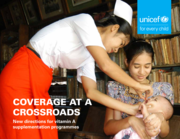
In where under-five mortality is high and vitamin A deficiency is a public health problem, two high-dose supplements of vitamin A per year, spaced four to six months apart, can strengthen children’s immune systems and improve their chances
...
of survival.
During much of early childhood – from 6 months to 5years of age – two high doses of vitamin A every year can prevent blindness and hearing loss, boost children’s immunity against diseases like measles and diarrhoea and provide critical protection against death. Like all forms of malnutrition, vitamin A deficiency is a marker of inequality. In countries where diets are lacking in vitamin A and infections and deaths are prevalent, supplementation programmes give vulnerable children a better chance to survive, develop and thrive. more
During much of early childhood – from 6 months to 5years of age – two high doses of vitamin A every year can prevent blindness and hearing loss, boost children’s immunity against diseases like measles and diarrhoea and provide critical protection against death. Like all forms of malnutrition, vitamin A deficiency is a marker of inequality. In countries where diets are lacking in vitamin A and infections and deaths are prevalent, supplementation programmes give vulnerable children a better chance to survive, develop and thrive. more

WHO’s Ambition and Action in Nutrition 2016-2025 is anchored in the six global targets for improving maternal, infant and young child nutrition and the global diet-related NCD targets.
In support of the 2030 Agenda for Sustainable Develo ... pment, particularly SDG2 and SDG3, and in concert with the 2016-2025 UN Decade of Action on Nutrition, WHO’s Ambition and Action in Nutrition 2016-2025 aims for “A world free from all forms of malnutrition where all people achieve health and well-being”. It defines the unique value of WHO for advancing nutrition: the provision of leadership, guidance and monitoring and proposes a theory of change. Finally, following a set of guiding principles, it proposes priority actions for WHO, the delivery model and a clear allocation of roles across the Organization. more
In support of the 2030 Agenda for Sustainable Develo ... pment, particularly SDG2 and SDG3, and in concert with the 2016-2025 UN Decade of Action on Nutrition, WHO’s Ambition and Action in Nutrition 2016-2025 aims for “A world free from all forms of malnutrition where all people achieve health and well-being”. It defines the unique value of WHO for advancing nutrition: the provision of leadership, guidance and monitoring and proposes a theory of change. Finally, following a set of guiding principles, it proposes priority actions for WHO, the delivery model and a clear allocation of roles across the Organization. more
