Filter
1385
Text search:
neglected
tropical
diseases
Featured
127
246
Language
Document type
421
393
154
100
79
66
57
38
18
17
16
10
7
7
2
Countries
216
33
25
24
23
22
21
20
20
18
14
14
13
13
12
11
10
10
10
10
9
9
8
8
8
8
7
7
7
7
6
6
5
5
4
4
3
3
3
3
3
3
3
2
2
2
2
2
2
2
2
2
2
2
2
2
2
2
2
2
1
1
1
1
1
1
1
1
1
1
1
1
1
1
1
1
1
1
1
1
1
1
1
1
1
1
1
1
1
1
1
1
1
1
1
1
Authors & Publishers
Publication Years
Category
287
136
88
52
27
26
15
1
Toolboxes
693
60
45
33
27
27
24
23
22
21
16
15
15
12
12
12
10
8
7
6
4
4
3
2
Leishmaniasis is a parasitic disease caused by the Leishmania parasite. This parasite typically lives in infected sand flies. You can contract leishmaniasis from a bite of an infected sand fly.
The sand flies that carry the parasite typically reside in
...
sobre la base de las orientaciones actuales de la OMS, 31 de mayo de 2021. Memorando
This aide-mémoire presents information on use and procurement of masks for community outreach interventions, with a focus on those for malaria, neglected
...
Contains data from World Health Organization's data portal covering the following categories:
Mortality and global health estimates, Sustainable development goals, Millennium Development Goals (MDGs), Health systems, Malaria, Tuberculosis, Child health, Infectious
...
In 1997, the Fiftieth World Health Assembly adopted resolution WHA50.29 on the elimination of
lymphatic filariasis as a public health problem. Preliminary guidance from WHO printed in 2011 referred to “verification” as the official process by which the achievements of the Global Programme to El
...
Human African trypanosomiasis (HAT) has been an alarming global public health issue. The disease affects mainly poor and marginalized people in low-resource settings and is caused by two subspecies of haemoflagellate parasite, Trypanosoma brucei and transmitted by tsetse flies. Progress made in HAT
...
This dataset contains data from WHO's data portal covering the following categories:
Air pollution, Antimicrobial resistance (AMR), Assistive technology, Child mortality, Dementia diagnosis, treatment and care, Dementia policy and legislation, Environment and health, Foodborne
...

This template dossier complements and should be used after fulfilling the criteria and preconditions specified in the Process of validation of elimination of kala-azar as a public health problem in South-East Asia. The national kala-azar programme should be in the consolidation phase of elimination;
...

ICTC’s 2022-2030 strategic plan spans the critical period running to the end of 2030, the year by which we are striving to achieve the elimination of trachoma as a public health problem. This strategic plan is in alignment with the NTD road map, Ending the neglect to attain the Sustainable Develop
...
The One Health Commission is a globally focused organization dedicated to implementing One Health and One Health actions around the world.
The goal of the One Health Research, Education and Outreach Centre in Africa (OHRECA) is to improve the health of humans, animals and ecosystems through capacit
...
WHO convened the fifth stakeholders meeting on the elimination of HAT due to infection with Trypanosoma brucei gambiense (g-HAT) and Trypanosoma brucei rhodesiense (r-HAT) in Geneva, Switzerland, on 7–9 June 2023. The meeting was held again in person after the coronavirus disease (COVID-19) pandem
...
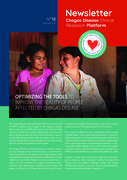
To support its R&D activities on Chagas disease, DNDi launched the Chagas Clinical Research Platform (CCRP). The platform brings together partners, experts, and stakeholders to provide support for evaluation and development of new treatments for Chagas disease. The patient-centred platform aims to f
...
The objective of this concept note and the framework it outlines is the elimination of a group of CDs and the negative health effects they generate, which together create a tangible burden on affected individuals, their families and communities, and on health care systems throughout the Region. Thou
...
Die Initiative Medikamente gegen vernachlässigte Krankheiten (Drugs for Neglected Diseases initiative, DNDi) ist eine internationale gemeinnützige Organisation, die sichere, wirksame und bezahlbar
...
La Iniciativa Medicamentos para Enfermedades Olvidadas (DNDi) es una organización internacional sin fines de lucro que proporciona tratamientos seguros, eficaces y asequibles para los pacientes más desatendidos, desde el laboratorio hasta su llegada a las manos de las poblaciones más vulnerables
...
L’initiative Médicaments contre les Maladies Négligées (DNDi) est une organisation internationale à but non lucratif spécialisée dans la recherche, le développement et la mise à disposition de traitements sûrs, efficaces et abordables aux patients les plus négligés.
A Iniciativa Medicamentos para Doenças Negligenciadas (DNDi) é uma organização internacional sem fins lucrativos que disponibiliza medicamentos seguros, eficazes e acessíveis para doenças negligenciadas, desde o laboratório até sua chegada às mãos das populações mais vulneráveis do mund
...
Engagement à mettre fin aux NTDs
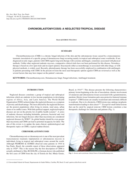
Chromoblastomycosis (CMB) is a chronic fungal infection of the skin and the subcutaneous tissue caused by a transcutaneous traumatic inoculation of a specific group of dematiaceous fungi occurring mainly in tropical and subtropical zones worldwide.
...
Front Chem. 2021; 9: 622286.
Published online 2021 Mar 12. doi: 10.3389/fchem.2021.622286