
Filter
1358
Text search:
hospital
acquired
infection
Featured
198
375
Language
Document type
680
288
208
80
44
29
16
10
2
1
Countries
91
46
43
35
33
32
31
26
25
25
25
24
22
22
20
20
19
19
18
16
16
13
10
9
7
7
6
6
6
6
6
6
5
5
5
5
5
5
5
4
4
4
4
4
4
3
3
3
3
3
3
3
3
2
2
2
2
2
2
2
2
2
2
2
2
2
1
1
1
1
1
1
1
1
1
1
1
1
1
1
1
1
1
1
1
1
1
1
1
1
1
1
1
Authors & Publishers
Publication Years
Category
578
159
66
60
58
47
16
Toolboxes
185
132
108
52
48
43
40
37
31
30
24
23
21
16
15
12
9
9
8
6
5
4
4
3
1
Health care-associated infection (HCAI) places a serious disease burden and has a significant economic impact on patients and health-care systems throughout the world. Yet good hand hygiene, the simple task of cleaning hands at the right times an
...
Using antimicrobials responsibly is an essential component ofefforts to contain antimicrobial resistance (AMR), and to ensurethat patients receive appropriate treatment. The WHO global action plan on AMR emphasizes the importance of training healthcare professionals in antimicrobial prescribing and
...
Abstract: Chagas disease is caused by infection with the protozoan Trypanosoma cruzi, and although over 100 years have passed since the discovery of Chagas disease, it still presents an increasing problem for global public health. A plethora of info
...
Schistosomiasis is a helminthic infection and one of the neglected tropical diseases (NTDs). It is caused by blood flukes of the genus Schistosoma. It is an important public health problem, particularly in poverty-stricken areas, especially those wi
...
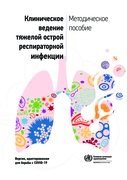
Clinical care for severe acute respiratory infection: toolkit: COVID-19 adaptation

Clinical care for severe acute respiratory infection: toolkit: COVID-19 adaptation

Recommendations of the Healthcare Infection Control Practices Advisory Committee and the HICPAC/SHEA/APIC/IDSA Hand Hygiene Task Force
Clinical Microbiology and Infection Volume 21, Issue 5, May 2015, Pages 433-443;
The neglected zoonotic diseases (NZDs) have been all but eradicated in wealthier countries, but remain major causes of ill-health and mortality across Africa, Asia, a
...
Cases of monkeypox (MPX) acquired in the EU have recently been reported in nine EU Member States (Austria, Belgium, France, Germany, Italy, Portugal, Spain, Sweden, and the Netherlands).
Monkeypox (MPX) does not spread easily between people. Human-
...

Cholera is an acute gastrointestinal infection caused by the bacterium Vibrio Cholerae serogroup O1 or O139, and is often linked to unsafe drinking water, lack of proper sanitation and personal hygiene. It adversely affects mostly the poor and vulne
...
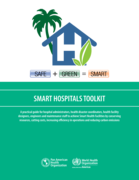
A practical guide for hospital administrators, health disaster coordinators, health facility designers, engineers and maintenance staff to achieve Smart Health Facilities by conserving resources, cutting costs, increasing efficiency in operations an
...
This document is an evidence-based policy for the implementation of sound tuberculosis (TB) infection control by all stake- holders. It recommends a combination of measures aimed at reducing the risk of TB transmission within populations. The emphas
...
In a retrospective review of hospital records of 40 human monkeypox cases from Nigeria, the majority developed fever and self-limiting vesiculopustular skin eruptions. Five deaths
were reported. Compared to human immunodeficiency virus (HIV)–nega
...

a systematic review and meta-analysis Derek K Chu et al. on behalf of the COVID-19 Systematic Urgent Review Group Effort (SURGE) study authors.
Published: The Lancet June 01, 2020 DOI: https://doi.org/10.1016S0140-6736(20)31142-9
'We did a systematic review of 172 observational studies in health-
...

The Guideline for Disinfection and Sterilization in Healthcare Facilities, 2008, presents evidence-
based recommendations on the preferred methods for cleaning, disinfection and sterilization of patient-
care medical devices and for cleaning and disinfecting the healthcare environment. This docume
...
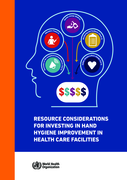
Investment in all the drivers and facilitators of hand hygiene action in health care to ensure that it occurs at the point of care and other critical moments requires a multidisciplinary, multifaceted approach. WHO describes such an approach as a “multimodal improvement strategy” (MMIS) which is
...
The training is based on ensuring that the competencies to care for newborn are acquired.
A range of adult learning methods are used, these include reading and self-study,
discussion, and case based learning in written exercises and group discussi
...

The Democratic Republic of Timor-Leste has the highest TB incidence rate in the South East Asian Region - 498 per 100,000, which is the seventh highest in the world. In Timor-Leste TB is the eighth most common cause of death.
The salient observations are as follows:
In 2018, 487 (12.5%) of the
...
Guidelines for the Management and Therapy of Urinary Tract Infection and Male Genitalia in Indonesia

Guidelines for Therapy and Management of Urinary Tract Infection
