
Filter
648
Text search:
WHO,
UNFPA,
UNICEF,
World
Bank
Group
Featured
Recommendations
50
New Publications
244
Language
Document type
No document type
428
Studies & Reports
97
Guidelines
55
Strategic & Response Plan
30
Manuals
21
Situation Updates
7
Training Material
6
Fact sheets
2
Resource Platforms
1
Infographics
1
Countries / Regions
Sierra Leone
28
Nepal
26
Nigeria
25
Liberia
24
Myanmar / Burma
24
Global
22
Ethiopia
21
Kenya
20
Bangladesh
18
Malawi
18
India
17
Zambia
17
Namibia
10
Congo, Democratic Republic of
9
Uganda
9
Lesotho
9
Zimbabwe
8
Latin America and the Carribbean
8
Asia
8
Rwanda
7
Ukraine
7
Senegal
6
Ghana
6
Philippines
6
South Sudan
6
Cambodia
6
South–East Asia Region
6
Haiti
5
Syria
5
Indonesia
5
Madagascar
5
Africa
5
Guinea
4
Tanzania
4
Mozambique
4
Yemen
4
East and Southern Africa
4
Middle East and North Africa
4
Moldova
4
Somalia
3
Benin
3
West and Central Africa
3
Laos
3
Pakistan
2
Lebanon
2
South Africa
2
Papua New Guinea
2
Sudan
2
Central African Republic
2
Colombia
2
Botswana
2
Mexico
2
Sri Lanka
2
Western and Central Europe
2
Venezuela
2
Eastern Europe
2
Albania
2
Timor Leste/ East Timor
2
Russia
2
Burkina Faso
1
Côte d’Ivoire / Ivory Coast
1
Cameroon
1
Jordan
1
Afghanistan
1
Egypt
1
Thailand
1
Argentina
1
Peru
1
Eswatini/ Swaziland
1
Brazil
1
Burundi
1
Bolivia
1
Western Pacific Region
1
Eastern Europe and Central Asia
1
Palestine
1
Southern Africa
1
Tajikistan
1
Vietnam
1
Turkmenistan
1
Japan
1
Authors & Publishers
Publication Years
Category
Countries
349
Women & Child Health
90
Clinical Guidelines
41
Key Resources
24
Public Health
18
Capacity Building
5
Pharmacy & Technologies
3
Toolboxes
HIV
63
COVID-19
46
Caregiver
27
Conflict
19
Mental Health
17
Global Health Education
16
Health Financing Toolbox
16
Disability
14
Ebola & Marburg
14
Refugee
7
Natural Hazards
6
Rapid Response
6
Planetary Health
6
Pharmacy
4
TB
3
AMR
3
Zika
1
Malaria
1
2.0 Rapid Response
1

An estimated 1.3 billion people – or 16% of global population worldwide – experience a significant disability today. Persons with disabilities have the right to the highest attainable standard of health as those without disabilities. However, the WHO
...
Understanding and addressing violence against women
A key purpose of the Recovery Toolkit is to support countries in the reactivation of health services which may have suffered as a result of the emergency. These services include ongoing programmes such as immunization and vaccinations, maternal and child health services, and noncommunicable diseases
...
Assessment Report
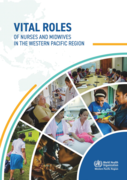
This document outlines why and how nurses and midwives are important, not only for individual health optimization but also to achieve the thematic priorities of For the Future. More specifically, it provides case studies to showcase the amazing work that nurses and midwives across the Region are doi
...
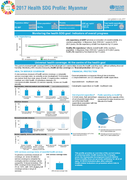
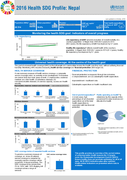

(Health Systems in Transition, Vol. 4, No. 3, 2014)

The knowledge guide is the second publication in the Self-care competency framework to support health and care workers.
This describes how health and care workers can apply each of the 10 competency standards in their work, detailing the necessary knowledge, skills and attitudes that underpin the
...
Violence against women and girls is widespread in the Region of the Americas, resulting in enormous consequences for the health and wellbeing of women and girls, their families and communities. These costs are unacceptable and they can be prevented through evidence-based action, including the health
...
La violencia contra las mujeres y las niñas es generalizada en la Región de las Américas, y tiene enormes consecuencias para su salud y bienestar, así como el de sus familias y sus comunidades. Se trata de un costo inaceptable que puede ser prevenido mediante acciones basadas en la evidencia, pr
...

The standards define 10 key competencies for health and care workers to support self-care in their clinical practice as well as the specific, measurable behaviours that demonstrate those competencies, focusing on people-centredness; decision-making; effective communication; collaboration; evidence-i
...

Evidence- and rights-based national policies, guidelines and legislation play a key role in improving sexual, reproductive, maternal, newborn, child and adolescent health (SRMNCAH), framing the enabling environment for equitable provision and accessibility of quality services. The SRMNCAH policy sur
...

This document is an output of a WHO cross-programme initiative aiming to improve the prevention, diagnosis and management of anaemia and thereby accelerate reduction in its prevalence. It comes at an important time, midway through the era of the Sus
...
Stronger collaboration, better health: global action plan for healthy lives and well-being for all
recommended
The overall objective of the Global Action Plan is to enhance collaboration among 12 global organizations engaged in health, development and humanitarian responses to accelerate country progress on the health-related SDG targets. The Plan presents a new approach to strengthening collaboration among
...

The report focuses on several key areas where health outcomes are falling short, and provides insight into ways in which countries can improve the situation for their children and adolescents. Areas in focus include mental health, overweight/obesity and adolescent risk-taking behaviour.
The report
...
