
Filter
485
Text search:
Marks,
M.
Featured
Recommendations
51
New Publications
106
Language
Document type
No document type
270
Studies & Reports
90
Guidelines
58
Manuals
29
Strategic & Response Plan
16
Training Material
9
Fact sheets
6
Resource Platforms
3
Situation Updates
2
Countries / Regions
India
34
Global
29
Kenya
20
South Africa
13
Zambia
10
Western and Central Europe
10
Tanzania
9
Ghana
8
Nepal
8
Liberia
7
Uganda
7
Bangladesh
7
Ethiopia
6
Sierra Leone
5
Syria
5
Philippines
4
Malawi
4
Namibia
4
Lesotho
4
Eastern Europe
4
Guinea
3
Nigeria
3
Zimbabwe
3
Pakistan
3
Mozambique
3
Latin America and the Carribbean
3
Asia
3
Germany
2
Thailand
2
Indonesia
2
Benin
2
Myanmar / Burma
2
Africa
2
Russia
2
Senegal
1
Congo, Democratic Republic of
1
Cameroon
1
South Sudan
1
Chad
1
Cambodia
1
Rwanda
1
Papua New Guinea
1
Sudan
1
Central African Republic
1
Argentina
1
Peru
1
Eswatini/ Swaziland
1
Brazil
1
Ukraine
1
Ecuador
1
Madagascar
1
West and Central Africa
1
South–East Asia Region
1
Paraguay
1
Venezuela
1
Poland
1
Albania
1
Canada
1
Tajikistan
1
Vietnam
1
Authors & Publishers
Publication Years
Category
Countries
162
Clinical Guidelines
53
Public Health
29
Key Resources
25
Women & Child Health
23
Capacity Building
12
Pharmacy & Technologies
9
Toolboxes
Mental Health
46
TB
37
HIV
33
Disability
26
Planetary Health
23
NTDs
23
COVID-19
19
NCDs
18
Caregiver
13
Rapid Response
12
Ebola & Marburg
10
Refugee
10
Conflict
9
Global Health Education
8
Pharmacy
8
Natural Hazards
7
AMR
6
Specific Hazards
4
Health Financing Toolbox
4
2.0 Rapid Response
4
Malaria
3
Cholera
1
Social Ethics
1
The purpose of this Guideline is to provide evidence-based recommendations that promote and sustain the undergraduate nursing student’s application of knowledge to practice in a variety of clinical learning environments. The Guideline explores the relationships among and between students and nursi
...
Living Conditions among People with Activity Limitations in Zambia: A National Representative Study.
This research report provides results from the study on living conditions among people with disabilities in Zambia. Comparisons are made between individuals with and without disabilities and also between households with and without a disabled family member. Results obtained in Zambia are also compar
...

Master of Science in Pharmaceutical Management Dissertation

National Tuberclosis and
Leprosy Programme (NTLP)
Disability-inclusive development policy and practice is constantly changing and evolving. It is a foundational part of our work in CBM, underpinning all that we do. It requires us to be constantly reflecting, learning and improving our practice. In particular looking to the deeper questions: of the
...

Skin-related neglected tropical diseases, or “skin NTDs”, are historically neglected because active case detection, individual case management, significant resources and intensive effort are required to control, eliminate and eradicate them. Integrated control and management of skin NTDs offers
...
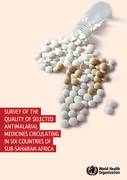
Survey of the Quality of Selected Antimalarial Medicines Circulating in Six Countries of Sub-Saharan Africa
recommended
The survey aimed at evaluating the quality of selected antimalarials in six countries of sub-Saharan Africa (Cameroon, Ethiopia, Ghana, Kenya, Nigeria and the United Republic of Tanzania). These countries have been supported by WHO to strengthen their regulatory controls o
...

Where there is no doctor Chapter 3

Conflict, climate crisis and COVID-19 pose great threats to the health of women and children.
This Strategy and Plan of Action on Health Promotion within the Context of the Sustainable Development
Goals 2019-2030 seeks to renew health promotion (HP) through social, political, and technical actions,
addressing the social determinants of health (SDH), he conditions in which people are born,
...

Guia de treinamento para profissionais de saúde da linha de frente
Versão oficial em português da obra original em Inglês
Recognizing neglected tropical diseases through changes on the skin: a training guide for front-line health workers


Epidemics of infectious diseases are occurring more often, and spreading faster and further than ever, in many different regions of the world. The background factors of this threat are biological, environmental and lifestyle changes, among others. A potentially fatal combination of newly-discovered
...
