
Filter
853
Text search:
International
Medical
School
Initiative
Featured
Recommendations
56
New Publications
220
Language
Document type
No document type
494
Studies & Reports
170
Guidelines
80
Manuals
49
Strategic & Response Plan
33
Training Material
9
Situation Updates
8
Fact sheets
6
Resource Platforms
2
App
1
Infographics
1
Countries / Regions
Global
40
Kenya
27
India
24
Uganda
17
Nepal
17
Malawi
17
Sierra Leone
16
South Africa
16
Liberia
15
Nigeria
15
Western and Central Europe
15
Ethiopia
14
Latin America and the Carribbean
14
Rwanda
13
Myanmar / Burma
13
Africa
13
Tanzania
11
Ghana
10
Zambia
10
Syria
10
Congo, Democratic Republic of
9
Namibia
9
South Sudan
8
Bangladesh
8
Guinea
7
Ukraine
6
Asia
6
Philippines
5
Lesotho
5
Yemen
5
South–East Asia Region
5
Senegal
4
Cameroon
4
Cambodia
4
Mozambique
4
Eswatini/ Swaziland
4
Botswana
4
Venezuela
4
Haiti
3
Afghanistan
3
Brazil
3
Eastern Europe and Central Asia
3
Russia
3
Burkina Faso
2
USA
2
Zimbabwe
2
Somalia
2
Pakistan
2
Lebanon
2
Chad
2
Indonesia
2
Benin
2
Colombia
2
Eastern Europe
2
Albania
2
Southern Africa
2
Tajikistan
2
Kazakhstan
2
Mali
1
Côte d’Ivoire / Ivory Coast
1
Niger
1
Iraq
1
Jordan
1
Germany
1
Thailand
1
China
1
Singapore
1
Papua New Guinea
1
Sudan
1
Central African Republic
1
Peru
1
Croatia
1
Burundi
1
Honduras
1
Bolivia
1
Libya
1
Angola
1
Mexico
1
Sri Lanka
1
East and Southern Africa
1
Western Pacific Region
1
Palestine
1
Armenia
1
Canada
1
Estonia
1
Moldova
1
Iran
1
Kyrgyzstan
1
Japan
1
Authors & Publishers
Publication Years
Category
Countries
303
Clinical Guidelines
61
Public Health
59
Women & Child Health
52
Key Resources
50
Capacity Building
10
Pharmacy & Technologies
3
Toolboxes
HIV
82
Disability
77
Mental Health
74
COVID-19
55
TB
32
NCDs
28
Planetary Health
27
Caregiver
26
NTDs
26
Conflict
24
AMR
17
Ebola & Marburg
16
Refugee
16
Pharmacy
15
Global Health Education
14
Natural Hazards
12
Health Financing Toolbox
11
Rapid Response
9
Malaria
8
Polio
3
Specific Hazards
3
2.0 Rapid Response
2
Zika
1
Social Ethics
1

Asthma is the most common non-communicable disease in children and remains one of the most common throughout the life course. The great majority of the burden of this disease is seen in low-income and middle-income countries (LMICs), which have disproportionately high asthma-related mortality relati
...
Background paper for the Oslo Summit on Education for Development.
This paper covers the four topics of the Oslo Summit: investment in education, quality of learning, education in emergencies and girls’ education. Disability continues to be one of the primary causes of educational disadvantage a
...
Measles outbreak guide
recommended
This guide also draws on the standard operating procedures (SOPs) to apply for measles outbreak response
support from the Measles & Rubella Initiative Outbreak Response Fund (17) and includes a section on
measles outbreak recovery so that contribu
...
Slavery on fishing vessels, degradation of ecosystems, overfishing, debt bondage, human trafficking and child labour in peeling sheds – the scandals surrounding the Thai fishery and shrimp industries have garnered international censure. Farmed and
...
Following the high-level meeting of the UN General Assembly on antimicrobial resistance held in September 2016 which called for national, regional and international political commitment to address the issue, member countries agreed on the importance
...
This Community Health Systems (CHS) Catalog country profile is the 2016 update of a landscape
assessment that was originally conducted by the Advancing Partners & Communities (APC) project
in 2014. The CHS Catalog focuses on 25 countries deemed priority by the United States Agency for
...
The power relations around global decisions which shape population health can be changed through new alliances and information flows. The Democratising Global Health Governance Initiative, of which WHO Watch is a project, is designed to contribute t
...
The Asia Pacific Observatory on Health Systems and Policies is a collaborative partnership which supports and promotes evidence-based health policy making in the Asia Pacific Region. Based in WHO’s Regional Office for South-East Asia, it brings together governments,
...
Almost 30 countries vulnerable to a new Ebola-style Epidemic, jeopardising the future of millions of Children. The report ranks the world’s poorest countries on the state of their public health systems, finding that 28 have weaker defences in place than Liberia where, alongside Sierra Leone and Gu
...

Asthma is the most common chronic condition in children worldwide. It affects daytime activities, sleep and school attendance and causes anxiety to parents, families and other carers. The quality of asthma diagnosis and management globally still nee
...
For applying the new operational guidance on CB-MHPSS in the field, UNICEF country offices and partners will need ready access to tools and resources that can be used to implement the programs. By bringing together resources from different contexts, the compendium makes options available to country
...
Networking for Policy Change: TB/HIV Participant’s Guide
WHO/HTM/TB/2007.384b
“TB is too often a death sentence for people with AIDS. It does not have to be this
way.”
-Nelson Mandela, International conference on HIV and AIDS, Bangkok, T
...
The 2018 Humanitarian Response Plan (HRP) aimed to assist 10.5 million people with direct assistance and 11.2 million people with improved access to basic services. In an effort to meet humanitarian needs, humanitarian partners provided various types of humanitarian life-saving and life-sustaining
...
This technical guidance outlines current evidence, knowledge and best practice relating to incidences of violence and injuries among refugees and migrants in the WHO European Region. It highlights key principles, summarizes priority actions and challenges, maps existing
...
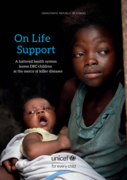
ON LIFE SUPPORT3The Democratic Republic of Congo’s Ebola outbreak has been contained, but confl ict and under-development leave over three million children at risk from measles and other killer diseases. The country’s medical services – ill-eq
...
Healthy maternal nutrition, exclusive breastfeeding, and optimal infant and young child nutrition are critical for appropriate growth and development, as well as reducing the risk of developing noncommunicable diseases (NCDs), for both mothers and children. On 7–8 November 2018 the WHO Regional Of
...

The aim of the present paper is to review capacity building in public health nutrition (PHN), the need for which has been stressed for many years by a range of academics, national and international organisations. Although great strides have been mad
...
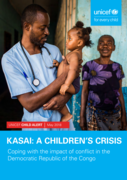
UNICEF CHILD ALERT May 2018
As part of a UNICEF series highlighting the challenges faced by children in current crisis situations, this Child Alert examines the situation of children affected by violent conflict in Kasai region, Democratic Republic of the Congo. The alert outlines what UNICEF a ...
As part of a UNICEF series highlighting the challenges faced by children in current crisis situations, this Child Alert examines the situation of children affected by violent conflict in Kasai region, Democratic Republic of the Congo. The alert outlines what UNICEF a ...
This timely report comes at a decisive moment in history where
we can reshape urban environments and health systems for the
majority of the world’s population that live in cities. Enabling
this transformation are the SDGs, which have reconfigured how
governments and the
...
This document is one of eight PDF documents that comprise the Guidance on Child-focused Victim
Assistance. All are available in PDF at
