
Filter
268
Text search:
Global
Handwashing
Partnership
Featured
Recommendations
24
New Publications
57
Language
Document type
No document type
75
Studies & Reports
63
Guidelines
50
Strategic & Response Plan
40
Manuals
19
Fact sheets
8
Situation Updates
7
Training Material
3
Infographics
3
Countries / Regions
Global
12
Sierra Leone
10
Ethiopia
9
Kenya
9
Liberia
7
Myanmar / Burma
7
India
6
South Sudan
6
Syria
6
East and Southern Africa
6
Latin America and the Carribbean
6
Uganda
5
Nepal
5
Rwanda
5
Mozambique
5
West and Central Africa
5
Congo, Democratic Republic of
4
Ghana
4
Zambia
4
Bangladesh
4
Colombia
4
Middle East and North Africa
4
Venezuela
4
Guinea
3
Nigeria
3
Zimbabwe
3
Jordan
3
Sudan
3
Central African Republic
3
Namibia
3
Ukraine
3
Yemen
3
South–East Asia Region
3
Western and Central Europe
3
Burkina Faso
2
Philippines
2
Somalia
2
Tanzania
2
Thailand
2
South Africa
2
Malawi
2
Papua New Guinea
2
Asia
2
Africa
2
Mali
1
Niger
1
Haiti
1
Pakistan
1
Iraq
1
Germany
1
Lebanon
1
Turkey
1
Egypt
1
China
1
Indonesia
1
Malaysia
1
Eswatini/ Swaziland
1
Burundi
1
Botswana
1
Eastern Europe and Central Asia
1
Poland
1
Romania
1
Moldova
1
Vietnam
1
Japan
1
Denmark
1
Spain
1
Authors & Publishers
Publication Years
Category
Countries
122
Key Resources
44
Women & Child Health
17
Public Health
14
Capacity Building
7
Clinical Guidelines
6
Pharmacy & Technologies
1
Toolboxes
COVID-19
81
Planetary Health
17
AMR
11
Ebola & Marburg
9
Cholera
9
Conflict
9
Caregiver
9
Global Health Education
6
NTDs
5
Natural Hazards
3
Refugee
3
Disability
2
Rapid Response
2
2.0 Rapid Response
2
HIV
1
NCDs
1
Malaria
1
Presentation on WASH in Malawi
This training guide applies a participatory approach, reflecting the considerable evidence that adults learn best by practicing and reflecting on their experiences. It thus emphasizes exercises to improve skills in counseling that support clients to adopt optimal nutrition practices. Women’s nutri
...

This new publication presents the continuing and emerging challenges to children’s environmental health.
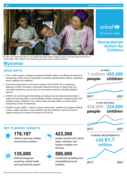
Over 1 million people, including an estimated 450,000 children, are affected by Myanmar’s decade-long conflict and are increasingly vulnerable to gender-based violence, exploitation, abuse, detention and trafficking.
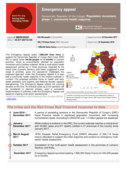
Community transmission of coronavirus disease 2019 (COVID-19) is increasing in
...
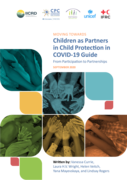
From Participation to Partnerships (September 2020)
Despite the COVID-19 challenges, children around the world have found meaningful ways to support and protect their peers, families, and communities. Children are on the frontlines of innovative responses and are working closely with their adult al
...
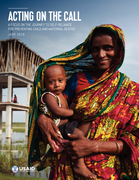
A Focus on the Journey to Self-Reliance for Preventing Child and Maternal Deaths . June 2018
The 2018 Acting on the Call report focuses on 25 countries’ journeys to self-reliance for preventing child and maternal deaths. Self-reliance is a country’s ability to finance and implement solution ...
The 2018 Acting on the Call report focuses on 25 countries’ journeys to self-reliance for preventing child and maternal deaths. Self-reliance is a country’s ability to finance and implement solution ...

The Infection Prevention and Control (IPC) Guidelines aim to support healthcare workers improve quality and safety health care. The Guidelines further aim to promote and facilitate the overall goal of IPC by providing evidence-based recommendations on the critical aspects of IPC, focusing on the fun
...
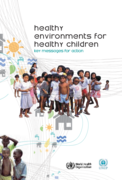
This booklet presents key messages for action, summarized from a set of
chapters on different environmental health issues.

4th edition, Reference Manual

WASH and Health working together: a ‘how-to’ guide for neglected tropical disease programmes
recommended
2nd edition. This toolkit provides step-by-step guidance to NTD programme managers and partners on how to engage and work collaboratively with the WASH community to improve delivery of water, sanitation and hygiene services to underserved population affected by many neglected tropical diseases. The
...
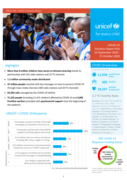
More than 8 million children have access to distance learning thanks to partnerships with 322 radio stations and 23 TV channels
1.2 million community masks distributed
25 million people reached with key messages on how to prevent COVID-19 through mass media channels (300 radio stations and
...

Adapting community-led approaches . Three out of 10 people in urban areas do not use improved sanitation facilities, and one out of 10 people are forced to practise open defecation. Still higher proportions do not have access to safely managed sanitation facilities, where the fecal sludge
is contai
...

The purpose of this Strategy is to set out the way to meet the needs of the rural populations for improved domestic water supply services, access to and use of improved sanitation with elimination of open defecation, and improved hygiene behaviour by the Year 2030. It also addresses water, sanitatio
...
It is too early to know the full impact of COVID-19 on Africa. To date the experience has been varied. There are causes for concern, but also reasons for hope. Early estimates were pessimistic regarding the pandemic’s impact on the continent. But the relatively low numbers of COVID-19 cases report
...
