Filter
1562
Text search:
participatory
assessment
Featured
143
510
Language
Document type
930
193
159
135
84
43
8
6
4
Countries
67
53
53
51
50
48
37
35
34
28
28
26
24
23
22
22
20
18
16
16
16
15
15
15
14
13
13
12
12
11
10
9
8
7
7
7
6
6
6
6
6
6
6
5
5
5
5
4
4
4
4
4
3
3
3
3
3
3
3
2
2
2
2
2
2
2
1
1
1
1
1
1
1
1
1
1
1
1
1
1
1
1
1
1
1
1
1
1
1
1
1
Authors & Publishers
Publication Years
Category
611
205
118
94
55
48
3
Toolboxes
118
109
92
74
58
55
47
44
43
39
35
35
33
30
25
21
19
17
9
8
6
5
4
4
3
1
1

PHSM are vital in reducing the risk and scale of infectious disease transmission and lowering hospitalization and deaths. Examples include contact tracing, quarantine and isolation, mask use, ventilation, school or workplace measures, mobility restrictions and travel requirements.
While these mea
...

This plan, approved by the Organization’s 62nd Directing Council, was shaped by extensive consultations with countries and stakeholders, and commits to transformative health outcomes over the next six years, tackling noncommunicable diseases (NCDs), mental health, health security, fragmented healt
...

Adolescents and young adults aged 10-24 remain underserved in the global response against HIV. Combination prevention, treatment and care programmes use a mix of evidence-based interventions to meet the current HIV prevention needs of adolescents and young adults. However, there needs to be a focus
...

This document, with a focus on the built environment and health care facilities, intends to guide the audience in preparing for and responding to SARI pandemics caused by existing and novel pathogens. It provides technical guidance on designing, establishing, and managing health care facilities for
...

Technology and digital tools are transforming everyday life, opening new opportunities for women and girls—but they are also being weaponized to harass, threaten, and silence them online. Technology-facilitated violence against women and girls (TF VAWG) is now a defining challenge for gender equal
...

Technical Brief

Bhana A et al. Journal of the International AIDS Society 2021, 24(S2):e25713

a comprehensive guide
for the HCPs who work in counselling and psychological care of children and adoles-
cents. The Handbook includes information on HIV clinical care; growth and development;
mental health; child protection; counselling and communication; disclosure; loss, grief,
and bereavemen
...

This facilitator manual is aimed at trainers of a three-day
‘Integrating VAC prevention and response into HIV settings’
course. It is for use by all facilitators who are delivering the
training.


Despite gains in childhood survival, more effort is needed to improve the well-being of children with developmental delays and disabilities. All children, including children with developmental delays and disabilities, need nurturing care. Nurturing care can contribute to preventing developmental del
...

The document “Strengthening the global architecture for health emergency prevention, preparedness, response and resilience” presents a report by the Director-General of the World Health Organization (WHO) to the World Health Assembly on global efforts to improve preparedness and response to heal
...
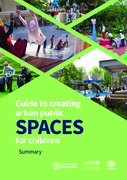
This guide defines public spaces for children as those that can be easily and freely accessed and enjoyed by all children, either alone or with friends or family, regardless of gender,
ethnicity, sexuality, nationality, social status or physical ability. Whatever their context, these places are saf
...

Indicators and questions to monitor progress towards the Global AIDS Strategy 2026-2031 targets
Training material and online courses

Emergency Medical Teams 2030 strategy
recommended
The Emergency Medical Teams (EMT) initiative plays a vital role in building this stronger and
more resilient global health emergency architecture, both by driving its formation and by
contributing to a rapidly deployable global health emergency corps. The Initiative and EMTs
bring something uniqu
...

The purpose of this interim guidance is to provide recommendations for planning and implementing RCCE activities that protect and empower communities during MVD outbreaks. The guidance is designed for national and subnational health responders involved in RCCE for MVD readiness and response. It is a
...
Background paper 9
The Independent Panel for Pandemic Preparedness and Response
May 2021