
Filter
3594
Text search:
community
health
units
Featured
336
1175
Language
3454
127
44
31
18
16
9
7
5
3
3
3
2
2
2
2
2
2
2
2
2
2
2
1
1
1
1
1
1
1
1
1
1
1
1
1
1
1
1
1
1
1
1
1
1
1
1
1
1
1
Document type
2010
548
497
224
171
62
33
32
7
5
3
2
Countries
244
138
137
127
115
99
94
91
80
75
69
68
65
57
56
55
52
51
51
49
48
46
41
40
31
29
27
26
25
24
23
22
22
22
22
19
19
18
17
17
16
14
14
13
13
13
12
12
10
10
10
10
9
9
9
9
8
8
8
7
7
7
7
7
7
7
7
6
6
5
5
5
5
4
4
4
4
4
4
4
3
3
3
3
3
3
3
3
3
3
3
3
2
2
2
2
2
2
2
2
2
2
2
2
2
2
2
2
2
2
2
2
1
1
1
1
1
1
1
1
1
1
1
1
1
1
1
1
1
1
1
1
1
1
1
1
1
1
Authors & Publishers
424
127
117
94
79
67
62
45
32
28
23
22
19
18
18
18
18
17
17
17
16
16
15
15
14
14
14
14
14
13
13
12
12
12
11
11
11
11
11
11
10
10
10
10
9
9
9
9
9
9
9
9
9
9
8
8
8
8
8
8
8
8
8
8
7
7
7
7
7
7
7
7
7
7
7
7
7
7
7
7
6
6
6
6
6
6
6
6
6
6
6
6
6
5
5
5
5
5
5
5
5
5
5
5
5
5
5
5
5
5
5
5
5
5
5
5
5
5
5
5
5
5
4
4
4
4
4
4
4
4
4
4
4
4
4
4
4
4
4
4
4
4
4
4
4
4
4
4
4
4
4
4
4
4
4
4
4
4
4
4
4
4
4
4
4
4
4
3
3
3
3
3
3
3
3
3
3
3
3
3
3
3
3
3
3
3
3
3
3
3
3
3
3
3
3
3
3
3
3
3
3
3
3
3
3
3
3
3
3
3
3
3
3
3
3
3
3
3
3
3
3
3
3
3
3
3
3
3
3
3
3
3
3
3
3
3
3
3
3
2
2
2
2
2
2
2
2
2
2
2
2
2
2
2
2
2
2
2
2
2
2
2
2
2
2
2
2
2
2
2
2
2
2
2
2
2
2
2
2
2
2
2
2
2
2
2
2
2
2
2
2
2
2
2
2
2
2
2
2
2
2
2
2
2
2
2
2
2
2
2
2
2
2
2
2
2
2
2
2
2
2
2
2
2
2
2
2
2
2
2
2
2
2
2
2
2
2
2
2
2
2
2
2
2
2
2
2
2
2
2
2
2
2
2
2
2
2
2
2
2
2
2
2
2
2
2
2
2
2
2
2
2
2
2
2
2
2
2
2
2
2
2
2
2
2
2
2
2
2
2
2
2
2
2
2
2
2
2
2
2
2
2
2
2
2
2
2
2
2
2
2
2
2
2
2
2
2
2
2
2
2
2
2
2
2
1
1
1
1
1
1
1
1
1
1
1
1
1
1
1
1
1
1
1
1
1
1
1
1
1
1
1
1
1
1
1
1
1
1
1
1
1
1
1
1
1
1
1
1
1
1
1
1
1
1
1
1
1
1
1
1
1
1
1
1
1
1
1
1
1
1
1
1
1
1
1
1
1
1
1
1
1
1
1
1
1
1
1
1
1
1
1
1
1
1
1
1
1
1
1
1
1
1
1
1
1
1
1
1
1
1
1
1
1
1
1
1
1
1
1
1
1
1
1
1
1
1
1
1
1
1
1
1
1
1
1
1
1
1
1
1
1
1
1
1
1
1
1
1
1
1
1
1
1
1
1
1
1
1
1
1
1
1
1
1
1
1
1
1
1
1
1
1
1
1
1
1
1
1
1
1
1
1
1
1
1
1
1
1
1
1
1
1
1
1
1
1
1
1
1
1
1
1
1
1
1
1
1
1
1
1
1
1
1
1
1
1
1
1
1
1
1
1
1
1
1
1
1
1
1
1
1
1
1
1
1
1
1
1
1
1
1
1
1
1
1
1
1
1
1
1
1
1
1
1
1
1
1
1
1
1
1
1
1
1
1
1
1
1
1
1
1
1
1
1
1
1
1
1
1
1
1
1
1
1
1
1
1
1
1
1
1
1
1
1
1
1
1
1
1
1
1
1
1
1
1
1
1
1
1
1
1
1
1
1
1
1
1
1
1
1
1
1
1
1
1
1
1
1
1
1
1
1
1
1
1
1
1
1
1
1
1
1
1
1
1
1
1
1
1
1
1
1
1
1
1
1
1
1
1
1
1
1
1
1
1
1
1
1
1
1
1
1
1
1
1
1
1
1
1
1
1
1
1
1
1
1
1
1
1
1
1
1
1
1
1
1
1
1
1
1
1
1
1
1
1
1
1
1
1
1
1
1
1
1
1
1
1
1
1
1
1
1
1
1
1
1
1
1
1
1
1
1
1
1
1
1
1
1
1
1
1
1
1
1
1
1
1
1
1
1
1
1
1
1
1
1
1
1
1
1
1
1
1
1
1
1
1
1
1
1
1
1
1
1
1
1
1
1
1
1
1
1
1
1
1
1
1
1
1
1
1
1
1
1
1
1
1
1
1
1
1
1
1
1
1
1
1
1
1
1
1
1
1
1
1
1
1
1
1
1
1
1
1
1
1
1
1
1
1
1
1
1
1
1
1
1
1
1
1
1
1
1
1
1
1
1
1
1
1
1
1
1
1
1
1
1
1
1
1
1
1
1
1
1
1
1
1
1
1
1
1
1
1
1
1
1
1
1
1
1
1
1
1
1
1
1
1
1
1
1
1
1
1
1
1
1
1
1
1
1
1
1
1
1
1
1
1
1
1
1
1
1
1
1
1
1
1
1
1
1
1
1
1
1
1
1
1
1
1
1
1
1
1
1
1
1
1
1
1
1
1
1
1
1
1
1
1
1
1
1
1
1
1
1
1
1
1
1
1
1
1
1
1
1
1
1
1
1
1
1
1
1
1
1
1
1
1
1
1
1
1
1
1
1
1
1
1
1
1
1
1
1
1
1
1
1
1
1
1
1
1
1
1
1
1
1
1
1
1
1
1
1
1
1
1
1
1
1
1
1
1
1
1
1
1
1
1
1
1
1
1
1
1
1
1
1
1
1
1
1
1
1
1
1
1
1
1
1
1
1
1
1
1
1
1
1
1
1
1
1
1
1
1
1
1
1
1
1
1
1
1
1
1
1
1
1
1
1
1
1
1
1
1
1
1
1
1
1
1
1
1
1
1
1
1
1
1
1
1
1
1
1
1
1
1
1
1
1
1
1
1
1
1
1
1
1
1
1
1
1
1
1
1
1
1
1
1
1
1
1
1
1
1
1
1
1
1
1
1
1
1
1
1
1
1
1
1
1
1
1
1
1
1
1
1
1
1
1
1
1
1
1
1
1
1
1
1
1
1
1
1
1
1
1
1
1
1
1
1
1
1
1
1
1
1
1
1
1
1
1
1
1
1
1
1
1
1
1
1
1
1
1
1
1
1
1
1
1
1
1
1
1
1
1
1
1
1
1
1
1
1
1
1
1
1
1
1
1
1
1
1
1
1
1
1
1
1
1
1
1
1
1
1
1
1
1
1
1
1
1
1
1
1
1
1
1
1
1
1
1
1
1
1
1
1
1
1
1
1
1
1
1
1
1
1
1
1
1
1
1
1
1
1
1
1
1
1
1
1
1
1
1
1
1
1
1
1
1
1
1
1
1
1
1
1
1
1
1
1
1
1
1
1
1
1
1
1
1
1
1
1
1
1
1
1
1
1
1
1
1
1
1
1
1
1
1
1
1
1
1
1
1
1
1
1
1
1
1
1
1
1
1
1
1
1
1
1
1
1
1
1
1
1
1
1
1
1
1
1
1
1
1
1
1
1
1
1
1
1
1
1
1
1
1
1
1
1
1
1
1
1
1
1
1
1
1
1
1
1
1
1
1
1
1
1
1
1
1
1
1
1
1
1
1
1
1
1
1
1
1
1
1
1
1
1
1
1
1
1
1
1
1
1
1
1
1
1
1
1
1
1
1
1
1
1
1
1
1
1
1
1
1
1
1
1
1
1
1
1
1
1
1
1
1
1
1
1
1
1
1
1
1
1
1
1
1
1
1
1
1
1
1
1
1
1
1
1
1
1
1
1
1
1
1
1
1
1
1
1
1
1
1
1
1
1
1
1
1
1
1
1
1
1
1
1
1
1
1
1
1
1
1
1
1
1
1
1
1
1
1
1
1
1
1
1
1
1
1
1
1
1
1
1
1
1
1
1
1
1
1
1
1
1
1
1
1
1
1
1
1
1
1
1
1
1
1
1
1
1
1
1
1
1
1
1
1
1
1
1
1
1
1
1
1
1
1
1
1
1
1
1
1
1
1
1
1
1
1
1
1
1
1
1
1
1
1
1
1
1
1
1
1
1
1
1
1
1
1
1
1
1
1
1
1
1
1
1
1
1
1
1
1
1
1
1
1
1
1
1
1
1
1
1
1
1
1
1
1
1
1
1
1
1
1
1
1
1
1
1
1
1
1
1
1
1
1
1
1
1
1
1
1
1
1
1
1
1
1
1
1
1
1
1
1
1
1
1
1
1
1
1
1
1
1
1
1
1
1
1
1
1
1
1
1
1
1
1
1
1
1
1
1
1
1
1
1
1
1
1
1
1
1
1
1
1
1
1
1
1
1
1
1
1
1
1
1
1
1
1
1
1
1
1
1
1
1
1
1
1
1
1
1
1
1
1
1
1
1
1
1
1
1
1
1
1
1
1
1
1
1
1
1
1
1
1
1
1
1
1
1
1
1
1
1
1
1
1
1
1
1
1
1
1
1
1
1
1
1
1
1
1
1
1
1
1
1
1
1
1
1
1
1
1
1
1
1
1
1
1
1
1
1
1
1
1
1
1
1
1
1
1
1
1
1
1
1
1
1
1
1
1
1
1
1
1
1
1
1
1
1
1
1
1
1
1
1
1
1
1
1
1
1
1
1
1
1
1
1
1
1
1
1
1
1
1
1
1
1
1
1
1
1
1
1
1
1
1
1
1
1
1
1
1
1
1
1
1
1
1
1
1
1
1
1
1
1
1
1
1
1
1
1
1
1
1
1
1
1
1
1
1
1
1
1
1
1
1
1
1
1
1
1
1
1
1
1
1
1
1
1
1
1
1
1
1
1
1
1
1
1
1
1
1
1
1
1
1
1
1
1
1
1
1
1
1
1
1
1
1
1
1
1
1
1
1
1
1
1
1
1
1
1
1
1
1
1
1
1
1
1
1
1
1
1
1
1
1
1
1
1
1
1
1
1
1
1
1
1
1
1
1
1
1
1
1
1
1
1
1
1
1
1
1
1
1
1
1
1
1
1
1
1
1
1
1
1
1
1
1
1
1
1
1
1
1
1
1
1
1
1
1
1
1
1
1
1
1
1
1
1
1
1
1
1
1
1
1
1
1
1
1
1
1
1
1
1
1
1
1
1
1
1
1
1
1
1
1
1
1
1
1
1
1
1
1
1
1
1
1
1
1
1
1
1
1
1
1
1
1
1
1
1
1
1
1
1
1
1
1
1
1
1
1
1
1
1
1
1
1
1
1
1
1
1
1
1
1
1
1
1
1
1
1
1
1
1
1
1
1
1
1
1
1
1
1
1
1
1
1
1
1
1
1
1
1
1
1
1
1
1
1
1
1
1
1
1
1
1
1
1
1
1
1
1
1
1
1
1
1
1
1
1
1
1
1
1
1
1
1
1
1
1
1
1
1
1
1
1
1
1
1
1
1
1
1
1
1
1
1
1
1
1
1
1
1
1
1
1
1
1
1
1
1
1
1
1
1
1
1
1
1
1
1
1
1
1
1
1
1
1
1
1
1
1
1
1
1
1
1
1
1
1
1
1
1
1
1
1
1
1
1
1
1
1
1
1
1
1
1
1
1
1
1
1
1
1
1
1
1
1
1
1
1
1
1
1
1
1
1
1
1
1
1
1
1
1
1
1
1
1
1
1
1
1
1
1
1
1
1
1
1
1
1
1
1
1
1
1
1
1
1
1
1
1
1
1
1
1
1
1
1
1
1
1
1
1
1
1
1
1
1
1
1
1
1
1
1
1
1
1
1
1
1
1
1
1
1
1
1
1
1
1
1
1
1
1
1
1
1
1
1
1
1
1
1
1
1
1
1
1
1
1
1
1
1
1
1
1
1
1
1
1
1
1
1
1
1
1
1
1
1
1
1
1
1
1
1
1
1
1
1
1
1
1
1
1
1
1
1
1
1
1
1
1
1
1
1
1
1
1
1
1
1
1
1
1
1
1
1
1
1
1
1
1
1
1
1
1
1
1
1
1
1
1
1
1
1
1
1
1
1
1
1
1
1
1
1
1
1
1
1
1
1
1
1
1
1
1
1
1
1
1
1
1
1
1
1
1
1
1
1
1
1
1
1
1
1
1
1
1
1
1
1
1
1
1
1
1
1
1
1
1
1
1
1
1
1
1
1
1
1
1
1
1
1
1
1
1
1
1
1
1
1
1
1
1
1
1
1
1
1
1
1
1
1
1
1
1
1
1
1
1
1
1
1
1
1
1
1
1
1
1
1
1
1
1
1
1
1
1
1
1
1
1
1
1
1
1
1
1
1
1
1
1
1
1
1
1
1
1
1
1
1
1
1
1
1
1
1
1
1
1
1
1
1
1
1
1
1
1
1
1
1
1
1
1
1
1
1
1
1
1
1
1
1
1
1
1
1
1
1
1
1
1
1
1
1
1
1
1
1
1
1
1
1
1
1
1
1
1
1
1
1
1
1
1
1
1
1
1
1
1
1
1
1
1
1
1
1
1
1
1
1
1
1
1
1
1
1
1
Publication Years
955
2286
337
14
2
Category
1672
257
227
172
171
57
31
Toolboxes
266
230
182
147
130
126
119
110
94
94
90
66
63
58
55
51
44
43
39
36
24
24
20
18
15
6
1

National emergency medical teams are the best option for providing immediate and appropriate surge response for emergencies directly affecting populations, while international teams may help relieve overwhelmed health systems. The efficiency and eff
...
ectiveness of countries and local authorities in mobilizing existing resources is only as good as the quality of care they are able to provide. This publication serves as a practical guide for teams and aims to compliment emergency response systems, fostering seamless collaboration with all emergency response actors and networks
more
access free courses in more than 60 languages
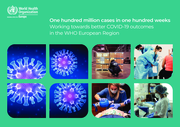
Working towards better COVID-19 outcomes in the WHO European Region.From the first COVID-19 cases in Europe reported on
24 January 2020, the pandemic reached 1 million cases
within 3 months, 10 million cases within 8 months, and
100 million cases in Europe alone within 2 years. Over
the course o
...
f its two years, COVID-19 has claimed over
1.6 million lives across Europe and Central Asia. The
World Health Organization (WHO) European Region has
accounted for close to a third of the cumulative global
COVID-19 cases and deaths.
more
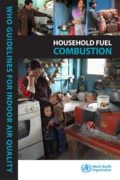
Energy use in the home is a vital and ubiquitous feature of human society. Energy
is used for a wide variety of purposes, including cooking, space heating, light-
ing, small-scale income generation, various household tasks, and entertainment.
Lymphatic filariasis is a neglected tropical disease that can cause permanent disability through disruption of the lymphatic system. This disease is caused by parasitic filarial worms that are transmitted by mosquitos. Mass drug administration (MDA) of antihelmintics is recommended by WHO to elimina
...
te lymphatic filariasis as a public health problem. This study aims to produce the first geospatial estimates of the global prevalence of lymphatic filariasis infection over time, to quantify progress towards elimination, and to identify geographical variation in distribution of infection.
more
Maternal mortality has fallen significantly in recent years, especially in countries that have emphasized the prevention of its main causes, such as hemorrhagic and infectious complications and hypertension , including in the Region of the Americas. In its final report on the Plan of Action to Accel
...
erate the Reduction of Maternal Mortality and Severe Maternal Morbidity, the Pan American Health Organization (PAHO) reported a continuing downward trend in maternal mortality, with an 18.1% reduction in the maternal morbidity ratio during the period 2010-2015 . From a pathophysiological perspective, death events are a common end result of a wide spectrum of complications leading to multi-organ dysfunction. However, there is a group of women in this situation who survive, despite the seriousness of their condition. This high number of patients––who were in serious condition
but did not die––reflects the actual health conditions in an institution or a country. For this reason, there is a need to create indicators to estimate morbidity in women due to diseases and incidents that occur during pregnancy, childbirth, and the puerperium. To this end, we propose conducting epidemiological surveillance of an indicator that includes women who survived after presenting a potentially fatal complication during pregnancy, childbirth, or the puerperium, reflecting quality medical attention and care (5, 6). This indicator
is maternal near-miss (MNM), which refers to extremely severe maternal morbidity––cases of a severity that
brings women very close to the death event. After adjusting the definition to a specific population and time,
MNM is defined as a case in which a woman nearly died, but survived a complication that occurred during
pregnancy, childbirth, or within 42 days of termination of pregnancy
more
Since 1996, trachoma has been targeted for elimination as a public health problem worldwide. The active trachoma criterion for national elimination as a public health problem is a TF1–9 < 5%, sustained for at least two years in the absence of antibiotic mass drug administration (MDA), in each formerly endemic EU. Using A, F and E,
...
health ministries and their partners have made considerable progress towards achieving this criterion in formerly endemic EUs worldwide. In 2002, an estimated 1517 million people lived in EUs in which EU-wide implementation of the A, F and E components of SAFE were thought to be needed for the purposes of global elimination of trachoma as a public health problem; by June 2021, that number had fallen to 136.2 million, a 91% reduction. Approximately 85% of the 136.2 million people living in EUs needing A, F and E in June 2021 were in WHO’s African Region.
more
Trachoma is the leading infectious cause of blindness (2). It is characterized by repeated
conjunctival infection with particular strains of Chlamydia trachomatis. This scars the conjunctivae and,
in some cases, leads to trichiasis with or without entropion. The abrasive action of eyelashes can
d
...
amage the cornea. In 2018, trachoma affected the poorest residents of the poorest communities of 43
countries
more
Background: The World Health Organization (WHO) published a clinical case definition of post COVID-19
condition, by a Delphi consensus, on 6 October 2021. That process concluded that a separate definition
may be applicable for children. It is impo
...
rtant to understand the frequency, characteristics and risk factors
that lead to post COVID-19 condition, along with its impact on everyday functioning and development of
children and adolescents. Long-term outcomes of the condition are currently unknown and need to be
studied. For these reasons, a globally standardized clinical case definition is needed.
Aim: To develop a globally relevant standardized clinical case definition for children and adolescents by
building on the WHO clinical case definition for post COVID-19 condition in adults.
more
Sexual exploitation, sexual abuse and sexual harassment (SEAH) violate the rights and wellbeing of the people we serve and the people with whom we serve. Such behaviours are directly in opposition to WHO’s values and our abiding responsibility to do no harm. WHO uses the umbrella term “sexual mi
...
sconduct” to encompass the full spectrum of prohibited and unwanted behaviour of a sexual nature (including rape and sexual assault) as described in WHO’s 2023 Policy for preventing and addressing sexual misconduct (1). This is because all such acts are prohibited – whether perpetrated by WHO’s own personnel or by implementing partners – and therefore constitute misconduct. The term sexual misconduct is also easier to communicate and translate, as
victims and survivors do not always understand the complicated acronyms and definitions used by the United Nations (UN) and the humanitarian sector. However, we use the terms sexual misconduct and SEAH interchangeably as required when we interact with UN and other stakeholders.
more

Cholera is a major health risk in many parts of the world, affecting millions of people every year. Since mid-2021, the world has been facing an acute upsurge of the 7th cholera pandemic, which is characterized by the number, size and concurrence of
...
multiple outbreaks, the spread to areas that had been free of cholera for decades and alarmingly high mortality rates. The mortality associated with these outbreaks is of particular concern as many countries have reported higher case fatality ratios (CFR) than in previous years
more
At the global, national, and regional levels, there are several guidelines and guides regarding the preparedness, prevention, surveillance, and control of diseases caused by respiratory viruses; most initiatives focus on specific virus events or cases. During the coronavirus disease 2019 (COVID-19)
...
pandemic, it has been found that even when there are strategies designed and planned for pandemics, it is necessary to strengthen and improve them. Planning for imminent threats, including those posed by respiratory viruses, contributes to strengthening the core capacities of the International Health Regulations (IHR [2005])
more
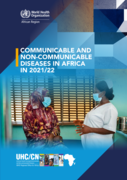
Communicable and non-communicable diseases in Africa in 2021/22
World Health Organization Africa Region; WHO Africa
World Health Organization Africa Region; WHO Africa
(2023)
C_WHO
This report is one of the first major products of the newly established Precision Public Health Metrics unit of the UCN cluster of the WHO Regional Office for Africa. The report presents national trends in communicable and non-communicable disease b
...
urden and control in the WHO African region. It tracks progress made with respect to disease burden reduction, elimination and eradication. It also highlights major emerging threats, opportunities and priorities in the fight against commu- nicable and non-communicable diseases in the region. It covers the period 2000-2022, but for some indicators, information is available only up to 2021.
The report shows the number of reported cases for malaria and vaccine preventable diseases (meningitis, measles, yellow fever, pertussis, diphtheria, tetanus, and polio); disease incidence due to HIV, tuberculosis and four major noncommunicable diseases (cardiovas- cular diseases, cancers, diabetes and chronic respira- tory diseases).
more

The Country Cooperation Strategy is the World Health Organization (WHO)’s reference for country work guiding planning and resource allocation through alignment with national health priorities and
...
harmonization with other development partners. It clarifies roles and functions of WHO in supporting the national strategic plan for health through the Sector-Wide Approach and Malawi Growth and Development Strategy II. The Country Cooperation Strategy is based on a systematic assessment of the recent national achievements, emerging health needs,
challenges, government policies and expectations. An evaluation of the previous CCS was conducted and jointly discussed with the Ministry of Health as well as other key stakeholders. This process led to the identification of the, achievements, challenges and shortfalls of the previous CCS. Through this process the areas where WHO needed to focus on were also identified. The CCS development has also been done in parallel with the formulation of the new Health Sector Strategic Plan (HSSP) to ensure that there is a linkage between the two.
more

Safe sanitation is essential for health, from preventing infections to improving and maintaining mental and social
well-being. Lack of adequate sanitation contributes to diarrhoeal diseases, parasitic infections, and undernutrition, as
well as pos
...
ing significant risks and causing anxiety, especially for women and girls. Achieving universal access to safe
sanitation, which protects health, privacy, and dignity, is a global development goal and a recognized basic human right.
more

Indoor residual spraying (IRS) involves applying residual insecticide to potential vector resting sites on the interior surfaces of human dwellings or other buildings. The main aim of IRS is to kill vectors before they are able to transmit pathogens to humans. When carried out correctly, IRS has his
...
torically been shown to be a powerful intervention to reduce adult vector density and longevity for mosquitoes, sand flies and triatomine bugs and can reduce the transmission of vector-borne diseases.
more
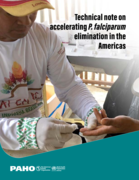
This technical note provides guidance on actions to accelerate P. falciparum elimination in areas close to achieving this goal without compromising unified malaria elimination efforts (P. vivax - P. falciparum), while contributing to the country's ultimate goal of eliminating malaria overall.

This training module on malaria case management has been developed to support the staff involved in malaria control and elimination programmes in the effective organization of malaria diagnosis and case management services
Measles is one of the most contagious diseases for humans. It is caused by a paramyxovirus virus, manifesting as a febrile rash illness. The incubation period for measles usually is 10–14 days (range 7–23 days) from exposure to symptom onset. Initial symptoms (prodrome) generally consist of feve
...
r, malaise, cough, conjunctivitis, and coryza. The characteristic maculopapular rash appears two to four days after onset of the prodrome. Patients are usually contagious from about four days before rash onset until four days after its appearance.
more
