
Filter
1503
Text search:
pharmaceutical
needs
Featured
144
404
Language
Document type
707
317
248
82
81
20
20
11
5
5
5
2
Countries
68
64
62
60
47
41
39
37
34
31
23
22
21
21
20
19
18
18
18
17
16
16
15
14
14
12
11
11
10
10
9
8
7
7
6
6
6
6
6
5
5
5
4
4
4
4
4
4
3
3
3
3
3
3
3
3
3
3
3
2
2
2
2
2
2
2
2
2
2
2
2
2
2
2
1
1
1
1
1
1
1
1
1
1
1
1
1
1
1
1
1
1
1
1
1
1
1
Authors & Publishers
Publication Years
Category
653
91
80
71
36
25
13
2
Toolboxes
149
146
116
88
67
49
39
33
31
29
29
28
24
24
22
22
14
12
11
7
6
6
4
3
2

Insufficient funding is hindering the achievement of malaria elimination targets in Africa, despite the pressing need for increased investment in malaria control. While Western donors attribute their inaction to financial constraints, the global health community has limited knowledge of China’s ex
...
Each year since 2007, G-FINDER has provided policy-makers, donors, researchers and industry with a comprehensive analysis of global investment into research and development of new products to
prevent, diagnose, control or cure neglected diseases in low- and middle-income countries, making it the go
...

The Council was established in late 2020 by Dr Tedros Adhanom
Ghebreyesus (Director-General, WHO) to provide new economic thinking – reassessing how health and wellbeing are valued, produced and distributed across the economy. An all-female group of 10 distinguished economists and area experts, t
...

PLOS Glob Public Health 3(7): e0001132. https://doi.org/10.1371/journal.
pgph.0001132
This paper proposes a framework for strategic communications for malaria governance that involves five key elements: knowing the audience, defining the message, designing a medium, identifying a messenger, and
...

4th edition, Reference Manual

The National Strategic Plan for Malaria Elimination 2021–2025 outlines Bangladesh’s roadmap to achieve zero indigenous malaria cases by 2030, with an interim goal to reduce transmission to near-zero levels by 2025. The strategy builds upon earlier successes in malaria control and shifts focus to
...

The framework recommends expanded coverage of malaria diagnostic and treatment services, intensified vector control to drive down transmission, strengthened malaria surveillance, and increased transborder collaboration, especially in terms of efforts to control the sale and use of artemisinin monoth
...

The National Strategic Plan on Malaria Prevention and Elimination Period 2021 – 2025 seeks to build on the previous national successes of the National Institute of Malariology, Parasitology, and Entomology (NIMPE) while addressing current challenges to reduce the overall burden of malaria in the S
...

Malaria remains a significant public health concern in the SADC region, accounting for 20% of childhood deaths, as well as prompting numerous outpatient visits and hospitalisations. Around three-quarters of the population, including 35 million children under the age of five and 8.5 million pregnant
...

This Toolkit for ensuring rights-based and ethical use of digital technologies in HIV and health programmes is derived from the comprehensive UNDP Guidance on the rights-based and ethical use of digital technologies in HIV and health programmes document. The foundational UNDP Guidance document outli
...

This document, with a focus on the built environment and health care facilities, intends to guide the audience in preparing for and responding to SARI pandemics caused by existing and novel pathogens. It provides technical guidance on designing, establishing, and managing health care facilities for
...

Building true health security in a global age. Findings and recommendations of the Global Council. In landmark findings based on two years of research and convenings around the world, the new report shows that high levels of inequality are linked to outbreaks becoming pandemics and that inequality i
...

Operational requirements for implementing WHO recommendations in digital systems. 2nd edition.
To ensure that countries can effectively benefit from digital health investments, “digital adaptation kits” (DAKs) are designed to facilitate the accurate reflection of WHO’s clinical, public health
...
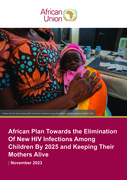
The adopted pillars for the AEVT Plan are a) early testing among children exposed to HIV, syphilis and HBV; b) closing the treatment gap among PBFW and children exposed to HIV, syphilis and HBV; c) prevention of new HIV, syphilis and HBV infections among PBFW; and d) breaking down barriers to access
...

This report examines how clinical trials contribute to environmental impacts and outlines key considerations for integrating environmental sustainability into trial design, conduct and oversight. It explores the carbon footprint and resource use associated with clinical research activities – inclu
...

The document “Pandemic Planning Response Guide” provides guidance for organizations on how to prepare for, respond to, and recover from a pandemic. It explains what a pandemic is and emphasizes the importance of advance planning to reduce disruptions to operations. The guide presents a structure
...

The purpose of this guide is to offer recommendations for improving the implementation of non‑pharmacological public health measures during the COVID-19 response and compliance with these measures by population groups in situations of vulnerability. This requires determining the main barriers to i
...
The Pocket Guide to Managing Contraceptive Supplies addresses one of
the most important components of any program that provides family
planning services—the logistics system that manages the delivery,
quality, and storage of contraceptive supplies. These supplies are
essential; without them, f
...
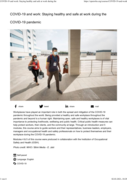
Workplaces have played an important role in both the spread and mitigation of the COVID-19 pandemic throughout the world. Being provided a healthy and safe workplace throughout the pandemic and beyond is a human right. Maintaining open, safe and healthy workplaces is of vital importance to protectin
...
The pre-clinical pipeline shows more innovation and diversity, with 252 agents being developed to treat WHO priority pathogens.
However, these products are in the very early stages of development and still need to be proven effective and safe. The optimistic scenario, the report indicates, is for
...
