
Filter
2250
Text search:
coverage
and
inclusion
Featured
199
669
Language
2210
48
33
19
15
11
9
3
3
2
2
2
2
2
2
2
1
1
1
1
1
1
1
1
1
1
1
1
1
1
Document type
1112
501
271
148
144
26
25
19
2
1
1
Countries
143
78
74
69
67
51
45
44
42
42
41
38
38
34
32
30
30
27
27
23
23
22
18
17
16
16
15
15
15
14
14
14
13
13
12
10
10
9
9
9
9
8
7
7
7
7
7
6
6
6
6
6
5
5
5
5
5
5
5
5
4
4
4
4
3
3
3
3
3
3
3
3
2
2
2
2
2
2
2
2
2
2
1
1
1
1
1
1
1
1
1
1
1
1
1
1
1
1
1
1
1
1
1
1
1
1
1
1
1
1
1
1
1
Authors & Publishers
391
77
75
72
64
42
31
26
25
23
19
15
15
13
12
11
11
11
9
9
9
9
8
8
8
8
7
7
7
7
7
7
6
6
6
6
6
6
6
6
6
6
6
6
5
5
5
5
5
5
5
5
5
5
5
5
4
4
4
4
4
4
4
4
4
4
4
4
4
4
4
4
4
4
4
4
4
4
4
4
3
3
3
3
3
3
3
3
3
3
3
3
3
3
3
3
3
3
3
3
3
3
3
3
3
3
3
3
3
3
3
3
3
3
3
3
3
3
3
3
3
3
3
3
3
3
3
2
2
2
2
2
2
2
2
2
2
2
2
2
2
2
2
2
2
2
2
2
2
2
2
2
2
2
2
2
2
2
2
2
2
2
2
2
2
2
2
2
2
2
2
2
2
2
2
2
2
2
2
2
2
2
2
2
2
2
2
2
2
2
2
2
2
2
2
2
2
2
2
2
2
2
2
2
2
2
2
2
2
2
2
2
2
2
2
2
2
2
2
2
2
2
2
2
2
2
2
2
2
2
2
2
2
2
2
2
2
2
2
2
2
2
2
2
2
2
2
2
2
2
2
2
2
2
2
2
2
2
2
1
1
1
1
1
1
1
1
1
1
1
1
1
1
1
1
1
1
1
1
1
1
1
1
1
1
1
1
1
1
1
1
1
1
1
1
1
1
1
1
1
1
1
1
1
1
1
1
1
1
1
1
1
1
1
1
1
1
1
1
1
1
1
1
1
1
1
1
1
1
1
1
1
1
1
1
1
1
1
1
1
1
1
1
1
1
1
1
1
1
1
1
1
1
1
1
1
1
1
1
1
1
1
1
1
1
1
1
1
1
1
1
1
1
1
1
1
1
1
1
1
1
1
1
1
1
1
1
1
1
1
1
1
1
1
1
1
1
1
1
1
1
1
1
1
1
1
1
1
1
1
1
1
1
1
1
1
1
1
1
1
1
1
1
1
1
1
1
1
1
1
1
1
1
1
1
1
1
1
1
1
1
1
1
1
1
1
1
1
1
1
1
1
1
1
1
1
1
1
1
1
1
1
1
1
1
1
1
1
1
1
1
1
1
1
1
1
1
1
1
1
1
1
1
1
1
1
1
1
1
1
1
1
1
1
1
1
1
1
1
1
1
1
1
1
1
1
1
1
1
1
1
1
1
1
1
1
1
1
1
1
1
1
1
1
1
1
1
1
1
1
1
1
1
1
1
1
1
1
1
1
1
1
1
1
1
1
1
1
1
1
1
1
1
1
1
1
1
1
1
1
1
1
1
1
1
1
1
1
1
1
1
1
1
1
1
1
1
1
1
1
1
1
1
1
1
1
1
1
1
1
1
1
1
1
1
1
1
1
1
1
1
1
1
1
1
1
1
1
1
1
1
1
1
1
1
1
1
1
1
1
1
1
1
1
1
1
1
1
1
1
1
1
1
1
1
1
1
1
1
1
1
1
1
1
1
1
1
1
1
1
1
1
1
1
1
1
1
1
1
1
1
1
1
1
1
1
1
1
1
1
1
1
1
1
1
1
1
1
1
1
1
1
1
1
1
1
1
1
1
1
1
1
1
1
1
1
1
1
1
1
1
1
1
1
1
1
1
1
1
1
1
1
1
1
1
1
1
1
1
1
1
1
1
1
1
1
1
1
1
1
1
1
1
1
1
1
1
1
1
1
1
1
1
1
1
1
1
1
1
1
1
1
1
1
1
1
1
1
1
1
1
1
1
1
1
1
1
1
1
1
1
1
1
1
1
1
1
1
1
1
1
1
1
1
1
1
1
1
1
1
1
1
1
1
1
1
1
1
1
1
1
1
1
1
1
1
1
1
1
1
1
1
1
1
1
1
1
1
1
1
1
1
1
1
1
1
1
1
1
1
1
1
1
1
1
1
1
1
1
1
1
1
1
1
1
1
1
1
1
1
1
1
1
1
1
1
1
1
1
1
1
1
1
1
1
1
1
1
1
1
1
1
1
1
1
1
1
1
1
1
1
1
1
1
1
1
1
1
1
1
1
1
1
1
1
1
1
1
1
1
1
1
1
1
1
1
1
1
1
1
1
1
1
1
1
1
1
1
1
1
1
1
1
1
1
1
1
1
1
1
1
1
1
1
1
1
1
1
1
1
1
1
1
1
1
1
1
1
1
1
1
1
1
1
1
1
1
1
1
1
1
1
1
1
1
1
1
1
1
1
1
1
1
1
1
1
1
1
1
1
1
1
1
1
1
1
1
1
1
1
1
1
1
1
1
1
1
1
1
1
1
1
1
1
1
1
1
1
1
1
1
1
1
1
1
1
1
1
1
1
1
1
1
1
1
1
1
1
1
1
1
1
1
1
1
1
1
1
1
1
1
1
1
1
1
1
1
1
1
1
1
1
1
1
1
1
1
1
1
1
1
1
1
1
1
1
1
1
1
1
1
1
1
1
1
1
1
1
1
1
1
1
1
1
1
1
1
1
1
1
1
1
1
1
1
1
1
1
1
1
1
1
1
1
1
1
1
1
1
1
1
1
1
1
1
1
1
1
1
1
1
1
1
1
1
1
1
1
1
1
1
1
1
1
1
1
1
1
1
1
1
1
1
1
1
1
1
1
1
1
1
1
1
1
1
1
1
1
1
1
1
1
1
1
1
1
1
1
1
1
1
1
1
1
1
1
1
1
1
1
1
1
1
1
1
1
1
1
1
1
1
1
1
1
1
1
1
1
1
1
1
1
1
1
1
1
1
1
1
1
1
1
1
1
1
1
1
1
1
1
1
1
1
1
1
1
1
1
1
1
1
1
1
1
1
1
1
1
1
1
1
1
1
1
1
1
1
1
1
1
1
1
1
1
1
1
1
1
1
1
1
1
1
1
1
1
1
1
1
1
1
1
1
1
1
1
1
1
1
1
1
1
1
1
1
1
1
1
1
1
1
1
1
1
1
1
1
1
1
1
1
1
1
1
1
1
1
1
1
1
1
1
1
1
1
1
1
1
1
1
1
1
1
1
1
1
1
1
1
1
1
1
1
1
1
1
1
1
1
1
1
1
1
1
1
1
1
1
1
1
1
1
1
1
1
1
1
1
1
1
1
1
1
1
1
1
1
1
1
1
1
1
1
1
1
1
1
1
1
1
1
1
1
1
1
1
1
1
1
1
1
1
1
1
1
1
1
1
1
1
1
1
1
1
1
1
1
1
1
1
1
1
1
1
1
1
1
1
1
1
1
1
1
1
1
1
1
1
1
1
1
1
1
1
1
1
1
1
1
1
1
1
1
1
1
1
1
1
1
1
1
1
1
1
1
1
1
1
1
1
1
1
1
1
1
1
1
1
1
1
1
1
1
1
1
1
1
1
1
1
1
1
1
1
1
1
1
1
1
1
1
1
1
1
1
1
1
1
1
1
1
1
1
1
1
1
1
1
1
1
1
1
1
1
1
1
1
1
1
1
1
1
1
1
1
1
1
1
1
1
1
1
1
1
1
1
1
1
1
1
1
1
1
1
1
1
1
1
1
1
1
1
1
1
1
1
1
1
1
1
1
1
1
1
1
1
1
1
1
1
1
1
1
1
1
1
1
1
1
1
1
1
1
1
1
1
1
1
1
1
1
1
1
1
1
1
1
1
1
1
1
1
1
1
1
1
1
1
1
1
1
1
1
1
1
1
1
1
1
1
1
1
1
1
1
1
1
1
1
1
1
1
1
1
1
1
1
1
1
1
1
1
1
1
1
1
1
1
1
1
1
1
1
1
1
1
1
1
1
1
1
1
1
1
1
1
1
1
1
1
1
1
1
1
1
1
1
1
1
1
1
1
1
1
1
1
1
1
1
1
1
1
1
1
1
1
1
1
1
1
1
1
1
1
1
1
1
1
1
1
1
1
1
1
1
1
1
1
1
1
1
1
1
1
1
1
1
1
1
1
1
1
1
1
1
1
1
1
1
1
1
1
1
1
1
1
1
1
1
1
1
1
1
1
1
1
1
1
1
1
1
1
1
1
1
1
1
1
1
1
1
1
1
1
1
1
1
1
1
1
1
1
1
1
1
1
1
1
1
1
1
1
1
1
1
1
1
1
1
1
1
1
1
1
1
1
1
1
1
1
1
1
1
1
1
1
1
1
1
1
1
1
1
1
1
1
1
1
1
1
1
1
1
1
1
1
1
1
1
1
1
1
1
1
1
1
1
1
1
1
1
1
1
1
1
1
1
1
1
1
1
1
1
1
1
1
1
1
1
1
1
1
1
1
1
1
1
1
1
1
1
1
1
1
1
1
Publication Years
795
1317
132
5
1
Category
889
169
165
159
138
28
10
Toolboxes
167
150
136
99
94
84
82
80
73
57
54
52
50
48
39
35
33
29
22
21
14
10
5
5
4
1

The Malaria Ministerial Conference, co-hosted by WHO and the Government of Cameroon on 6 March 2024, brought together more than 400 stakeholders, including Ministers of Health and senior representat
...
ives from the African countries hardest hit by malaria, global health leaders, scientists, civil society and other partners. The pivotal meeting sought to leverage political commitment, scientific innovation and community engagement to reshape the trajectory of malaria control in high burden African countries, and beyond.
At the end of the meeting and in the weeks that followed, Ministers of Health from the 11 “High Burden High Impact” African countries (Burkina Faso, Cameroon, Democratic Republic of the Congo, Ghana, Mali, Mozambique, Niger, Nigeria, Sudan, Uganda and United Republic of Tanzania) signed the Yaoundé Declaration, pledging their “unwavering commitment” to the principle that “no one should die from malaria given the tools and systems available.” Success in reducing malaria morbidity and mortality will hinge on efforts by countries to translate this political commitment into actions and resources that will save lives.
more

Rwanda Malaria Strategic Plan 2020–2024
Ministry of Health, Rwanda; Rwanda Biomedical Centre (RBC)
Ministry of Health, Republic of Rwanda
(2020)
C2
The Rwanda Malaria Strategic Plan 2020–2024 outlines Rwanda’s national strategy to reduce malaria morbidity and mortality by at least 50% compared to 2019 levels. The vision is a malaria-free Rwanda contributing to socioeconomic development.
Th
...
e plan includes strengthening prevention through long-lasting insecticide-treated nets, indoor residual spraying, and larval source management; ensuring universal access to testing and treatment; improving surveillance and data use; and enhancing program management, coordination, and financing. It also emphasizes community engagement and behavior change to ensure at least 85% of the at-risk population adopts protective practices.
The strategy builds on past lessons, involves multi-sectoral collaboration, and aligns with global malaria goals. It highlights equity, quality services, and evidence-based interventions as guiding principles, aiming to mobilize national and international resources for sustained impact.
more

The objective of this guideline is to present the complete set of all WHO recommendations and best practice statements relating to abortion. While legal, regulatory, policy and service-delivery cont
...
exts may vary from country to country, the recommendations and best practices described in this document aim to enable evidence-based decision-making with respect to quality abortion care.
more
The INEE Minimum Standards Handbook is the only global tool that articulates the minimum level of educational quality and access in emergencies through to recovery. The Minimum Standards express a commitment that all individuals—children, youth
...
and adults—have a right to education.
There are different languages available: Arabic, Azerbajan, Bahsa Indonesia, Bengali, Bosnian, Coratian, Serbian, Chinese, English, French, Japanese, Krygyz, Nepali, Pashto, Portuguese, Russian, Spanish, Urdu, Turkish, Vietnamese
more
In recent years, high prices of pharmaceutical products have posed challenges in high- and low-income countries alike. In many instances, high prices of pharmaceutical products have led to significant financial hardship for individuals
...
and negatively impacted on healthcare systems’ ability to provide population-wide access to essential medicines.
Pharmaceutical pricing policies need to be carefully planned, carried out, and regularly checked and revised according to changing conditions. Strong, well-thought-out policies can guide well-informed and balanced decisions to achieve affordable access to essential health products.
This guideline replaces the 2015 WHO guideline on country pharmaceutical pricing policies, revised to reflect the growing body of literature since the last evidence review in 2010. This update also recognizes country experiences in managing the prices of pharmaceutical products.
more

Many low-resource settings have a shortage of physicians and health workers. (1) In order to provide patient-centred continuous care more effectively, primary care systems can include team-based care strategies in their clinic workflows
...
and protocols. Team-based care uses multidisciplinary teams (which may involve new staff, or the shifting of tasks among existing staff). Teams can include patients themselves, primary care physicians, and other allied health professionals, such as nurses, pharmacists, counsellors, social workers, nutritionists, community health workers, or others. Teams reduce the burden on physicians by utilizing the skills of trained health workers. Strong evidence shows that team-based care is effective in improving hypertension control among patients in a cost-effective way. (2) Some amount of task shifting/team-based care is already taking place in many settings; this module provides further guidance on how to maximize this approach for greater impact.
more

Adapting community-led approaches . Three out of 10 people in urban areas do not use improved sanitation facilities, and one out of 10 people are forced to practise open defecation. Still higher proportions do not have access to safely managed sanit
...
ation facilities, where the fecal sludge
is contained and either left in situ or safely emptied, transported, and delivered to a treatment plant.
more
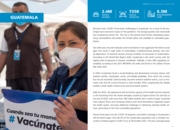
Recovery from COVID-19 has been challenging in Guatemala. As a result of the prolonged socio-economic impact of the pandemic, the average poverty rate nationwide has increased by almost 5%. This rise in the poverty level further exacerbates preexisting vulnerabilities
...
and erodes the limited safety nets available to vulnerable populations. Year after year, recurrent disasters and humanitarian crises aggravate the historic social gaps that result in high levels of vulnerability, multidimensional poverty, and overall deprivation of essential services among hundreds of thousands of Guatemalans. According to the World Risk Report 2020, Guatemala is the tenth country with the highest level of exposure to disaster worldwide. Globally, it ranks 28th regarding vulnerability according to the 2021 INFORM’s risk index and 62nd in the Global Climate Risk Index 2021.
In 2020, Guatemala faced a record-breaking and devastating hurricane season with extreme rainfall, catastrophic winds, and deadly landslides, from which the country has not yet recovered. Unfortunately, recurrent extreme weather events, such as Hurricane Julia that hit Central America in early October 2022, progressively but deeply eroded a weak health infrastructure and local health systems.
more

The ongoing COVID-19 pandemic has shown that public financial management (PFM) should be an integral part of the response. Effectiveness in financing the health response depends not only on the level of funding but also on the way public funds are allocated
...
and spent, this is determined by the PFM rules, and how money flows to health service providers. So far, early assessments have shown that PFM systems ranged from being a fundamental enabler to acting as a roadblock in the COVID-19 health response. While service delivery mechanisms have been extensively documented throughout the pandemic, the underlying PFM mechanisms of the response also merit attention. To highlight the importance of PFM in health emergency contexts, this rapid review analyses various country PFM experiences and identifies early lessons emerging from the financing of the health response to COVID-19. The assessment is done by stages of the budget cycle: budget allocation, budget execution, and budget oversight. Identifying lessons from the varying PFM modalities used to finance the response to COVID-19 is fundamental both for health policy-makers and for finance authorities to prepare for future health emergencies.
more
The 2021 Global monitoring report on financial protection in health shows that before the COVID-19 pandemic, the world was off-track to reduce financial hardship due to health expenditures because trends in catastrophic health spending were going in the wrong direction
...
and the number of people incurring impoverishing health spending remained unacceptably high (Chapter 1). Chapter 2 summarizes emerging evidence on the consequence of the pandemic and the related macroeconomic and fiscal crisis that points to the likely worsening of financial protection for households, particularly as a result of declining income and consumption, along with rising poverty and inequality
more

The World Heart Federation (WHF) has been advocating globally for stronger
legislation and policy regarding cardiovascular disease (CVD) for many years. Now, as focus shifts from global to national progress, we call on members
...
and colleagues to advocate for greater action on CVD in your local settings. This ‘Road to 2018 Toolkit’ provides World Heart Federation members with information
and specific, practical tools to support national CVD advocacy, especially around the United Nations High-Level Meeting on NCDs in 2018.
more
IDMC's Global Report on Internal Displacement (GRID) is the authoritative source for data and analysis on the state of internal displacement for the previous year.
- Twenty-two joint integrated rapid response mechanism (IRRM) missions were conducted in 11 counties and reached 305,887 people including 65,432 children under 5 years of age.
- UNICEF’s Integrated Community Mobilization Network reached 345,2 ... 19 households (total population 2.1 million) advocating for child rights focused on child survival, birth notification, education and protection. Three million people have been reached with advocacy and life-saving messages through radio and community engagement activities, including activities focused on youth and faith leaders.
- On 27 June, discussions between President Salva Kiir and former First Vice President Riek Machar in Khartoum culminated in agreement to a permanent ceasefire and the opening of humanitarian corridors, effective 30 June. more
- UNICEF’s Integrated Community Mobilization Network reached 345,2 ... 19 households (total population 2.1 million) advocating for child rights focused on child survival, birth notification, education and protection. Three million people have been reached with advocacy and life-saving messages through radio and community engagement activities, including activities focused on youth and faith leaders.
- On 27 June, discussions between President Salva Kiir and former First Vice President Riek Machar in Khartoum culminated in agreement to a permanent ceasefire and the opening of humanitarian corridors, effective 30 June. more
These guidelines will assist the ICMR institutions/ centers/ Hqrs. by providing information on the policies, principles and approaches which should be followed in carrying out procurement of goods and
...
services at their respective institute/ center/ Hqrs.
more
The Committee examined the clinical development of Ebola virus vaccines and conducted an inventory of available data on their safety. It also reviewed 3 generic issues: updating a global strategy on vaccine saf
...
ety, use of a network of distributed data to monitor the safety of vaccines and case studies of communication about the safety of human papillomavirus (HPV) vaccines.
Weekly epidemiological record/Relevé épidémiologique hebdomadaire 12 JULY 2019, 94th YEAR / 12 JUILLET 2019, 94e ANNÉENo 28, 2019, 94, 309–316
more

Background paper 9
The Independent Panel for Pandemic Preparedness and Response
May 2021
Road safety is an issue that does not receive anywhere near the attention it deserves – and it really is one
of our great opportunities to save lives around the world

Global Report on Food Crises 2023
recommended
The Global Report on Food Crises (GRFC) 2023 highlights that the number of people experiencing high levels of acute food insecurity and requiring urgent food and livelihood assistance increased for
...
the fourth consecutive year in 2022. Over a quarter of a billion people were estimated to face acute hunger, with economic shocks and the Ukraine war contributing to the increase. In 2022, around 258 million people across 58 countries and territories faced acute food insecurity at crisis or worse levels (IPC/CH Phase 3-5), up from 193 million people in 53 countries and territories in 2021.
more
Background:Neonatal mortality accounts for 43% of global under-five deaths and is decreasing more slowly than maternal or child mortality. Donor funding has increased for maternal, newborn, and chil
...
d health (MNCH), but no analysis to date has disaggregated aid for newborns. We evaluated if and how aid flows for newborn care can be tracked, examined changes in the last decade, and considered methodological implications for tracking funding for specific population groups or diseases. MethodsandFindings:We critically reviewed and categorised previous analyses of aid to specific populations, diseases, or types of activities. We then developed and refined key terms related to newborn survival in seven languages and searched titles and descriptions of donor disbursement records in the Organisation for Economic Co-operation and Development’s Creditor Reporting System database, 2002–2010. We compared results with the Countdown to 2015 database of aid for MNCH (2003–2008) and the search strategy used by the Institute for Health Metrics and Evaluation. Prior to 2005, key terms related to newborns were rare in disbursement records but their frequency increased markedly thereafter. Only two mentions were found of ‘‘stillbirth’’ and only nine references were found to ‘‘fetus’’ in any spelling variant or language
more
Tax capacity—the policy, institutional, and technical capabilities to collect tax revenue—is part of a deeper process of state building that is essential for achieving the sustainable development goals. This Staff Discussion Note shows that deve
...
loping countries have made some progress in revenue mobilization during the past decades, but that much more is needed. It finds that a staggering 9 percentage-point increase in the tax-to-GDP ratio is feasible through a combination of tax system reform and institutional capacity building. Achieving this calls for a holistic and institution-based approach that focuses on improving policy, administration, and legal implementation of core taxes. The note offers practical lessons and guidance, based on IMF capacity-building experience in this area.
more
