
Filter
2878
Text search:
Health
Care
without
Harm
Featured
Recommendations
328
New Publications
640
Language
Document type
No document type
1525
Guidelines
456
Studies & Reports
433
Manuals
224
Strategic & Response Plan
98
Training Material
67
Fact sheets
43
Situation Updates
15
Infographics
6
Brochures
5
Resource Platforms
2
Online Courses
2
App
1
Countries / Regions
Global
135
India
125
Western and Central Europe
65
Kenya
59
Syria
49
South Africa
47
Ukraine
45
Uganda
41
Nepal
38
Nigeria
34
Myanmar / Burma
34
Ethiopia
32
Bangladesh
31
Latin America and the Carribbean
29
Zambia
28
Tanzania
28
Sierra Leone
27
Namibia
25
Eastern Europe
21
Philippines
20
South–East Asia Region
20
Africa
20
Asia
19
Liberia
18
Ghana
17
South Sudan
16
Indonesia
16
Malawi
14
Rwanda
13
Congo, Democratic Republic of
12
Yemen
12
Germany
11
Lebanon
11
Eastern Europe and Central Asia
11
Cambodia
10
East and Southern Africa
10
Middle East and North Africa
10
Russia
10
Afghanistan
9
West and Central Africa
9
Vietnam
9
Zimbabwe
8
Pakistan
8
Jordan
8
Venezuela
8
Tajikistan
8
USA
7
Thailand
7
Lesotho
7
Haiti
6
Mozambique
6
Western Pacific Region
6
Iraq
5
Colombia
5
Botswana
5
Laos
5
Moldova
5
Georgia
5
Central African Republic
4
Brazil
4
Greece
4
Sri Lanka
4
Albania
4
United Kingdom
4
Guinea
3
Senegal
3
Turkey
3
China
3
Sudan
3
North Macedonia
3
Mexico
3
Poland
3
Iran
3
Kyrgyzstan
3
Somalia
2
Malaysia
2
Benin
2
Eswatini/ Swaziland
2
Serbia
2
Hungary
2
Croatia
2
Fiji
2
Palestine
2
Canada
2
Romania
2
Japan
2
Portugal
2
Spain
2
Morocco
1
Cameroon
1
Egypt
1
Gambia
1
Ireland
1
Singapore
1
Papua New Guinea
1
Argentina
1
Burundi
1
Ecuador
1
Libya
1
Guatemala
1
Madagascar
1
Chile
1
Bhutan
1
Armenia
1
Southern Africa
1
Qatar
1
Estonia
1
Lithuania
1
Uzbekistan
1
Kazakhstan
1
North America
1
Turkmenistan
1
Jamaica
1
Norway
1
Azerbaijan
1
Belarus
1
Bosnia and Herzegovina
1
Latvia
1
Authors & Publishers
Publication Years
Category
Countries
705
Key Resources
237
Women & Child Health
233
Clinical Guidelines
225
Public Health
143
Capacity Building
80
Pharmacy & Technologies
24
Toolboxes
Mental Health
460
HIV
356
COVID-19
212
Conflict
125
Caregiver
114
TB
104
Refugee
102
Planetary Health
99
Disability
89
Pharmacy
73
Global Health Education
56
AMR
49
Ebola & Marburg
44
Rapid Response
42
Specific Hazards
36
Natural Hazards
34
NCDs
30
2.0 Rapid Response
29
NTDs
28
Health Financing Toolbox
22
Social Ethics
19
Malaria
17
Polio
11
Zika
11
Cholera
9
South Sudan
1
Water, sanitation, hygiene, and waste management for SARS-CoV-2, the virus that causes COVID-19
recommended
Updated Interim guidance 29 July 2020
The provision of safe water, sanitation and waste management and hygienic conditions is essential for preventing and for protecting human health during all infectious disease outbreaks, including of coronavirus
...

The Ideal Clinic manual has been developed to assist managers at various levels of healthcare service provision to correctly interpret and understand the requirement for achieving the elements as depicted in the Ideal Clinic framework/dashboard. It can therefore be regarded as a reference document w
...
A guide for Regional Workshop and Hospital Technicians
This report reviews and analyses the Affordable Medicines Programme, which was introduced in Ukraine in April 2017 to provide patients with improved access to 23 outpatient medicines for the treatment of chronic noncommunicable diseases. The evaluation combines both quantitative and qualitative anal
...

This Implementation Kit (I-Kit), developed by the Health Communication Capacity Collaborative (HC3), helps national and local stakeholders to design country-specific social and behavioural change communication (SBCC) campaigns that address the threa
...

Offering additional pre-exposure prophylaxis (PrEP) choices has the potential to increase uptake and effective use of PrEP, and of HIV prevention overall, as it allows people to choose a method that they prefer.
In this guideline, WHO recommends an offering long-acting injectable lenacapavir (LEN
...

Guidelines on lenacapavir for HIV prevention and testing strategies for long-acting injectable pre-exposure prophylaxis. Web Annex B

This publication provides guidance for planning country-specific programming to achieve the triple elimination of mother-to-child (or vertical) transmission of HIV, syphilis and hepatitis B virus. It is based on the WHO Triple Elimination Framework, which promotes an integrated, person-centred appro
...
This operational guidance provides a structured approach to support countries in sustaining priority services for HIV, viral hepatitis and sexually transmitted infections in the context of reduced external funding. The guidance is intended for national governments, public
...

WHO guidelines for clinical management of arboviral diseases: dengue, chikungunya, Zika and yellow fever
recommended
The new WHO guidelines provide clinical management recommendations for four of the most widespread arboviruses affecting humans: dengue, chikungunya, Zika, and yellow fever.
An integrated approach is vital, as these four diseases often present with similar symptoms, especially in the early stages
...

WHO consolidated guidelines on tuberculosis: Module 6: tuberculosis and comorbidities, 2nd ed
recommended
Addressing TB comorbidities and risk factors is central to the World Health Organization (WHO) End TB Strategy. These guidelines consolidate the latest WHO recommendations on TB and key comorbidities. The guidelines are a living document and will in
...

Building on the WHO guidelines for disclosure to children up to age 12 in 2011, this implementation guidance provides evidence on existing interventions that support children and adolescents living with HIV in the process of disclosure. It includes interventions that focuses on safe disclosure, as w
...

Operational Guidance. This operational guidance provides a structured approach to support countries in sustaining priority services for HIV, viral hepatitis and sexually transmitted infections in the context of reduced external funding. The guidance is intended for national governments, public
...

Developed through broad and inclusive consultation, and aligned with the WHO Global Health Sector Strategies and the Sustainable Development Goals, the framework promotes a people-centred approach and antimicrobial stewardship across 5 key domains:
...
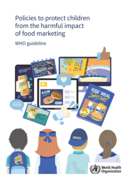
Children continue to be exposed to powerful food marketing, which predominantly promotes foods high in saturated fatty acids, trans-fatty acids, free sugars and/or sodium and uses a wide variety of marketing strategies that are likely to appeal to children. Food marketing has a harmful impact on chi
...
