
Filter
1769
Text search:
women
empowerment
Featured
114
566
Language
Document type
1113
300
124
83
76
32
23
8
5
2
1
1
1
Countries
109
77
69
60
55
55
51
49
44
42
40
39
38
34
34
33
31
29
29
26
23
21
18
18
18
15
13
13
11
11
11
11
11
11
11
9
9
9
9
8
8
7
7
6
6
6
6
6
6
5
5
5
4
4
4
4
3
3
3
3
3
3
3
3
3
3
2
2
2
2
2
2
2
2
2
1
1
1
1
1
1
1
1
1
1
1
1
1
1
1
1
1
1
1
1
1
Authors & Publishers
Publication Years
Category
897
146
104
85
41
28
Toolboxes
177
145
93
73
61
54
46
44
40
35
26
26
20
16
15
12
10
5
5
4
4
3
3
3
1
1
Female Genital Mutilation in Mali: Insights from a statistical analysis Mali is home to nearly 8 million girls and women who have experienced FGM. Overall, 89 per cent of girls and women aged 15 to
...
Over 400,000 girls and women in Guinea-Bissau alive today have experienced FGM. Overall, 52 per cent of girls and women aged 15 to 49 years have undergone the practice, varying from 96 per cent in G
...
Kenya is home to 4 million girls and women who have experienced FGM. Overall, 21 per cent of girls and women aged 15 to 49 years have undergone the practice, varying from 98 per cent in the North Ea
...

Census data shows that Myanmar can harness a double dividend – both youth and gender. This year’s annual report provides many facets of the journey to gender equality. It tells a story of widening horizons for women and girls who are capable in
...

Women, girls and marginalized groups who are largely dependent on natural resources for livelihoods are among the hardest hit by extreme weather patterns. These weather patterns limit their access to food, water, shelter, education and access to ess
...
Monitoring the situation of children and women
DHS Further Analysis Reports No. 111
This study is a theory-driven analysis of the socio-demographic determinants of maternal care seeking in Kenya. Specifically, it examines predisposing, enabling, and need factors potentially associated with use of antenatal care (ANC), health facility delive ...
This study is a theory-driven analysis of the socio-demographic determinants of maternal care seeking in Kenya. Specifically, it examines predisposing, enabling, and need factors potentially associated with use of antenatal care (ANC), health facility delive ...
Every Newborn: an action plan to end preventable deaths is a roadmap for change. It takes forward the Global Strategy for Women’s and Children’s Health by focusing specific attention on newborn health and identifying actions for improving their
...

Despite improvements in recent years, the prevalence of undernutrition among women and children in Myanmar remains unacceptably high. One in three children are stunted and about 8% are acutely malnourished. Micronutrient deficiencies are common amon
...
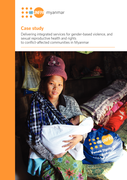
Women and girls have specific needs that are often ignored during crisis. While on the run or while living in shelters, women and girls continue to become pregnant, but they often lack access to bas
...
This document adopts a health determinants framework for examining the evidence related to women’s poor mental health. From this perspective, public policy including economic policy, socio-cultural and environmental factors, community and social s
...
Women have less access to the development services and support – such as adequate healthcare, education and
modern technology – that make people more resilient to climate change and other shocks and stressors.2
...

The African Regional Convening of the Global Initiative to Support Parents (GISP) stimulated the interest or engagement of almost 1500 individuals from 742 unique organizations in the fields of health, education, social welfare, women’s affairs, e
...

The family-centered approach to reaching every child living with HIV. This report examines the structural barriers impeding equitable access to HIV testing, treatment initiation and long-term adherence – essential elements for sustaining health and well-being for children, adolescents and young
...
A Booklet on Women and HIV/AIDS for Auxiliary Nurse Midwives (ANMs) Accredited Social Health Activists (ASHAs) Anganwadi Workers (AWWs) and Members of Self-help Groups (SHGs)
Version 2
Version 2

Nearly 800 women die every day from preventable maternal causes, and in 2022 alone, an estimated 2.3 million newborns died. For every maternal death, countless more women endure life-altering injuri
...
Humanitarian crises can affect women, men, girls and boys in radically different ways. To address the different impacts of conflict and disasters on each group and promote the potential for positive transformation of gender norms, Oxfam calls for hu
...
Abuses against Women and Girls with Psychosocial or Intellectual Disabilities in institutions in India
Violence Against Women and HIV/AIDS Prevention and Treatment

This publication offers practical advice on implementing HIV and STI programmes for transgender people, with a focus on transgender women, aligned with the 2011 Recommendations and the 2014 Key Populations Consolidated Guidelines. It contains exampl
...
