
Filter
168
Text search:
cyanosis
Featured
31
36
Language
Document type
72
57
18
9
7
2
2
1
Countries
26
6
6
5
4
4
3
3
3
2
2
2
2
2
2
2
1
1
1
1
1
1
1
1
1
1
1
1
1
1
1
1
Authors & Publishers
Publication Years
Category
66
46
32
9
5
2
Toolboxes
28
21
6
5
3
3
3
3
3
2
1
1
1
1
1
First published in 2020, this toolkit is intended for clinicians working in acute care, managing adult and paediatric patients with acute respiratory infection, including severe pneumonia, acute respiratory distress syndrome, sepsis and septic shock. The main objective is to provide key tools for us
...

The WHO COVID-19 Clinical management: living guidance contains the Organization’s most up-to-date recommendations for the clinical management of people with COVID-19. Providing guidance that is comprehensive and holistic for the optimal care of COVID-19 patients throughout their entire illness is
...
Updated 2022. This guide addresses the care pathway from presentation of the patient to a health facility to patient discharge. It considers different levels of disease severity, from asymptomatic individuals to critically ill patients. Accounting for variations in the benefits and harms of chest im
...
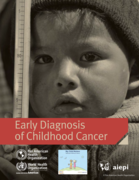
General practitioners and pediatricians must know the signs and
symptoms of possible pediatric cancer.
Birth defects surveillance: quick reference handbook of selected congenital anomalies and infections
This Quick Reference Handbook of Selected Congenital Anomalies and Infections is a companion tool to Birth defects surveillance: a manual for programme managers, and is intended for use by front-line health care professionals who are diagnosing and collecting data on congenital defects and infection
...
This twelfth version of the WHO living guideline now contains 19 recommendations. This latest update provides updated recommendations for remdesivir, addresses the use of combination therapy with corticosteroids, interleukin-6 (IL-6) receptor blockers and Janus kinase (JAK) inhibitors in patients wi
...
The World Health Organization invites clinicians and patients to collect information on COVID-19 in a systematic way and contribute clinical data to the WHO Clinical Platform to expand our knowledge on Post-COVID-19 condition, and support patient care and public health interventions.
WHO’s Post
...
Cognizant of the need for standardization of the response for COVID-19, the Federal Ministry of Health prepared this national guideline in an effort to contain the epidemic before it overwhelms the health care facilities. This national guideline is expected to guide policy makers and h
...
These guidelines for the prevention and management of cardiovascular diseases are a critical ingredient for streamlining care across the entire health services provision continuum. They are a strategic component in achieving universal health coverage, securing affordable heal
...

In resource restriced countries
In resource restriced countries
This brief summarizes current evidence and guidance for maintaining safe and effective care across the spectrum of maternal, newborn and infant care while protecting mother and child and health care providers during COVID-19. Furthermore, implications of the principle of “do no harm” are reviewe
...
Handbook of Hospital Care for Newborn Infants
recommended
Updated June 2021
Guide for clinical case management and infection prevention and control during ameasles outbreak. This guide has been developed to reduce the high morbidity and mortality seen in some of the current outbreaks of measles. This short guide outlines practical clinical care interventions and is derived
...
Welcome to the World Health Organization pulse oximeter training manual. In many countries pulse
oximetry is mandatory for monitoring patients during anaesthesia. Although pulse oximetry is a simple and reliable technology that can detect low levels of oxygen in the blood, it is only effective if t
...
A living WHO guideline on drugs for covid-19
recommended
BMJ 2020; 370 doi: https://doi.org/10.1136/bmj.m3379
Rapid Recommendation and visual graph. This is the fifth version (update 4) of the living guideline (BMJ 2020;370:m3379). When citing this article, please consider adding the update number and date of access for clarity. The publication of the RE
...
The aim of the SATG was to produce a triage scale for use throughout South Africa. The group was multi-disciplinary and comprised doctors, nurses and paramedics. The result of the SATG’s activities is the South African Triage Scale (SATS), a physiology and symptom based scale which prioritises int
...

The National Guideline for Neonatal Care and Establishment of Neonatal Care Unit aims to provide health workers with all basics and necessary knowledge and skills to provide appropriate care at the most vulnerable period in a newborn’s life. This guideline will be available to all health facilitie
...
