
Filter
466
Text search:
World
Health
Organization
WHO,
IFRC
Featured
Recommendations
94
New Publications
133
Language
Document type
No document type
207
Guidelines
83
Studies & Reports
51
Manuals
49
Strategic & Response Plan
22
Training Material
18
Fact sheets
17
Situation Updates
14
Infographics
3
Resource Platforms
1
Online Courses
1
Countries / Regions
Sierra Leone
19
Global
19
Liberia
17
Guinea
14
Congo, Democratic Republic of
12
Syria
12
Myanmar / Burma
11
Nepal
10
Brazil
10
Western and Central Europe
9
Latin America and the Carribbean
7
Nigeria
6
Uganda
6
South Sudan
6
Bangladesh
6
Ukraine
6
Madagascar
6
Russia
6
Senegal
5
Haiti
5
Philippines
5
Indonesia
5
Mozambique
5
Yemen
5
Middle East and North Africa
5
Eastern Europe and Central Asia
5
Africa
5
Mali
4
Kenya
4
Rwanda
4
West and Central Africa
4
Côte d’Ivoire / Ivory Coast
3
Cambodia
3
Central African Republic
3
Colombia
3
Angola
3
South–East Asia Region
3
Asia
3
Venezuela
3
Vietnam
3
Burkina Faso
2
Guinea-Bissau
2
Ethiopia
2
Cameroon
2
Ghana
2
Togo
2
Zimbabwe
2
Pakistan
2
Afghanistan
2
Lebanon
2
Turkey
2
Gambia
2
Papua New Guinea
2
Benin
2
Laos
2
Moldova
2
Portugal
2
Saudi Arabia
1
Niger
1
India
1
Somalia
1
Iraq
1
Jordan
1
Zambia
1
Chad
1
China
1
Malaysia
1
Malawi
1
Sudan
1
Vanuatu
1
Hungary
1
Croatia
1
Honduras
1
Sri Lanka
1
East and Southern Africa
1
Western Pacific Region
1
Solomon Islands
1
Bhutan
1
Poland
1
North Korea
1
Italy
1
Tajikistan
1
Romania
1
Iran
1
Japan
1
Mauritius
1
Spain
1
Belarus
1
Authors & Publishers
Publication Years
Category
Countries
108
Key Resources
105
Clinical Guidelines
16
Capacity Building
13
Public Health
12
Women & Child Health
11
Toolboxes
COVID-19
114
Ebola & Marburg
52
Rapid Response
33
Natural Hazards
29
Conflict
25
2.0 Rapid Response
19
Mental Health
17
Planetary Health
16
Disability
14
Zika
13
Refugee
12
Cholera
10
Global Health Education
9
TB
7
HIV
4
Malaria
3
Specific Hazards
2
AMR
2
NTDs
2
Polio
1
Typhoon
1
Health Financing Toolbox
1
Table of contents
1: Introdução; 2: Considerações para atendimento em situação de pico de demanda em serviços de saúde e alocação de equipes médicas de emergência; 3: Equipes médicas de emergência; 4: Níveis de resposta em situação de pico de demanda por cuidados médicos; 5: Expan
...
Esta nota de instrução resume as principais considerações em Saúde Mental e Apoio Psicossocial (SMAPS) referen-tes ao novo surto de coronavírus (COVID-19). Este documento foi atualizado pela última vez em 17 de março de 2020.

The response to a cholera outbreak must focus on limiting mortality and reducing the spread of the disease. It should be comprehensive and multisectoral, including epidemiology, case management, water, sanitation and hygiene, logistics, community engagement and risk communication. All efforts must b
...
Reduce Risk, Protect Health Facilities, Save Lives
Women, the elderly, adolescents, youth, and children,
persons with disabilities, indigenous populations, refugees,
migrants, and minorities experience the highest degree
of socio-economic marginalization. Marginalized people
become even more vulnerable in emergencies.1 This is due
to factors su
...

The document contains preliminary report on all aspects of WHO’s response in the Ebola outbreak. WHO Member States will discuss the report at the sixty-eighth
...
Guidelines for social mobilization
TB and poverty; TB and children; TB and women; TB, migrants and refugees; TB and prisons
WHO/CDS/STB/2001.9
Original: English; Distribution: Limited
As knowledge on Ebola-related safety measures accumulates, this guidance is provisional. This guide focuses on psychological first aid, which involves humane, supportive and practical help to follow human beings suffering serious crisis events. The guidance has been written for people
...

On August 13, 2024, the Africa CDC declared the mpox outbreak a Public Health Emergency of Continental Security (PHECS). The following day, the WHO declared it a Public
...

Humanitarian emergencies, regardless of type and cause, have a number of common risk factors for communicable diseases inextricably linked to excess risk of morbidity and mortality which can come from vaccine–preventable diseases (VPDs). The reduction of VPDs is a significant aim of public-
...

Access to safe blood and blood products is recognized as one of the key requirements for delivery of modern health care in the journey towards health for all. The foundation of safe and sustainable
...
แนวปฏิบัติในการจัดการความเสี่ยง ดานภาวะฉุกเฉินและความพิการเพื่อสุขภาพ
The present book deals not only with emergency response, but also with measures designed to reduce the impact of disasters on environmental health infrastructure, such as water supply and sanitation facilities. It also aims to strengthen the ability
...
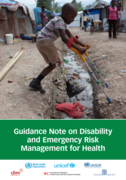
This guidance note is intended primarily for health actors working in emergency and disaster risk management (hereafter 'emergency risk management') at the local, national or international level, and in governmental or nongovernm
...

Medical care for people caught up in armed conflict and other insecure environments saves lives and alleviates suffering. It is one of the most immediate and high priority needs of an affected population and is often the first type of response activated and/or requested by authorities and affected c
...
Strengthening health-system emergency preparedness.

Experience of national TB partnerships
