
Filter
332
Text search:
World
Health
Organization
-
Regional
Office
for
South-East
Asia
Featured
Recommendations
45
New Publications
89
Language
Document type
No document type
152
Studies & Reports
68
Guidelines
60
Manuals
20
Strategic & Response Plan
17
Training Material
4
Situation Updates
3
Fact sheets
3
Resource Platforms
2
Infographics
2
Online Courses
1
Countries / Regions
South–East Asia Region
28
Global
23
India
14
Asia
13
Myanmar / Burma
10
Bangladesh
6
Nepal
5
Western and Central Europe
4
Philippines
3
Western Pacific Region
3
Uganda
2
Cambodia
2
Thailand
2
Congo, Democratic Republic of
1
Syria
1
Tanzania
1
Rwanda
1
Indonesia
1
Sudan
1
Eswatini/ Swaziland
1
Brazil
1
Croatia
1
Sri Lanka
1
Yemen
1
Middle East and North Africa
1
Eastern Europe and Central Asia
1
Other region
1
Africa
1
Venezuela
1
Eastern Europe
1
Tajikistan
1
Russia
1
Kazakhstan
1
Maldives
1
Authors & Publishers
Publication Years
Category
Countries
58
Clinical Guidelines
54
Women & Child Health
29
Public Health
27
Key Resources
22
Capacity Building
9
Pharmacy & Technologies
5
Toolboxes
HIV
37
TB
25
Mental Health
22
NTDs
21
COVID-19
20
Planetary Health
17
AMR
16
Caregiver
15
Rapid Response
13
Global Health Education
8
Disability
7
Pharmacy
6
2.0 Rapid Response
6
Natural Hazards
4
Zika
4
NCDs
4
Polio
3
Conflict
3
Malaria
3
Ebola & Marburg
2
Cholera
2
Refugee
2
Specific Hazards
2
Typhoon
1
Social Ethics
1
Health Financing Toolbox
1
Global concerns: Implications for the future
Child Mental Health Atlas
The objectives of these WHO guidelines are to provide updated evidence- based recommendations for the treatment of persons with hepatitis C infection using, where possible, all DAA-only combinations. The guidelines also provide recommendations on th
...

Mpox continues to affect people around the world. A new framework released today by WHO will guide health authorities, communities and other stakeholders in preventing and controlling mpox outbreaks
...

Cities are uniquely positioned to understand local needs and respond rapidly to changing conditions to safeguard health. These changes require strong city leadership to implement multisectoral, health
...

Skin-related neglected tropical diseases, or “skin NTDs”, are historically neglected because active case detection, individual case management, significant resources and intensive effort are required to control, eliminate and eradicate them. Integrated control and management of skin NTDs offers
...
Networking for Policy Change: TB/HIV Participant’s Guide
WHO/HTM/TB/2007.384b
“TB is too often a death sentence for people with AIDS. It does not have to be this
way.”
-Nelson Mandela, I
...

2016 data
The report was coordinated by Anastasia Pharris and Annemarie Stengaard.
Report review and production support were provided by Andrew J. Amato-Gauci, Mike Catchpole, Denis Coulombier, Masoud Dara, Nedret Emiroglu, Rachel Katterl, Shahin Khasiyev, Valentina Lazdina, Teymur Noori, Marc
...
Advising principles. The purpose of this document is to support competent authorities in charge of IHR implementation to improve national capacities for the prevention, detection and control of events, by strengthening communications and coordinatio
...
A WHO-UNICEF joint statement encouraging greater health commodity supply chain integration for temperature-sensitive pharmaceuticals where appropriate, 19 November 2020
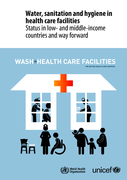
This report presents, for the first time, a global assessment of the extent to which health care facilities provide essential water, sanitation and hygiene (WASH) services. Drawing on data from 54 l
...
It provides selected illustrations and photographs of congenital anomalies that are severe enough to have a high probability of being captured during the first few days following birth
Interim guidance. 12 May 2021. The Continuity of essential health services: Facility Assessment Tool can be used by countries to rapidly assess the capacity of health facilities to maintain the prov
...

This fourth WHO report on neglected tropical diseases (NTDs) reviews the progress made towards achieving the Roadmap targets for 2020, noting the remaining challenges, then looks beyond 2020 to evaluate the changing global
...

Every year, an estimated 15 million babies are born preterm – before 37 weeks of pregnancy. That is more than 1 in 10 live births. Approximately 1 million children die each year worldwide due to complications from their early birth. Those that survive often face a lifetime of ill-
...

The Implementation toolkit for accessible telehealth services provides practical guidance to support governments, industry partners, health service providers and civil society groups in the use and
...

This Teacher’s Guide accompanies the WHO publication Management of wastes from health-care activities . It provides teaching materials and recommendations for a three day training course, designed
...
