
Filter
472
Text search:
Government
of
Nepal
Ministry
of
Education
Department
of
Education
Featured
Recommendations
42
New Publications
168
Language
Document type
No document type
319
Studies & Reports
68
Guidelines
34
Manuals
28
Strategic & Response Plan
13
Situation Updates
3
Training Material
2
Infographics
2
Fact sheets
2
Resource Platforms
1
Countries / Regions
Nepal
131
Global
23
India
22
South–East Asia Region
19
Bangladesh
14
Asia
14
Myanmar / Burma
9
Ethiopia
6
Uganda
6
Tanzania
6
Pakistan
5
Vietnam
5
Nigeria
4
Zambia
4
Malawi
4
Ghana
3
Haiti
3
Afghanistan
3
Kenya
3
Cambodia
3
Thailand
3
Indonesia
3
Sri Lanka
3
Africa
3
Laos
3
Liberia
2
Philippines
2
Somalia
2
South Sudan
2
Jordan
2
Lebanon
2
South Africa
2
Congo, Democratic Republic of
1
Cameroon
1
Zimbabwe
1
Germany
1
Syria
1
China
1
Mozambique
1
Namibia
1
Peru
1
Brazil
1
Serbia
1
Colombia
1
Ecuador
1
Lesotho
1
Mexico
1
Yemen
1
East and Southern Africa
1
West and Central Africa
1
Middle East and North Africa
1
Latin America and the Carribbean
1
Eastern Europe and Central Asia
1
Western and Central Europe
1
Bhutan
1
Eastern Europe
1
Authors & Publishers
Publication Years
Category
Countries
194
Key Resources
42
Women & Child Health
32
Public Health
25
Clinical Guidelines
18
Capacity Building
9
Toolboxes
Disability
51
HIV
29
Mental Health
28
Natural Hazards
17
COVID-19
17
AMR
13
NTDs
13
Conflict
12
Global Health Education
11
Caregiver
11
TB
10
Planetary Health
8
Pharmacy
8
Health Financing Toolbox
7
Refugee
6
2.0 Rapid Response
6
Rapid Response
5
Malaria
5
NCDs
4
Ebola & Marburg
3
Specific Hazards
3
Cholera
1
Polio
1
Typhoon
1
Nepal has made substantial progress in reducing under-five mortality and is on track to achieve Millennium Development Goal 4, but advances in neonatal health are less encouraging. The objectives of
...
No education system is effective unless it promotes the health and well-being of its students, staff and community. These strong links have never been more visible and compelling than in the context
...

WHO guideline on health policy and system support to optimize community health worker programmes
recommended
The guideline uses state-of-the-art evidence to identify effective policy options to strengthen community health worker (CHW) programme performance through their proper integration in health systems and communities.
Successful delivery
...
Review of International, Regional and National Policies and Legal Frameworks that Promote Migrants and Mobile Populations' Access to Health and Malaria Services in the Greater Mekong Subregion (Cambodia, Lao People's Democratic Republic, Myanmar, Th
...
Water, sanitation and hygiene education in schools – WASH in Schools – provides safe drinking water, improves sanitation facilities and promotes lifelong health. WASH in Schools enhances the well-being
...
Making education more inclusive requires schools and education authorities to remove the barriers to education experienced by the most excluded chi
...
The primary audience for the guideline is policy makers and health programme managers of MNCH and immunization programmes in ministries of health where decisions are made and policies created on the
...
Women have less access to the development services and support – such as adequate healthcare, education and
modern technology – that make people more resilient to climate change and other shocks and stressors.2
Women’s unequal access to reso
...
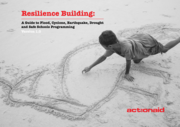
This guidance document is meant to support practitioners working in disaster prone contexts to develop and implement more effective integrated resilience programming. It promotes programming that cuts across different fields of work like rights awar
...

J Glob Health Sci. 2020 Jun;2(1):e3. A group of enzootic and zoonotic protozoan infections, the leishmaniases constitute among the most severely neglected tropical diseases (NTDs) and are found in all continents except Oceania. Representing the most
...

Lessons learned from recent public health events such as the COVID-19 pandemic, Ebola virus disease, Zika virus disease outbreaks, and other public health threats, including earthquakes and floods, have highlighted the need for countries to continuously develop, strengthen, and maintain capacities r
...

On Global Handwashing Day, WHO and UNICEF have released the first-ever global Guidelines on Hand Hygiene in Community Settings to support governments and practitioners in promoting effective hand hygiene outside health care – across households, public spaces and institutions. Framing hand hygiene
...
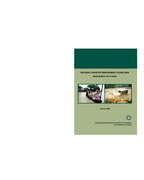
The guidelines are presented in the form of the following chapters:
Chapter 1: Floods status and context
Chapter 2: Institutional framework and financial arrangements
Chapter 3: Flood prevention, preparedness and mitigation
Chapt ...
Chapter 1: Floods status and context
Chapter 2: Institutional framework and financial arrangements
Chapter 3: Flood prevention, preparedness and mitigation
Chapt ...
Building on Nigeria’s Call to Action to Save Newborn Lives, the Federal Ministry of Health (FMoH) has developed the National Strategy and Implementation Plan for Scale-up
...
The Report describes the evaluation of WHO's contribution to the Maternal Health Program in South-East Asia Region. This was an independent evaluation conducted in 2015 by Amaltas, a Delhi based organization. The evaluation highlights the progress i
...
