
Filter
1045
Text search:
Global
Water
Partnership
Central
Africa
Featured
Recommendations
82
New Publications
292
Language
Document type
No document type
578
Studies & Reports
232
Strategic & Response Plan
77
Guidelines
76
Manuals
57
Situation Updates
10
Training Material
9
Fact sheets
5
Resource Platforms
1
Countries / Regions
Global
69
Ethiopia
43
Uganda
38
Zambia
37
Kenya
37
Liberia
36
Sierra Leone
35
Malawi
29
South Africa
25
Nigeria
24
Africa
23
Ghana
22
Tanzania
20
Rwanda
18
India
16
South Sudan
16
Zimbabwe
15
Lesotho
15
Mozambique
14
Namibia
14
West and Central Africa
14
Senegal
13
Congo, Democratic Republic of
13
Central African Republic
13
Middle East and North Africa
11
Syria
10
Guinea
9
East and Southern Africa
9
Bangladesh
8
Asia
8
Yemen
7
South–East Asia Region
7
Burkina Faso
6
Cameroon
6
Nepal
6
Botswana
6
Haiti
5
Somalia
5
Sudan
5
Pakistan
4
Thailand
4
Indonesia
4
Myanmar / Burma
4
Latin America and the Carribbean
4
Afghanistan
3
Cambodia
3
Ukraine
3
Madagascar
3
Western and Central Europe
3
Mali
2
Côte d’Ivoire / Ivory Coast
2
Niger
2
Lebanon
2
China
2
Papua New Guinea
2
Benin
2
Eswatini/ Swaziland
2
Burundi
2
Mexico
2
Western Pacific Region
2
Venezuela
2
Moldova
2
Iran
2
Japan
2
Bosnia and Herzegovina
2
Guinea-Bissau
1
Morocco
1
Saudi Arabia
1
Togo
1
Philippines
1
Iraq
1
Jordan
1
Chad
1
Gambia
1
Malaysia
1
Greece
1
Sri Lanka
1
Eastern Europe
1
Palestine
1
Albania
1
Djibouti
1
Southern Africa
1
Laos
1
Canada
1
Kyrgyzstan
1
Kazakhstan
1
Georgia
1
Vietnam
1
Gabon
1
Turkmenistan
1
Mauritius
1
Tunisia
1
Authors & Publishers
Publication Years
Category
Countries
439
Key Resources
110
Public Health
64
Clinical Guidelines
46
Women & Child Health
46
Capacity Building
11
Pharmacy & Technologies
4
Annual Report MEDBOX
1
Toolboxes
COVID-19
69
Planetary Health
69
Disability
48
HIV
48
AMR
43
Conflict
36
NTDs
36
Global Health Education
35
Ebola & Marburg
33
Refugee
28
Mental Health
27
Rapid Response
24
Natural Hazards
22
TB
21
Health Financing Toolbox
21
2.0 Rapid Response
21
Caregiver
20
Malaria
14
Cholera
9
Polio
6
NCDs
6
Zika
4
Pharmacy
4
Specific Hazards
2

While the full effects of COVID-19 remain unknown, the pandemic continues to profoundly impact regional migration and mobility dynamics, with deep health, social and economic consequences for the most vulnerable, including migrants, displaced populations and their host communities, and returnees.
The National Institute for Transforming India (NITI) Aayog has developed the Composite Water Management Index (CWMI) to enable effective water management in Indian states in the face of extreme
...

This document outlines the plan for a continental cholera prevention and control with the implementation framework for the Cholera IMST, detailing its governance structure, strategic priorities, and operational modalities

Ahead of World Malaria Day, the WHO Global Malaria Programme published a new operational strategy outlining its priorities and key activities up to 2030 to help change the trajectory of malaria trends, with a view to achieving the
...
This report seeks to uncover the extent to which global goals crowd in international financing, inform domestic policy priorities, and navigate progress toward development outcomes in low- and middle-income countries (LICs and MICs). Our report:
Pr
...
2018 monitoring report: current status and strategic priorities
The report sets out the status of women’s, children’s and adolescents’ health, and on health systems and social and environmental determinants. Regional dashboards on 16 key indicators highlight where progress is being made o ...
The report sets out the status of women’s, children’s and adolescents’ health, and on health systems and social and environmental determinants. Regional dashboards on 16 key indicators highlight where progress is being made o ...
The Global vector control response 2017–2030 (GVCR) provides a new strategy to strengthen vector control worldwide through increased capacity, improved surveillance, better coordination and integrated action across sectors and diseases.
In Ma ...
In Ma ...

Today, patient harm due to unsafe care is a large and growing global public health challenge and is one of the
leading causes of death and disability worldwide. Most of this patient harm is avoidable. As countries strive to
achieve universal healt
...
What We Know, What We Don’t Know, and What We Need to Do

2nd edition.
The tool kit provides learning objects and curricular content to support the competencies for those proficiency/trainee levels

With this World Health Day, WHO is drawing attention to a group of diseases that are spread by insects and other vectors, the heavy health and economic burdens they impose, and what needs to be done to reduce these burdens. Many of these diseases have been historically confined to distinct geographi
...
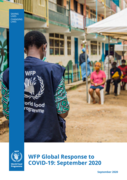
The COVID-19 pandemic is a multiplier of vulnerability, compounding threats to food insecurity, while exposing weaknesses in food and health systems. It is severely undermining the capacity of communities to cope in times of crisis and has become a stress test for political and economic stability.

A discussion paper on the scope of the problem, its drivers, and strategies for moving forward for policy, practice, and research
In many protracted emergencies, the prevalence rates of global acute malnutrition (GAM) regularly exceed the emergency
...
GUIDELINES ON LEPROSY CONTROL IN SOUTH AFRICA | 2011

Cities are uniquely positioned to understand local needs and respond rapidly to changing conditions to safeguard health. These changes require strong city leadership to implement multisectoral, health-relevant policies and public services that engage communities. The response to malaria must be an i
...
