Filter
1504
Text search:
psychological
first
aid
Featured
173
384
Language
Document type
863
203
173
122
45
42
27
18
5
3
1
1
1
Countries
60
55
52
44
41
34
32
32
31
26
25
25
23
20
20
18
18
16
15
14
14
14
13
13
11
11
11
11
11
11
11
10
9
9
9
9
9
8
7
6
6
6
6
6
6
5
5
4
4
4
4
4
4
4
4
3
3
3
3
3
3
3
3
3
3
3
3
2
2
2
2
2
2
2
2
2
2
2
2
1
1
1
1
1
1
1
1
1
1
1
1
1
1
1
1
1
1
1
1
1
1
1
1
1
1
Authors & Publishers
Publication Years
Category
476
144
105
62
57
55
2
1
Toolboxes
301
146
132
98
90
57
49
38
28
27
27
21
17
17
16
12
12
11
8
5
4
3
2
2
2
1
This document is produced by the Humanitarian Country Team and the United Nations Resident
Coordinator’s Office in Mozambique, with the support of the United Nations Office for the Coordination of
Humanitarian Affairs (OCHA). The projects reflected here support the national government. It covers
...
This report serves as a background paper to five short studies Yemeni-international researcher tandems will jointly develop in the course of 2019. It places a particular focus on ‘peace requirements’, a term that seeks to draw attention to the manifold challenges to establishing stab
...
Clinical management standard operating procedures.
Ebola virus disease (EVD) is a life-threatening multisystem illness associated with fever and gastrointestinal (GI) symptoms that frequently leads to hypovolaemia, metabolic acidosis, hypoglycaemia, and multi-organ failure. The prolonged 2013–201
...
You can also register into a free online course
https://www.open.edu/openlearncreate/course/view.php?id=13
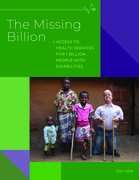
One billion people around the world live with disabilities. This report makes the case that they are being “left behind” in the global community’s work on health. This lack of access not only violates the rights of people with disabilities under international law, but UHC and SDG 3 cannot be a
...
Regional situation analysis, practices, experiences, lessons learned and ways forward.
Health Evidence Network Synthesis Report, No. 47
The increasing number of refugees, asylum seekers and irregular migrants poses a challenge for mental health services in Europe. This review found that these groups are exposed to risk factors for mental disorders before, during and after migration.
...
he WHO Guidelines on Integrated Care for Older People (ICOPE) propose evidence-based recommendations for health care professionals to prevent, slow or reverse declines in the physical and mental capacities of older people. These recommendations require countries to place the needs and preferences of
...
The ICOPE guidance for person-centred assessment and pathways in primary care (ICOPE Handbook) helps community health and care workers put the recommendations outlined in the ICOPE Guidelines into practice. The Handbook assists with setting person-centred goals, screening for loss in a range of doma
...
A systematic review informing a radical transformation of health workforce development

Expert Consensus Validation 2018.
This innovative approach aimed at improving and facilitating the screening, prescribing and monitoring of drug therapy for older patients, is currently being further developed in the area of Clinical Pharmacology at the University of Heidelberg in Mannheim. This ap
...
Ramped-up cancer services could save 7 million lives over the next decade—and addressing huge service gaps between rich and poor countries is key to success, according to this report.
In 2019, over 90% of high-income countries reported that comprehensive cancer treatment services were available
...

Accessed Febr. 6, 2020