
Filter
2396
Text search:
air
quality
Featured
289
604
Language
2314
65
55
44
37
20
20
15
14
11
5
4
4
3
3
3
3
3
3
2
2
2
2
2
2
2
2
2
2
2
2
2
2
2
2
2
1
1
1
1
1
1
1
1
1
1
1
1
1
1
1
1
1
1
1
1
1
1
1
1
Document type
1046
510
384
191
108
55
49
16
16
13
5
2
Countries
174
157
68
56
50
45
41
41
40
36
35
35
34
33
31
26
25
25
24
23
22
21
21
19
19
19
18
16
16
16
15
14
14
12
11
11
9
9
9
8
8
8
8
7
7
7
7
6
6
5
5
5
5
5
4
4
4
4
4
4
4
4
3
3
3
3
3
3
3
3
3
3
3
3
2
2
2
2
2
2
2
2
2
2
2
2
2
2
1
1
1
1
1
1
1
1
1
1
1
1
1
1
1
1
1
1
1
1
1
1
1
1
1
1
Authors & Publishers
338
90
81
73
68
43
40
39
23
19
16
15
14
14
13
13
11
11
11
11
11
10
9
9
9
9
9
9
9
9
8
8
8
8
8
8
8
8
8
8
7
7
7
7
7
7
7
7
7
7
7
7
7
7
6
6
6
6
6
6
6
6
6
6
6
5
5
5
5
5
5
5
5
5
5
5
5
5
5
5
5
5
5
5
4
4
4
4
4
4
4
4
4
4
4
4
4
4
4
4
4
4
4
4
4
4
4
3
3
3
3
3
3
3
3
3
3
3
3
3
3
3
3
3
3
3
3
3
3
3
3
3
3
3
3
3
3
3
3
3
3
3
3
3
3
3
3
3
3
3
3
3
3
3
3
3
3
3
3
2
2
2
2
2
2
2
2
2
2
2
2
2
2
2
2
2
2
2
2
2
2
2
2
2
2
2
2
2
2
2
2
2
2
2
2
2
2
2
2
2
2
2
2
2
2
2
2
2
2
2
2
2
2
2
2
2
2
2
2
2
2
2
2
2
2
2
2
2
2
2
2
2
2
2
2
2
2
2
2
2
2
2
2
2
2
2
2
2
2
2
2
2
2
2
2
2
2
2
2
2
2
2
2
2
2
2
2
2
2
2
2
2
2
2
2
2
2
2
2
2
2
2
2
2
2
2
2
2
2
2
1
1
1
1
1
1
1
1
1
1
1
1
1
1
1
1
1
1
1
1
1
1
1
1
1
1
1
1
1
1
1
1
1
1
1
1
1
1
1
1
1
1
1
1
1
1
1
1
1
1
1
1
1
1
1
1
1
1
1
1
1
1
1
1
1
1
1
1
1
1
1
1
1
1
1
1
1
1
1
1
1
1
1
1
1
1
1
1
1
1
1
1
1
1
1
1
1
1
1
1
1
1
1
1
1
1
1
1
1
1
1
1
1
1
1
1
1
1
1
1
1
1
1
1
1
1
1
1
1
1
1
1
1
1
1
1
1
1
1
1
1
1
1
1
1
1
1
1
1
1
1
1
1
1
1
1
1
1
1
1
1
1
1
1
1
1
1
1
1
1
1
1
1
1
1
1
1
1
1
1
1
1
1
1
1
1
1
1
1
1
1
1
1
1
1
1
1
1
1
1
1
1
1
1
1
1
1
1
1
1
1
1
1
1
1
1
1
1
1
1
1
1
1
1
1
1
1
1
1
1
1
1
1
1
1
1
1
1
1
1
1
1
1
1
1
1
1
1
1
1
1
1
1
1
1
1
1
1
1
1
1
1
1
1
1
1
1
1
1
1
1
1
1
1
1
1
1
1
1
1
1
1
1
1
1
1
1
1
1
1
1
1
1
1
1
1
1
1
1
1
1
1
1
1
1
1
1
1
1
1
1
1
1
1
1
1
1
1
1
1
1
1
1
1
1
1
1
1
1
1
1
1
1
1
1
1
1
1
1
1
1
1
1
1
1
1
1
1
1
1
1
1
1
1
1
1
1
1
1
1
1
1
1
1
1
1
1
1
1
1
1
1
1
1
1
1
1
1
1
1
1
1
1
1
1
1
1
1
1
1
1
1
1
1
1
1
1
1
1
1
1
1
1
1
1
1
1
1
1
1
1
1
1
1
1
1
1
1
1
1
1
1
1
1
1
1
1
1
1
1
1
1
1
1
1
1
1
1
1
1
1
1
1
1
1
1
1
1
1
1
1
1
1
1
1
1
1
1
1
1
1
1
1
1
1
1
1
1
1
1
1
1
1
1
1
1
1
1
1
1
1
1
1
1
1
1
1
1
1
1
1
1
1
1
1
1
1
1
1
1
1
1
1
1
1
1
1
1
1
1
1
1
1
1
1
1
1
1
1
1
1
1
1
1
1
1
1
1
1
1
1
1
1
1
1
1
1
1
1
1
1
1
1
1
1
1
1
1
1
1
1
1
1
1
1
1
1
1
1
1
1
1
1
1
1
1
1
1
1
1
1
1
1
1
1
1
1
1
1
1
1
1
1
1
1
1
1
1
1
1
1
1
1
1
1
1
1
1
1
1
1
1
1
1
1
1
1
1
1
1
1
1
1
1
1
1
1
1
1
1
1
1
1
1
1
1
1
1
1
1
1
1
1
1
1
1
1
1
1
1
1
1
1
1
1
1
1
1
1
1
1
1
1
1
1
1
1
1
1
1
1
1
1
1
1
1
1
1
1
1
1
1
1
1
1
1
1
1
1
1
1
1
1
1
1
1
1
1
1
1
1
1
1
1
1
1
1
1
1
1
1
1
1
1
1
1
1
1
1
1
1
1
1
1
1
1
1
1
1
1
1
1
1
1
1
1
1
1
1
1
1
1
1
1
1
1
1
1
1
1
1
1
1
1
1
1
1
1
1
1
1
1
1
1
1
1
1
1
1
1
1
1
1
1
1
1
1
1
1
1
1
1
1
1
1
1
1
1
1
1
1
1
1
1
1
1
1
1
1
1
1
1
1
1
1
1
1
1
1
1
1
1
1
1
1
1
1
1
1
1
1
1
1
1
1
1
1
1
1
1
1
1
1
1
1
1
1
1
1
1
1
1
1
1
1
1
1
1
1
1
1
1
1
1
1
1
1
1
1
1
1
1
1
1
1
1
1
1
1
1
1
1
1
1
1
1
1
1
1
1
1
1
1
1
1
1
1
1
1
1
1
1
1
1
1
1
1
1
1
1
1
1
1
1
1
1
1
1
1
1
1
1
1
1
1
1
1
1
1
1
1
1
1
1
1
1
1
1
1
1
1
1
1
1
1
1
1
1
1
1
1
1
1
1
1
1
1
1
1
1
1
1
1
1
1
1
1
1
1
1
1
1
1
1
1
1
1
1
1
1
1
1
1
1
1
1
1
1
1
1
1
1
1
1
1
1
1
1
1
1
1
1
1
1
1
1
1
1
1
1
1
1
1
1
1
1
1
1
1
1
1
1
1
1
1
1
1
1
1
1
1
1
1
1
1
1
1
1
1
1
1
1
1
1
1
1
1
1
1
1
1
1
1
1
1
1
1
1
1
1
1
1
1
1
1
1
1
1
1
1
1
1
1
1
1
1
1
1
1
1
1
1
1
1
1
1
1
1
1
1
1
1
1
1
1
1
1
1
1
1
1
1
1
1
1
1
1
1
1
1
1
1
1
1
1
1
1
1
1
1
1
1
1
1
1
1
1
1
1
1
1
1
1
1
1
1
1
1
1
1
1
1
1
1
1
1
1
1
1
1
1
1
1
1
1
1
1
1
1
1
1
1
1
1
1
1
1
1
1
1
1
1
1
1
1
1
1
1
1
1
1
1
1
1
1
1
1
1
1
1
1
1
1
1
1
1
1
1
1
1
1
1
1
1
1
1
1
1
1
1
1
1
1
1
1
1
1
1
1
1
1
1
1
1
1
1
1
1
1
1
1
1
1
1
1
1
1
1
1
1
1
1
1
1
1
1
1
1
1
1
1
1
1
1
1
1
1
1
1
1
1
1
1
1
1
1
1
1
1
1
1
1
1
1
1
1
1
1
1
1
1
1
1
1
1
1
1
1
1
1
1
1
1
1
1
1
1
1
1
1
1
1
1
1
1
1
1
1
1
1
1
1
1
1
1
1
1
1
1
1
1
1
1
1
1
1
1
1
1
1
1
1
1
1
1
1
1
1
1
1
1
1
1
1
1
1
1
1
1
1
1
1
1
1
1
1
1
1
1
1
1
1
1
1
1
1
1
1
1
1
1
1
1
1
1
1
1
1
1
1
1
1
1
1
1
1
1
1
1
1
1
1
1
1
1
1
1
1
1
1
1
1
1
1
1
1
1
1
1
1
1
1
1
1
1
1
1
1
1
1
1
1
1
1
1
1
1
1
1
1
1
1
1
1
1
1
1
1
1
1
1
1
1
1
1
1
1
1
1
1
1
1
1
1
1
1
1
1
1
1
1
1
1
1
1
1
1
1
1
1
1
1
1
1
1
1
1
1
1
1
1
1
1
1
1
1
1
1
1
1
1
1
1
1
1
1
1
1
1
1
1
1
1
1
1
1
1
1
1
1
1
1
1
1
1
1
1
1
1
1
1
1
1
1
1
1
1
1
1
1
1
1
1
1
1
1
1
1
1
1
1
1
1
1
1
1
1
1
1
1
1
1
1
1
1
1
1
1
1
1
1
1
1
1
1
1
1
1
1
1
1
1
1
1
1
1
1
1
1
1
1
1
1
1
1
1
1
1
1
1
1
1
1
1
1
1
1
1
1
1
1
1
1
1
1
1
1
1
1
1
1
1
1
1
1
1
1
1
1
1
1
1
1
1
1
1
1
1
1
1
1
1
1
1
1
1
1
1
1
1
1
1
1
1
1
1
1
1
1
1
1
1
1
1
1
1
1
1
1
1
1
1
1
1
1
1
1
1
1
1
1
1
1
Publication Years
862
1273
238
20
3
Category
901
201
182
154
91
52
43
Toolboxes
297
223
141
119
82
81
77
77
77
62
60
53
49
45
43
42
40
26
25
24
21
15
15
8
5
3
1
The framework responds to the demand from Member States and partners for guidance on how the health sector and its operational basis in health systems can systematically and effectively address the challenges increasingly presented by climate variability and change. This framework has been designed
...
in light of the increasing evidence of climate change and its associated health risks (1); global, regional and national policy mandates to protect population health (2); and a rapidly emerging body of practical experience in building health resilience to climate change (3).
more
This updated step by step guide aims to assist the ministries of health (MoHs) in developing the national action plans for noma prevention and control, with a view to sustainably reducing the incidence of noma as a public health problem through programmes that are fully integrated with national heal
...
th planning, strengthening of primary health care (PHC) and attainment of universal health coverage (UHC).
more
Workplaces outside of healthcare facilities can be also settings for transmission of COVID-19. Outbreaks of COVID-19 has been reported in various types of workplaces and job categories.
All workers should be protected from acquiring COVID-19 because of their work. The prevention of COVID-19 in
...
work settings should be combined with measures for protecting physical and mental health, safety and wellbeing of workers from other occupational hazards in the operation, closures and reopening of workplaces.
This joint WHO/ILO policy brief provides a summary of the evidence for transmission of COVID-19 in general workplaces and an overview of WHO and ILO recommendations for prevention and mitigation of COVID-19 and for protecting health and safety at work in the context of the pandemic.
more
Mit dem One Health Ansatz für gesunde Menschen, gesunde Tiere und eine gesunde Umwelt weltweit. Briefing paper.
Der One Health Ansatz nimmt das Zusammenspiel der Gesundheit von Mensch, Tier und Umwelt in
den Blick. Der Ansatz betont den Mehrwert einer trans-, multi- und interdisziplinären Zusamm
...
enarbeit zu den verschiedenen Themenbereichen. Ein multi-dimensionaler One Health Ansatz hat in den letzten Jahren zunehmend an Bedeutung gewonnen und wird nun von verschiedenen Akteuren als Ansatz zur Prävention und Reaktion auf zukünftige Pandemien gesehen
more
The purpose of this document is to offer guidance to Member States on quarantine measures for individuals in the context of COVID-19. It is intended for those responsible for establishing local or national policy for quarantine of individuals, and adherence to infection prevention and control measur
...
es.
more

Noma (cancrum oris) is a severe gangrenous disease of the mouth and face. It mostly affects children between the ages of 2 and 6 years living in extreme poverty. In addition to the known factors such as malnutrition, lack of vaccination in children and poor oral hygiene, several social and environme
...
ntal factors such as maternal malnutrition and close spacing of pregnancies that result in offspring with increasingly weakened immune systems are potentially related to the onset of the disease.
The aim of this guide is to assist the ministries of health (MoHs) to identify a general goal to be attained by the end of five years, with a view to sustainably reducing the incidence of noma as a public health problem through programmes that are fully integrated with national health planning, strengthening of primary health care (PHC) and attainment of UHC.
more
Manual de prevención y control de bacterias multirresintentes
Adriana Jiménez Rojas; Maria Virginias Villegas
Asociación Colombiana de Infectiologiá ACIN
(2019)
C1
Las Infecciones Asociadas a la Atención en Salud (IAAS) son reconocidas en la
actualidad como un problema de salud pública y existen lineamientos guber-
namentales en la mayoría de los países para constituir sistemas de vigilancia y
Programas de Prevención y Control de Infecciones para con
...
tener este fenóme-
no a nivel hospitalario.
more
Healthy people, healthy animals and a healthy environment worldwide with the One Health approach.
The COVID-19 pandemic has drastically demonstrated just how close the link is between humans, animals, and the environment, and has highlighted and aggravated existing challenges. The destruction of na
...
tural habitats and displacement of species, trade in wild animals, resource-intensive lifestyles and conditions, non-sustainable food systems and, in particular, industrial agriculture and intensive livestock farming are the causes of the emergence of zoonoses as well as numerous other communicable and non-communicable, chronic diseases.
The One Health approach focuses precisely on such interaction between humans, animals, and the environment.
more
Recomendações da SBMFC para a APS durante a Pandemia de COVID-19 (Edicao 4)
Ricardo Heinzelmann, Rogerio Luz Coelho Neto et al.
Sociedade Brasileira de Medicina de Família e Comunidade
(2021)
CC
SBMFC Recommendations for PHC during the Pandemic of COVID-19 (edition 4)
This document answers questions and gives recommendations so that the Brazilian PHC can quickly receive the best possible scientific synthesis on the current situation of the pandemic of COVID-19

This version of the glossary is substantially changed from the original. Some terms have been omitted, many have been modified in light of practical experiences and the evolution in concepts, and new terms have been added. The list of terms is not intended to be either exhaustive or exclusive, and d
...
raws upon the wide range of disciplines in which health promotion has its roots. Wherever possible, definitions are sourced or derived from existing, publicly accessible WHO documents. Specific sources are referenced, and where possible a web link is also provided to facilitate access to source documents. Hyperlinks were correct at the time of publication but are subject 2 Health Promotion Glossary of Terms 2021 to inevitable change. In some examples the definitions have been adapted to reflect the application of a term to the current health promotion context. Where relevant, this focus is acknowledged in individual definitions.
more
Climate change and health vulnerability and adaptation assessment
In 2013 the World Health Organization (WHO) published the report Protecting health from climate change:
vulnerability and adaptation assessment. The aim was to provide basic and flexible guidance on conducting national or subnati
...
onal assessments of current and future vulnerability (the susceptibility of a population or region to harm) to the health risks of climate change, and of policies and programmes that could increase resilience, taking into account the multiple determinants of climate-sensitive health outcomes.
That guidance has been a very useful tool, applied to more than 50 countries and settings, and has helped countries to prepare their health contributions to United Nations Framework Convention on Climate Change national adaptation plans.
Since the launch of the guidance, WHO, technical partners such as Health Canada, and countries have learned much in terms of its applicability in different countries, at national and local levels.
At the same time, knowledge on climate change and health has increased.
WHO, the Pan American Health Organization and Health Canada have produced this updated version, which aims to better support countries in their assessments by proposing a simpler tool that incorporates all lessons learned.
more
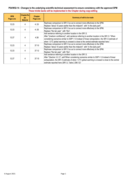
Climate Change 2021: The Physical Science Basis. Contribution of Working Group I to the Sixth Assessment Report of the Intergovernmental Panel on Climate Change
The Lancet Countdown is an international collaboration that independently monitors the health consequences of a changing climate. Publishing updated, new, and improved indicators each year, the Lancet Countdown represents the
consensus of leading researchers from 43 academic institutions and UN ag
...
encies. The 44 indicators of this report expose an unabated rise in the health impacts of
climate change and the current health consequences of the delayed and inconsistent response of countries around the globe—providing a clear imperative for accelerated action that puts the health of people and planet above all else.The 2021 report coincides with the UN Framework Convention on Climate Change 26th Conference of the Parties (COP26), at which countries are facing pressure to realise the ambition of the Paris Agreement to keep the global average temperature rise to 1·5°C and to
mobilise the financial resources required for all countries to have an effective climate response. These negotiations unfold in the context of the COVID-19 pandemic—a global health crisis that has claimed millions of lives, affected livelihoods and communities around the globe, and exposed deep fissures and inequities in the world’s capacity to cope with, and respond to, health emergencies. Yet, in its response to both crises, the world is faced with an unprecedented opportunity to ensure a healthy future for all.
more

Left unabated, climate change will have catastrophic effects on the health of present and future generations. Such effects are already seen in Europe, through more frequent and severe extreme weather events, alterations to water and food systems, and changes in the environmental suitability for infe
...
ctious diseases. As one of the largest current and historical contributors to greenhouse gases and the largest provider of financing for climate change mitigation and adaptation, Europe’s response is crucial, for both human health and the planet. To ensure that health and
wellbeing are protected in this response it is essential to build the capacity to understand, monitor, and quantify health impacts of climate change and the health co-benefits of accelerated action.
more
History has shown that governments tend to deprioritize environmental commitments during times of financial and public crises as they work to mitigate immediate needs—and the age of COVID-19 has been no different. Even though human interaction with wildlife is believed to be the cause of the pande
...
mic, the focus on COVID’s fallout has deprioritized the importance of reversing the damage humans have done to the planet.
COVID has had a multifaceted and detrimental effect on environmental conservation. Not only has funding been diverted to deal with the pandemic, conservation-oriented organizations are operating with minimal staff or have closed entirely. People whose daily work it is to advance environmental science and protect the land and water have become ill or have been forced to stay home because of travel restrictions. Plastic use is at an all-time high.
The good news is that there is an unprecedented opportunity for philanthropy to recharge the effort to protect the planet. This Giving Smarter Guide examines the state of environmental philanthropy, and provides an overview of potential strategic starting points for philanthropy and impact capital to play a role in saving the planet. In addition to offering recommendations specific to the COVID-19 response, the Center for Strategic Philanthropy also asks the questions that philanthropists should consider at the start of their journey into the field of conservation philanthropy.
more
Against the backdrop of the COVID-19 pandemic, health is receiving unprecedented public and political attention. Yet the fact that climate change also presents us with a health crisis deserves further recognition. From more deaths due to heat stress to increased transmission of infectious diseases,
...
climate change affects the social and environmental determinants of health in ways that are profound and far-reaching. The fundamental interdependency of human health and the health of the environment is encapsulated in the concept of planetary health, a scientific field and social movement that has been gaining force since the 2015 publication of the Rockefeller Foundation-Lancet Commission report “Safeguarding human health in the Anthropocene epoch”.
We see an urgent need for strategic communication to raise awareness of climate-health synergies in order to overcome the misperception that climate and health are two independent agendas. The fragmented and sector-focused nature of thinking and action remains a significant barrier to integrating health considerations into climate planning and project development. Inevitably, collaboration across sectors requires a community of practice. Despite recent efforts focused on the climate-health nexus, much work remains to be done to translate scientific findings for policymakers, mobilise climate financing resources in support of health co-benefits, and promote genderjust solutions within climate change projects.
more

The COVID-19 pandemic has led to large increases in healthcare waste, straining under resourced healthcare facilities and exacerbating environmental impacts from solid waste. This report quantifies the additional COVID-19 healthcare waste generated, describes current healthcare waste management syst
...
ems and their deficiencies, and summarizes emerging best practices and solutions to reduce the impact of waste on human and environmental health. The recommendations included in the report build on actions in the WHO manifesto for a healthy recovery from COVID-19: prescriptions and actionables for a healthy and green recovery. They target the global, national and facility levels to promote a “win–win” scenario for COVID-19 PPE use, testing and vaccinations that are safe and support environmental sustainability.
more

This publication presents the Agenda for the Americas on Health, Environment, and Climate Change 2021–2030 (the Agenda). The Agenda is a call to action to the health sector to lead the charge to address environmental determinants of health in the Americas. The Pan American Health Organization (PAH
...
O) will work with Member States to achieve its goal and objective to ensure healthy lives and promote well-being for all at all ages using a sustainable and equitable approach that places a priority on reducing health inequity. The Agenda has been developed under the umbrella of the WHO Global Strategy on Health, Environment, and Climate Change, and builds upon the commitments set forth in the Sustainable Health Agenda for the Americas 2018–2030 and the PAHO Strategic Plan 2020–2025. The Agenda was developed in consultation with the Technical Advisory Group and through a consensus-driven decision-making process with Member States during the 2019–2020 period. Looking toward the achievement of Sustainable Development Goal 3, the Agenda focuses on: improving the performance of environmental public health programs and institutions; fostering environmentally resilient and sustainable health systems; and promoting environmentally healthy and resilient cities and communities. Its implementation will be context-specific, based on the needs and realities of the countries. It will benefit countries and territories by promoting good governance practices, strengthening the leadership and coordination roles of the health sector, fostering cross-sectoral action, focusing on primary prevention, and enhancing evidence and communication. It will facilitate access to human, technical, and financial resources necessary to address environmental determinants of health and ensure that the Region is fully engaged in global health, environment, and climate change processes and agreements. The objective of the Agenda is to strengthen the capacity of health actors in the health and non-health sectors to address and adapt to environmental determinants of health (EDHs), prioritizing populations living in conditions of vulnerability, in order to meet Outcome 18 of the PAHO Strategic Plan 2020–2025 directly and several other outcomes of the Plan indirectly. To address and adapt to the challenges of EDHs in the Region, an integrated and evidence-informed approach within the health sector and across sectors will be needed, one enabled, and supported by good governance practices, adequate management mechanisms, high-level political will, and adequate human, technical, technological, and financial resources.
more
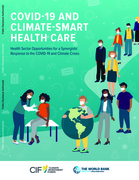
English Analysis on World about Climate Change and Environment, Health and Epidemic; published on 03 Nov 2021 by World Bank
