
Filter
2061
Text search:
temperature
control
Featured
295
526
Language
2021
37
24
23
17
10
9
6
2
2
2
2
2
2
2
1
1
1
1
1
1
1
1
1
1
1
1
1
1
1
1
1
1
Document type
914
463
317
173
59
56
46
13
12
7
1
Countries
159
80
56
54
54
51
50
43
41
36
34
30
30
28
25
25
24
19
19
17
17
16
15
14
12
12
11
10
9
8
8
8
7
7
6
6
6
6
6
6
6
5
5
5
5
4
4
4
4
3
3
3
3
3
3
3
3
3
3
3
2
2
2
2
2
2
2
2
2
2
2
2
2
2
1
1
1
1
1
1
1
1
1
1
1
1
1
1
1
1
1
1
1
1
1
1
1
Authors & Publishers
343
120
64
49
47
38
32
31
25
17
17
15
14
13
13
11
11
11
10
9
9
9
9
9
9
9
8
8
8
8
7
7
6
6
6
6
6
6
6
6
6
6
6
6
6
5
5
5
5
5
5
5
5
5
5
5
5
5
5
5
4
4
4
4
4
4
4
4
4
4
4
4
4
4
4
4
4
4
4
4
4
3
3
3
3
3
3
3
3
3
3
3
3
3
3
3
3
3
3
3
3
3
3
3
3
3
3
3
3
3
3
3
3
3
3
3
3
3
3
3
3
3
3
3
3
3
3
3
2
2
2
2
2
2
2
2
2
2
2
2
2
2
2
2
2
2
2
2
2
2
2
2
2
2
2
2
2
2
2
2
2
2
2
2
2
2
2
2
2
2
2
2
2
2
2
2
2
2
2
2
2
2
2
2
2
2
2
2
2
2
2
2
2
2
2
2
2
2
2
2
2
2
2
2
2
2
2
2
2
2
2
2
2
2
2
2
2
2
2
2
2
2
2
2
2
2
2
2
2
2
2
2
2
2
2
2
2
2
2
2
2
2
2
2
2
2
2
2
2
1
1
1
1
1
1
1
1
1
1
1
1
1
1
1
1
1
1
1
1
1
1
1
1
1
1
1
1
1
1
1
1
1
1
1
1
1
1
1
1
1
1
1
1
1
1
1
1
1
1
1
1
1
1
1
1
1
1
1
1
1
1
1
1
1
1
1
1
1
1
1
1
1
1
1
1
1
1
1
1
1
1
1
1
1
1
1
1
1
1
1
1
1
1
1
1
1
1
1
1
1
1
1
1
1
1
1
1
1
1
1
1
1
1
1
1
1
1
1
1
1
1
1
1
1
1
1
1
1
1
1
1
1
1
1
1
1
1
1
1
1
1
1
1
1
1
1
1
1
1
1
1
1
1
1
1
1
1
1
1
1
1
1
1
1
1
1
1
1
1
1
1
1
1
1
1
1
1
1
1
1
1
1
1
1
1
1
1
1
1
1
1
1
1
1
1
1
1
1
1
1
1
1
1
1
1
1
1
1
1
1
1
1
1
1
1
1
1
1
1
1
1
1
1
1
1
1
1
1
1
1
1
1
1
1
1
1
1
1
1
1
1
1
1
1
1
1
1
1
1
1
1
1
1
1
1
1
1
1
1
1
1
1
1
1
1
1
1
1
1
1
1
1
1
1
1
1
1
1
1
1
1
1
1
1
1
1
1
1
1
1
1
1
1
1
1
1
1
1
1
1
1
1
1
1
1
1
1
1
1
1
1
1
1
1
1
1
1
1
1
1
1
1
1
1
1
1
1
1
1
1
1
1
1
1
1
1
1
1
1
1
1
1
1
1
1
1
1
1
1
1
1
1
1
1
1
1
1
1
1
1
1
1
1
1
1
1
1
1
1
1
1
1
1
1
1
1
1
1
1
1
1
1
1
1
1
1
1
1
1
1
1
1
1
1
1
1
1
1
1
1
1
1
1
1
1
1
1
1
1
1
1
1
1
1
1
1
1
1
1
1
1
1
1
1
1
1
1
1
1
1
1
1
1
1
1
1
1
1
1
1
1
1
1
1
1
1
1
1
1
1
1
1
1
1
1
1
1
1
1
1
1
1
1
1
1
1
1
1
1
1
1
1
1
1
1
1
1
1
1
1
1
1
1
1
1
1
1
1
1
1
1
1
1
1
1
1
1
1
1
1
1
1
1
1
1
1
1
1
1
1
1
1
1
1
1
1
1
1
1
1
1
1
1
1
1
1
1
1
1
1
1
1
1
1
1
1
1
1
1
1
1
1
1
1
1
1
1
1
1
1
1
1
1
1
1
1
1
1
1
1
1
1
1
1
1
1
1
1
1
1
1
1
1
1
1
1
1
1
1
1
1
1
1
1
1
1
1
1
1
1
1
1
1
1
1
1
1
1
1
1
1
1
1
1
1
1
1
1
1
1
1
1
1
1
1
1
1
1
1
1
1
1
1
1
1
1
1
1
1
1
1
1
1
1
1
1
1
1
1
1
1
1
1
1
1
1
1
1
1
1
1
1
1
1
1
1
1
1
1
1
1
1
1
1
1
1
1
1
1
1
1
1
1
1
1
1
1
1
1
1
1
1
1
1
1
1
1
1
1
1
1
1
1
1
1
1
1
1
1
1
1
1
1
1
1
1
1
1
1
1
1
1
1
1
1
1
1
1
1
1
1
1
1
1
1
1
1
1
1
1
1
1
1
1
1
1
1
1
1
1
1
1
1
1
1
1
1
1
1
1
1
1
1
1
1
1
1
1
1
1
1
1
1
1
1
1
1
1
1
1
1
1
1
1
1
1
1
1
1
1
1
1
1
1
1
1
1
1
1
1
1
1
1
1
1
1
1
1
1
1
1
1
1
1
1
1
1
1
1
1
1
1
1
1
1
1
1
1
1
1
1
1
1
1
1
1
1
1
1
1
1
1
1
1
1
1
1
1
1
1
1
1
1
1
1
1
1
1
1
1
1
1
1
1
1
1
1
1
1
1
1
1
1
1
1
1
1
1
1
1
1
1
1
1
1
1
1
1
1
1
1
1
1
1
1
1
1
1
1
1
1
1
1
1
1
1
1
1
1
1
1
1
1
1
1
1
1
1
1
1
1
1
1
1
1
1
1
1
1
1
1
1
1
1
1
1
1
1
1
1
1
1
1
1
1
1
1
1
1
1
1
1
1
1
1
1
1
1
1
1
1
1
1
1
1
1
1
1
1
1
1
1
1
1
1
1
1
1
1
1
1
1
1
1
1
1
1
1
1
1
1
1
1
1
1
1
1
1
1
1
1
1
1
1
1
1
1
1
1
1
1
1
1
1
1
1
1
1
1
1
1
1
1
1
1
1
1
1
1
1
1
1
1
1
1
1
1
1
1
1
1
1
1
1
1
1
1
1
1
1
1
1
1
1
1
1
1
1
1
1
1
1
1
1
1
1
1
1
1
1
1
1
1
1
1
1
1
1
1
1
1
1
1
1
1
1
1
1
1
1
1
1
1
1
1
1
1
1
1
1
1
1
1
1
1
1
1
1
1
1
1
1
1
1
1
1
1
1
1
1
1
1
1
1
1
1
1
1
1
1
1
1
1
1
1
1
1
1
1
1
1
1
1
1
1
1
1
1
1
1
1
1
1
1
1
1
1
1
1
1
1
1
1
1
1
1
1
1
1
1
1
1
1
1
1
1
1
1
1
1
1
1
1
1
1
1
1
1
1
1
1
1
1
1
1
1
1
1
1
1
1
1
1
1
1
1
1
1
1
1
1
1
1
1
1
1
1
1
1
1
1
1
1
1
1
1
1
1
1
1
1
1
1
1
1
1
1
1
1
1
1
1
1
1
1
1
1
1
1
1
1
1
1
1
1
1
1
1
1
1
1
1
1
1
1
1
1
1
1
1
1
1
1
1
1
1
1
1
1
1
1
1
1
1
1
1
1
1
1
1
1
1
1
1
1
1
1
1
1
1
1
1
1
1
1
1
1
1
1
1
1
1
1
1
1
1
1
1
1
1
1
1
1
1
1
1
1
1
1
1
1
1
1
1
1
1
1
1
1
1
1
1
1
1
1
1
1
1
1
1
1
1
1
1
1
1
1
1
1
1
1
1
1
1
1
1
1
1
1
1
1
1
1
1
1
1
1
1
1
Publication Years
676
1119
242
22
2
Category
760
237
150
115
91
72
43
1
Toolboxes
239
153
134
105
80
71
66
56
53
53
49
40
37
34
32
28
27
27
22
22
20
11
11
3
1
1

The WHO COVID-19 Clinical management: living guidance contains the most up-to-date recommendations for the clinical management of people with COVID-19. Providing guidance that is comprehensive and holistic for the optimal care of COVID-19 patients throughout their entire illness is important.
In line with the Climate and Environment Charter for Humanitarian Organisations which IFRC, ICRC and various Red Cross Red Crescent National Societies have endorsed, this short Guide aims to help practitioners integrate environmental and climate change considerations into their work. It has been dev
...
eloped primarily for logistics staff, administrative staff, and management. It is not necessary to be an environmental expert to use this Guide.
more
Prompt, effective antimalarial treatment, and supportive care can substantially reduce the rate of mortality from severe malaria. However, many children in malaria-endemic countries do not have access to health facilities or a qualified health care provider and do not receive the necessary care in a
...
timely fashion. Without rapid detection of danger signs and access to effective treatment, including pre-referral treatment that can be administered in the community level, many of these children with severe malaria die.
In situations where there is no immediate access to a health care facility, WHO recommends the administration of a standard dose of an effective antimalarial medicine as pre-referral treatment before referral to a facility at which complete treatment can be administered.
Rectal artesunate is the WHO-recommended pre-referral intervention in situations where artesunate injection are not feasible for children under the age of 6 years with suspected severe malaria. The intervention reduces the risk of death or permanent disability by up to 50% provided the child is referred to a health facility at which complete treatment can be administered.
This field guide is aimed at supporting the effective deployment of RAS as pre-referral treatment of suspected severe malaria in line with the WHO malaria guidelines.
more
This publication aims to provide updated guidance on the specific use of yellow fever laboratory assays in the context of surveillance to be used across the Global Yellow Fever Laboratory Network for disease surveillance. In the recent years, new commercial assays became available and are now recomm
...
ended for use by WHO and this publication will support national program on the use of compound laboratory assays as per the most recent recommended testing algorithms. This piece is aligned with the elimination effort set in the comprehensive global strategy to eliminate yellow fever epidemics (EYE) strategy 2017-2026 and where its advisory laboratory technical working group actively contributed to its development. The target audiences are policy-makers and health workers.
more
Buruli ulcer (BU) is a bacterial skin infection that is caused by Mycobacterium ulcerans and mainly affects people who reside in the rural areas of Africa and in suburban and beach resort communities in Australia.
The Global Burden of Cardiovascular Diseases and Risk: A Compass for Future Health
Vaduganathan, M.; Mensah, G.A.; Turco, J.V. et al.
Journal of the American College of Cardiology
(2022)
CC
Cardiovascular diseases (CVDs) have collectively remained the leading causes of death worldwide and substantially contribute to loss of health and excess health system costs. The Global Burden of Diseases, Injuries, and Risk Factors (GBD) Study has tracked trends in death and disability since 1990 a
...
nd has provided an updated perspective on the status of cardiovascular health globally, regionally, and nationally.
more

Terminology used to describe the transmission of pathogens through the air varies across scientific disciplines, organizations and the general public. While this has been the case for decades, during the coronavirus disease (COVID-19) pandemic, the terms ‘airborne’, ‘airborne transmission’ a
...
nd ‘aerosol transmission’ were used in different ways by stakeholders in different scientific disciplines, which may have contributed to misleading information and confusion about how pathogens are transmitted in human populations.
This global technical consultation report brings together viewpoints from experts spanning a range of disciplines with the key objective of seeking consensus regarding the terminology used to describe the transmission of pathogens through the air that can potentially cause infection in humans.
This consultation aimed to identify terminology that could be understood and accepted by different technical disciplines. The agreed process was to develop a consensus document that could be endorsed by global agencies and entities. Despite the complex discussions and challenges, significant progress was made during the consultation process, particularly the consensus on a set of descriptors to describe how pathogens are transmitted through the air and the related modes of transmission. WHO recognizes the important areas where consensus was not achieved and will continue to address these areas in follow-up consultations.
more

Diabetes is a significant public health issue that affects approximately one in 10 adults globally, with type 2 diabetes accounting for 90–95% of cases. This chronic condition causes considerable morbidity and mortality and is growing in impact, with cases projected to rise from 537 million in 202
...
1 to 784 million by 2045.1 As cases rise, it is imperative to ensure the healthcare workforce is prepared to care for affected individuals. However, there is a growing global shortage of healthcare workers, which was estimated, pre pandemic, to reach 15 million by 2030.2 Therefore, all of the healthcare workforce will need to be utilised to their fullest potential in order to address the growing global burden of diabetes. Pharmacists will continue to be essential in this endeavour.
more

Cardiovascular diseases (CVDs) are a growing public health problem in Ghana and other African countries. Strokes and other CVDs have become a leading cause of death due to increasing risk factors such as hypertension. According to the Global Burden of Disease study (GBD), ischaemic heart disease was
...
the fourth leading cause of death in Ghana in 2016. The prevalence of hyper-
tension, a major risk factor for CVDs, is increasing rapidly and ranges from 19% to 48%, according to the Ghana Health Service Annual Report, 2017, due to rising life expectancy and the increasing prevalence of contributing factors such as overweight/obesity. Early diagnosis and adequate management of the risk factors can reduce the fatal consequences of CVDs.
At the heart of improving risk assessment and management of CVDs are nationally approved guidelines, which facilitate standardisation of care approaches.
These guidelines developed by experts from all levels of health care and stakeholders capture all recommended approaches and necessary information for clinicians and other healthcare workers on CVDs. They also serve as a practical guide for assessing and managing the most important CVDs prevalent in Ghana and can be used at all levels of care namely health facilities without a doctor; with a general practitioner and with a physician specialist.
more

Diabetes is a major public health problem. The rising incidence of Diabetes Type 2 is related to the effects of urbanization and unhealthy lifestyles. Research studies show that healthy eating and regular physical activity can prevent or delay the onset of Diabetes Type 2, even in high-risk individu
...
als.
more

The ICMR type 1 diabetes guidelines come at a time when the SARS-CoV-2 pandemic
has disproportionately affected people with diabetes population, exposing them to a
high risk for severe illness and mortality. Globally, diabetes was responsible for over fourmillion deaths in the year 2019. It was th
...
e leading cause of end-stage kidney disease, adult-onset blindness and cardiovascular diseases. Further, there was a considerable heterogeneity in the prevalence of complications and deaths associated with diabetes across the countries.
more
Diabetes mellitus, commonly known as diabetes, is a group of metabolic disorders characterized by the presence of hyperglycaemia in the absence of treatment. The heterogeneous aetiopathology includes defects in insulin secretion, insulin action, or both. The long-term specific complications of diabe
...
tes include retinopathy, nephropathy, and neuropathy. People with diabetes are also at increased risk of other diseases, including cardiac, peripheral arterial and cerebrovascular disease, cataracts, erectile dysfunction, and nonalcoholic fatty liver disease. They are also at an increased risk of some infectious diseases such as tuberculosis, and are likely to experience poorer outcomes.
more

Diabetes is a significant public health issue that affects approximately one in 10 adults globally, with type 2 diabetes accounting for 90–95% of cases. This chronic condition causes considerable morbidity and mortality and is growing in impact, with cases projected to rise from 537 million in 202
...
1 to 784 million by 2045. As cases rise, it is imperative to ensure the healthcare workforce is prepared to care for affected individuals. However, there is a growing global shortage of healthcare workers, which was estimated, pre pandemic, to reach 15 million by 2030. Therefore, all of the healthcare workforce will need to be utilised to their fullest potential in order to address the growing global burden of diabetes. Pharmacists will continue to be essential in this endeavour.
more
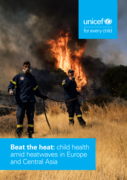
Beat the heat: child health amid heatwaves in Europe and Central Asia finds that half of these children died from heat-related illnesses in their first year of life. Most children died during the summer months.
"Around half of children across Europe and Central Asia – or 92 million children –
...
are already exposed to frequent heatwaves in a region where temperatures are rising at the fastest rate globally. The increasingly high temperatures can have serious health complications for children, especially the youngest children, even in a short space of time. Without care, these complications can be life-threatening,” said Regina De Dominicis UNICEF Regional Director for Europe and Central Asia.
Heat exposure has acute effects on children, even before they are born, and can result in pre-term births, low birth weight, stillbirth, and congenital anomalies. Heat stress is a direct cause of infant mortality, can affect infant growth and cause a range of paediatric diseases. The report also notes that extreme heat caused the loss of more than 32,000 years of healthy life among children and teenagers in the region.
As the temperatures continue to rise, UNICEF urges governments across Europe and Central Asia to:
- Integrate strategies to reduce the impact of heatwaves including through National Determined Contributions (NDC), National Adaptation Plans (NAP), and disaster risk reduction and disaster management policies with children at the centre of these plans
Invest in heat health action plans and primary health care to more adequately support heat-related illness among children
- Invest in early warning systems, including heat alert systems
- Adapt education facilities to reduce the temperatures in the areas children play in and equip teachers with skills to respond to heat stress
- Adapt urban design and infrastructure including ensuring buildings, particularly those housing the most vulnerable communities are equipped to minimize heat exposure
- Secure the provision of safe water, particularly in countries with deteriorating water quality and availability.
UNICEF works with governments, partners and communities across the region to build resilience against heatwaves. This includes equipping teachers, community health workers and families with the skills and knowledge to respond to heat stress.
more

The document "Chronic Respiratory Diseases: A Handbook for Pharmacists" outlines the significant role pharmacists play in managing asthma and COPD, emphasizing patient education, disease prevention, medication management, and promoting healthy lifestyles. It highlights the importance of pharmacists
...
in supporting early detection, adherence to treatment, smoking cessation, and interprofessional collaboration to enhance respiratory care and outcomes.
more

This report provides an overview of the operations and activities of the WHO Country Office in Ukraine in 2023. Despite the acute health impacts of the war in Ukraine, the Country Office continued its work according to its core mandate. WHO supported the Government of Ukraine in managing the health
...
emergency and pursued existing priorities set out in WHO’s Thirteenth General Programme of Work 2019–2023, the European Programme of Work 2020–2025, and the Biennial Collaborative Agreement 2022–2023 signed with the Government of Ukraine. The report presents the achievements of the WHO Country Office in Ukraine in 2023 in the context of the war’s impact on the lives, health, and well-being of Ukrainians.
more

“We must not forget that no matter where we are or how old we are, we can all work for life and take action.” Francisco Vera, 15, UNICEF Child Advocate
The Young Climate Activists toolkit was created by advocates of all ages who, like you, are deeply concerned about our planet's future. Havin
...
g faced numerous challenges in advocacy and action, our aim is to provide clear, concise and easily understandable information about global, regional and national climate action. This will equip you for meaningful and informed participation. The toolkit booklets are designed to be read sequentially to build a comprehensive understanding of each topic, though they can also be consulted independently based on your needs.
This is the global volume of the Young Climate Activists Toolkit and is designed to complement the regional toolkits for Latin America and the Caribbean, and the Middle East and North Africa Region.
more

6th edition. The HIV epidemic Namibia is gradually being brouhgt under countrol as demonstrated by results in the preliminary report of Namibia Population-Based HIV Impact Assessment (NAMPHIA), a cross-sectional household-based survey that was conducted in 2017. Currently, it is estimated that about
...
204,207 Namibians are living with HIV. According to the NAMPHIA preliminary report, HIV prevalence among adults aged 15-64 is 12.6% and the annual HIV incidence is 0.36%. This report, together with HIV programmatic data has show that Namibia is one of the few African countries to meet the 2015 Joint United Nations Program on HIV and epidemic globally by 2030.
more

Available in French and English
Technical specifications series for submission to WHO prequalification: diagnostic assessment;TSS-3
