
Filter
1467
Text search:
essential
diagnostic
supplies
Featured
201
425
Language
Document type
710
262
211
121
103
25
17
14
2
1
1
Countries
77
68
61
56
54
49
47
38
36
33
30
28
26
25
25
23
20
17
16
15
15
14
14
14
12
11
11
10
9
9
9
9
9
8
8
7
7
6
6
6
6
5
5
5
4
4
4
3
3
3
3
3
3
3
3
3
3
3
2
2
2
2
2
2
2
2
2
2
2
2
2
1
1
1
1
1
1
1
1
1
1
1
1
1
1
1
1
1
1
1
1
1
1
1
1
1
1
Authors & Publishers
Publication Years
Category
670
140
97
87
68
40
28
Toolboxes
154
97
67
66
55
49
46
43
41
36
34
33
31
26
23
22
20
16
15
15
12
9
9
8
1
WHO Guideline on use of ferritin concentrations to assess iron status in individuals and populations
This guideline provides global, evidence-informed recommendations on the use of indicators for assessing a population’s
iron status and application of the use of ferritin concentrations for monitoring and evaluating iron interventions.
The Department of Health is committed to providing the best quality care to patients and users of health services, in order to meet their expectations and needs, and to improve service delivery.
The main purpose of the National Core Standards is to:
• Develop a common definition of quality of
...
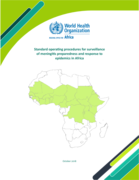
Epidemic meningitis is a major public health challenge in the African 'meningitis belt', an area that extends from Senegal to Ethiopia with an estimated total population of 500 million. Since 2002, the World Health Organization (WHO), in collaboration with its collaborating centres for meningitis, h
...
This SOP describes specific step by step procedures in clinical management like OPD, IPD Housekeeping, Emergency services, OT services, Radiology Services & Pathology services. It should be used as a hands-on reference for service providers providing services, thereby helping to standardize the prac
...


Guide to national implementation of the Shanghai Declaration describes policy orientations and approaches that can unlock the transformative potential of health promotion for sustainable development. This guide was developed to support country level implementation of the commitments and recommendati
...
This new plan has been developed to build on successes made and lessons learnt from implementation of the two initial plans and to provide a short to medium term strategic anchor against which preparedness and response plans to the corona virus disease COVID-19 epidemic in the country should focus o
...

The Guideline for Disinfection and Sterilization in Healthcare Facilities, 2008, presents evidence-
based recommendations on the preferred methods for cleaning, disinfection and sterilization of patient-
care medical devices and for cleaning and disinfecting the healthcare environment. This docume
...
The Community Health Systems (CHS) Catalog is a resource that provides information on community health program workers, and interventions for the 25 countries deemed priority by USAID’s Of of Population and Reproductive Health. It comprises a compilation of 25 country profiles developed from a de
...
The purpose of this reference manual to support learning of ETAT + principles and to complement your clinical training and practice. The manual is for use before, during, and after an ETAT + course.
This manual contains the necessary information to help you to:
• Triage all sick children when th
...
The recommendations cover the level of blood pressure to start medication, what type of medicine or combination of medicines to use, the target blood pressure level, and how often to have follow-up checks on blood pressure. In addition, the guideline provides the basis for how physicians and other h
...
Drawing light from the pandemic: A new strategy for health and sustainable development (2021)
Available in English, French, German and Russian
This document aims to support those working in primary care to strengthen IPC, informed by existing WHO IPC guidance and implementation resources. Many of the existing WHO IPC guidance and implementation resources initially developed for acute health care facilities have a potential utility for IPC
...
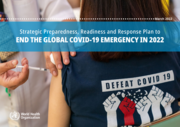
More than two years since the first SARS-CoV-2 infections were reported, the COVID-19 pandemic remains an acute global emergency. In this Strategic Preparedness, Readiness and Response plan for 2022, WHO sets out a number of key strategic adjustments that, if implemented rapidly and consistently at
...
The second edition of the joint WHO, WIPO and WTO
publication “Promoting Access to Medical Technologies
and Innovation: Intersections between public health,
intellectual property and trade” (the Trilateral Study),*
published in 2020, included a special insert mappi
...


What every clinician should know

The Zimbabwe Multi-Sectoral Cholera Elimination Plan (2018–2028) aims to eradicate cholera by improving water, sanitation, and healthcare infrastructure, strengthening disease surveillance, and expanding oral cholera vaccination (OCV). The strategy focuses on five pillars, including public health
...
