
Filter
2508
Text search:
TB
in
children
Featured
268
776
Language
2313
68
63
57
20
18
10
8
6
5
5
4
4
3
2
2
2
2
1
1
1
1
1
1
1
1
1
1
1
1
1
1
1
1
Document type
1552
331
301
102
91
50
45
13
10
4
4
1
1
Countries
148
110
97
71
68
68
66
61
58
57
56
56
51
43
42
41
40
39
39
34
33
29
29
25
22
21
20
19
18
18
17
17
15
15
13
12
11
11
10
8
8
7
7
7
7
6
6
6
6
5
5
5
5
5
4
4
4
4
4
4
4
3
3
3
3
3
2
2
2
2
2
2
2
2
2
2
2
2
2
1
1
1
1
1
1
1
1
1
1
1
1
1
1
1
1
1
1
1
1
1
1
1
1
1
1
1
1
1
1
1
1
1
1
1
1
1
Authors & Publishers
238
133
68
60
57
55
49
34
30
25
22
20
20
19
19
18
17
17
15
15
15
15
14
14
13
13
12
11
10
10
10
10
10
9
9
9
9
8
8
8
8
8
8
8
7
7
7
7
7
7
7
7
7
7
7
7
7
6
6
6
6
6
6
6
6
6
5
5
5
5
5
5
5
5
5
5
5
5
5
5
5
5
5
5
5
5
5
4
4
4
4
4
4
4
4
4
4
4
4
4
4
4
4
4
4
4
4
4
4
4
4
4
4
4
4
4
4
4
4
4
4
4
4
4
4
4
3
3
3
3
3
3
3
3
3
3
3
3
3
3
3
3
3
3
3
3
3
3
3
3
3
3
3
3
3
3
3
3
3
3
3
3
3
3
3
3
3
3
3
3
3
3
3
3
3
3
3
2
2
2
2
2
2
2
2
2
2
2
2
2
2
2
2
2
2
2
2
2
2
2
2
2
2
2
2
2
2
2
2
2
2
2
2
2
2
2
2
2
2
2
2
2
2
2
2
2
2
2
2
2
2
2
2
2
2
2
2
2
2
2
2
2
2
2
2
2
2
2
2
2
2
2
2
2
2
2
2
2
2
2
2
2
2
2
2
2
2
2
2
2
2
2
2
2
2
2
2
2
2
2
2
2
2
2
2
2
2
2
2
2
2
2
2
2
2
2
2
2
2
2
2
2
2
2
2
2
2
2
2
2
2
2
2
2
2
2
2
2
2
2
2
2
2
2
2
2
2
2
2
2
2
2
2
2
2
2
2
2
2
2
2
2
2
2
2
2
2
2
2
2
2
2
2
2
2
2
2
1
1
1
1
1
1
1
1
1
1
1
1
1
1
1
1
1
1
1
1
1
1
1
1
1
1
1
1
1
1
1
1
1
1
1
1
1
1
1
1
1
1
1
1
1
1
1
1
1
1
1
1
1
1
1
1
1
1
1
1
1
1
1
1
1
1
1
1
1
1
1
1
1
1
1
1
1
1
1
1
1
1
1
1
1
1
1
1
1
1
1
1
1
1
1
1
1
1
1
1
1
1
1
1
1
1
1
1
1
1
1
1
1
1
1
1
1
1
1
1
1
1
1
1
1
1
1
1
1
1
1
1
1
1
1
1
1
1
1
1
1
1
1
1
1
1
1
1
1
1
1
1
1
1
1
1
1
1
1
1
1
1
1
1
1
1
1
1
1
1
1
1
1
1
1
1
1
1
1
1
1
1
1
1
1
1
1
1
1
1
1
1
1
1
1
1
1
1
1
1
1
1
1
1
1
1
1
1
1
1
1
1
1
1
1
1
1
1
1
1
1
1
1
1
1
1
1
1
1
1
1
1
1
1
1
1
1
1
1
1
1
1
1
1
1
1
1
1
1
1
1
1
1
1
1
1
1
1
1
1
1
1
1
1
1
1
1
1
1
1
1
1
1
1
1
1
1
1
1
1
1
1
1
1
1
1
1
1
1
1
1
1
1
1
1
1
1
1
1
1
1
1
1
1
1
1
1
1
1
1
1
1
1
1
1
1
1
1
1
1
1
1
1
1
1
1
1
1
1
1
1
1
1
1
1
1
1
1
1
1
1
1
1
1
1
1
1
1
1
1
1
1
1
1
1
1
1
1
1
1
1
1
1
1
1
1
1
1
1
1
1
1
1
1
1
1
1
1
1
1
1
1
1
1
1
1
1
1
1
1
1
1
1
1
1
1
1
1
1
1
1
1
1
1
1
1
1
1
1
1
1
1
1
1
1
1
1
1
1
1
1
1
1
1
1
1
1
1
1
1
1
1
1
1
1
1
1
1
1
1
1
1
1
1
1
1
1
1
1
1
1
1
1
1
1
1
1
1
1
1
1
1
1
1
1
1
1
1
1
1
1
1
1
1
1
1
1
1
1
1
1
1
1
1
1
1
1
1
1
1
1
1
1
1
1
1
1
1
1
1
1
1
1
1
1
1
1
1
1
1
1
1
1
1
1
1
1
1
1
1
1
1
1
1
1
1
1
1
1
1
1
1
1
1
1
1
1
1
1
1
1
1
1
1
1
1
1
1
1
1
1
1
1
1
1
1
1
1
1
1
1
1
1
1
1
1
1
1
1
1
1
1
1
1
1
1
1
1
1
1
1
1
1
1
1
1
1
1
1
1
1
1
1
1
1
1
1
1
1
1
1
1
1
1
1
1
1
1
1
1
1
1
1
1
1
1
1
1
1
1
1
1
1
1
1
1
1
1
1
1
1
1
1
1
1
1
1
1
1
1
1
1
1
1
1
1
1
1
1
1
1
1
1
1
1
1
1
1
1
1
1
1
1
1
1
1
1
1
1
1
1
1
1
1
1
1
1
1
1
1
1
1
1
1
1
1
1
1
1
1
1
1
1
1
1
1
1
1
1
1
1
1
1
1
1
1
1
1
1
1
1
1
1
1
1
1
1
1
1
1
1
1
1
1
1
1
1
1
1
1
1
1
1
1
1
1
1
1
1
1
1
1
1
1
1
1
1
1
1
1
1
1
1
1
1
1
1
1
1
1
1
1
1
1
1
1
1
1
1
1
1
1
1
1
1
1
1
1
1
1
1
1
1
1
1
1
1
1
1
1
1
1
1
1
1
1
1
1
1
1
1
1
1
1
1
1
1
1
1
1
1
1
1
1
1
1
1
1
1
1
1
1
1
1
1
1
1
1
1
1
1
1
1
1
1
1
1
1
1
1
1
1
1
1
1
1
1
1
1
1
1
1
1
1
1
1
1
1
1
1
1
1
1
1
1
1
1
1
1
1
1
1
1
1
1
1
1
1
1
1
1
1
1
1
1
1
1
1
1
1
1
1
1
1
1
1
1
1
1
1
1
1
1
1
1
1
1
1
1
1
1
1
1
1
1
1
1
1
1
1
1
1
1
1
1
1
1
1
1
1
1
1
1
1
1
1
1
1
1
1
1
1
1
1
1
1
1
1
1
1
1
1
1
1
1
1
1
1
1
1
1
1
1
1
1
1
1
1
1
1
1
1
1
1
1
1
1
1
1
1
1
1
1
1
1
1
1
1
1
1
1
1
1
1
1
1
1
1
1
1
1
1
1
1
1
1
1
1
1
1
1
1
1
1
1
1
1
1
1
1
1
1
1
1
1
1
1
1
1
1
1
1
1
1
1
1
1
1
1
1
1
1
1
1
1
1
1
1
1
1
1
1
1
1
1
1
1
1
1
1
1
1
1
1
1
1
1
1
1
1
1
1
1
1
1
1
1
1
1
1
1
1
1
1
1
1
1
1
1
1
1
1
1
1
1
1
1
1
1
1
1
1
1
1
1
1
1
1
1
1
1
1
1
1
1
1
1
1
1
1
1
1
1
1
1
1
1
1
1
1
1
1
1
1
1
1
1
1
1
1
1
1
1
1
1
1
1
1
1
1
1
1
1
1
1
1
1
1
1
1
1
1
1
1
1
1
1
1
1
1
1
1
1
1
1
1
1
1
1
1
1
1
1
1
1
1
1
1
1
1
1
1
1
1
1
1
1
1
1
1
1
1
1
1
1
1
1
1
1
1
1
1
1
1
1
1
1
1
1
1
1
1
1
1
1
1
1
1
1
1
1
1
1
1
1
1
1
1
1
1
1
1
1
1
1
1
1
1
1
1
1
1
1
1
1
1
1
1
1
1
1
1
1
1
1
1
1
1
1
1
1
1
1
1
1
1
1
1
1
1
1
1
1
1
1
1
1
1
1
1
1
1
1
1
1
1
1
1
1
1
1
1
1
1
1
1
1
1
1
1
1
1
1
1
1
1
1
1
1
1
1
1
1
1
1
1
1
1
1
1
1
1
1
1
1
1
1
1
1
1
1
1
1
1
1
1
1
1
1
1
1
1
1
1
1
1
1
1
1
1
1
1
1
1
1
1
1
1
1
1
1
1
1
1
1
1
1
1
1
1
1
1
1
1
1
1
1
1
1
1
1
1
1
1
1
1
1
1
1
1
1
1
1
1
1
1
1
1
1
1
1
1
1
1
1
1
1
1
1
1
1
1
1
1
1
1
1
1
1
1
1
1
1
1
1
1
1
1
1
1
1
1
1
1
1
1
1
1
1
1
1
1
1
1
1
1
1
1
1
1
1
1
1
1
1
1
1
1
1
1
1
1
1
1
1
1
1
1
1
1
1
1
1
1
1
1
1
1
1
1
1
1
1
1
1
1
1
1
1
1
1
1
1
1
1
1
1
1
1
1
1
1
1
1
1
1
1
1
1
1
1
1
1
1
1
1
1
1
1
1
1
1
1
1
1
1
1
1
1
1
1
1
1
1
1
1
1
1
1
1
1
1
1
1
1
1
1
1
1
1
1
1
1
1
1
1
1
1
1
1
1
1
1
1
1
1
1
1
1
1
1
1
1
1
1
1
1
1
1
1
1
1
1
1
1
1
1
1
1
1
1
1
1
1
Publication Years
590
1643
268
7
Category
1261
199
99
96
70
46
20
3
Toolboxes
475
173
87
67
63
61
48
45
41
40
37
37
36
34
32
18
18
16
15
13
13
6
5
3
1
1
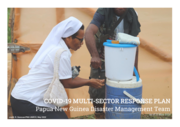
his revision to the Disaster Management Team’s (DMT) multi-sector response plan for COVID-19 is meant to align the multi-sector plan with the Department of Health’s COVID-19 Emergency Response Plan issued on 24 April 2020. Additionally, at the time of this version, the Department of Education an
...
d Department for Community Development and Religion have also issued their own national COVID-19 response and recovery plans.
The Government’s plan maintains a health sector focus and plans for a ‘worst case’ scenario, articulating the process of progressing into containment and subsequently mitigation of community transmission and on to recovery. It presents an opportunity to improve the core capacities of the whole of government, to see where both health and non-health sectors fit in and respond in the immediate and medium terms, and to adapt to the ‘new normal’ that this coronavirus has inevitably presented
more
2020 is a critical year for our Joint Programme as we collectively define the path to getting back on track to ending the AIDS epidemic by 2030. Our revised timelines for adoption of the next strategy are highly ambitious. We need the full support of all the tremendously dedicated people
...
in UNAIDS-within our staff, our board and all our stakeholders to make this happen.
more
This document was designed to inform educators, amongst others, about enhancing the pre-service curriculum with mental health Gap Action Programme Intervention Guide (mhGAP-IG) materials, which can provide future professionals with the theoretical and clinical knowledge they need to provide mental h
...
ealth in non-specialized health care settings.
more
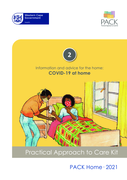
Information and Advice for the Home: COVID-19 at home
recommended
Knowledge Translation Unit, University of Cape Town Lung Institute
Western Cape Department of Health
(2021)
CC
Updated May 2021. Manual 2. The Practical Approach to Care Kit – PACK – is used by nurses, doctors and community health workers in their everyday work to care for patients at the clinic and in t
...
he community –PACK Adult, PACK Adolescent, PACK Child and PACK Community.PACK Home is designed for people seeking more information about how to care for their own health and the health of their family at home.Collect and read all the PACK Home volumes in English, Afrikaans, isiXhosa, isiZulu or Sesotho
Download the different languages: https://knowledgetranslation.co.za/pack/pack-home/
more
COVID-19 & Community Health Workers
recommended
2-Day Orientation training Orientation Training, 1 Febr. 2021
Community Health Workers (CHWs) are an essential part of the Partnership to Accelerate COVID-19 Testing (PACT) Initiative • Africa CDC set up PACT to drive forward the Africa Union Joint Continental Strategy for COVID-19
Available
...
in English, French and Arabic
more
Community health nurses have the potential to make significant contributions to meet the health care needs of various population groups in a variety of community settings. In order to assess the ext
...
ent to which CHNs are achieving this potential, WHO conducted a study between 2010 and 2014 that examined the status of community health nursing in 22 countries, 13 of which were experiencing a critical shortage of health care workers. The study revealed that the countries surveyed had the basic and operational framework for optimizing CHN in their health systems as evidenced by the availability of PHC structures to guide interventions. However, challenges were identified related to the education, practice and management of CHNs in these countries. The major challenges identified were: Limited availability of career opportunities; poor worker retention; low recognition for CHNs; inadequate and unsupportive working conditions and environments; absence of educational standards; varying educational entry-level requirements for CHN programmes; and a lack of consensus on the scope of practice for CHNs.
more
n the countries of the Region of the Americas, there are different forms of organization of health services at the first level of care. Some countries include certain laboratory, dental and diagnostic imaging practices in the first level of care, wh
...
ile other countries centralize these practices in the second and third levels of care. Consequently, so that the List of Priority Medical Devices (LPMD) could be adapted to these different forms of organization of health systems in the region of the Americas, modular lists were developed that complement the main list. In this way, to use the LPMD, only those modules that are planned to be offered in a first-level care center are selected, and it is those lists that are analyzed.
more
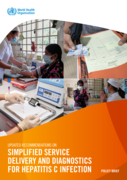
Updated recommendations on simplified service delivery and diagnostics for hepatitis C infection
recommended
Policy Brief. 24 June 2022. This policy brief, one of two on the updated hepatitis C (HCV) guidelines, focuses on the new recommendations on simplified service delivery for a public health approach to HCV testing, care and treatment. These recommendations include decentralization, integration and ta
...
sk-sharing, in addition to the use of point-of-care (POC) HCV viral load assays and reflex viral load testing.
more
As a result of Russia’s invasion of Ukraine, the people of Ukraine, especially the most vulnerable, are paying an enormous price. Lives and livelihoods are being lost, with more than ten million people forced from their homes— and their country—in
...
search of safety. The war has unleashed catastrophic damage to the country’s economy and threatens lasting increases in poverty and societal upheaval. The scale of the war and the devastation it has caused have jeopardized Ukraine’s hard-fought development gains, through destruction of production and property, disruption of trade, diminished investment due to amplified uncertainty, and erosion of human capita
more

Rebuilding Liberia’s health system is crucial for improving the country’s overall health outcomes. This annual report highlights key achievements, challenges,and lessons learned in implementing programmes of technical cooperation with the Gov
...
ernment of Liberia from January to December 2022. The key achievements are summarized under the thematic areas of Universal Health Coverage, Health Emergencies and Corporate and Enabling Support.
more
This report shows that increased domestic revenues can and will cover only part of the necessary SDG budget spending of the LIDCs. Achieving the SDGs in the LIDCs will also require increases of both Official Development Assistance (ODA) and Private
...
Development Assistance (PDA) to reach aggregate levels of SDG-directed development aid on the order of US$300-400 billion USD per year
more

The aim of this guidance manual is to introduce the user to project/programme plan- ning in a Red Cross Red Crescent environment. It describes the different stages of the planning phase of the “project/programme cycle” within the context of Resu
...
lts-Based Management (RBM). It also gives an overview of the various components of RBM and explains how to integrate and apply this approach in practice. In addition, the manual summarizes briefly the other key phases of the cycle (assessment, imple- mentation and monitoring, evaluation) and provides references to the key Federation manuals on these phases.
The manual has been developed primarily for use by people managing projects and programmes either in a National Society or the secretariat of the International Federation of Red Cross and Red Crescent Societies (International Federation). Although it is mainly designed for use at the country level, the basic principles can be applied to project and programme planning at any level. The manual draws on two International Red Cross and Red Crescent Movement publications – the International Federation’s Project Planning Process (2002) and the ICRC Economic Security Unit’s Programme/ Project Management: The Results-Based Approach (2008) – reflecting the significant similarity of approach. The International Federation has developed the manual internally to suit the particular needs and uses of project/programme management within the organization.
more

Language influences the way we think, how we perceive reality, and how we behave. With respect to HIV, language can embody stigma and discrimination, which impacts access to testing, acquisition of HIV, and engagement with treatment. Language plays a role
...
in supporting respect and empowerment of individuals, as communities shape how they are referred to and the labels they wish to use. Consideration and use of appropriate language can strengthen the global response to the HIV pandemic by diminishing stigma and discrimination and increasing support and understanding for individuals and communities living with HIV. Comments and suggestions for modifications should be sent to
more

The Ministry of Health and Social Services has the mandate to fulfil one of the aspirations in Namibia’s Vision 2030 to “transform Namibia into a healthy and food-secure nation”. Namibia strives to provide quality health and social welfare ser
...
vices efficiently and effectively to the population across the country in its quest to achieve universal health coverage. Namibia has identified eHealth as one of its key enablers to achieve universal health coverage.
more
Strengthening health financing to accelerate progress towards universal health coverage. Total Government Health Expenditure exceeds the commitment by African Union member states to commit at least 15% of their budgets to the health sector. With a sector allocation of 16.6% of total budget
...
in 2022/23 and average per capita spending estimated at US$407 (N$6,500.00), health spending in Namibia is one of the highest in SADC. The Government is thus encouraged to sustain this level of investment to safeguard the gains achieved and make progress towards SDGs. This could be achieved through the development of a national health financing strategy to mobilise additional and innovative resources for the sector.
more

This document highlights the latest WHO recommendations designed to optimize health outcomes, streamline delivery and address persistent barriers to prevention and care. It especially focuses on people often left behind in service delivery, includin
...
g adolescents and young people, key populations and people with advanced HIV disease. The guidance emphasizes integration, simplification, choice and equity.
more
The World Health Organization recently redefined leprosy elimination as a phased process, with the first milestone being the
interruption of transmission, achieved when no new child cases (defined as younger than 15 years) are reported for five consecutive years.
...
In Pakistan, the well-functioning leprosy programme, with effective case management, context-specific active case-finding strategies and
a robust data management system, has contributed to a decrease in new cases. Between 2001 and 2023, new adult cases dropped by 75%
(from 878 cases to 220 cases annually) and child cases by 83% (from 93 to 16). To support the country’s goal of no new child cases by 2030
and ultimately eliminate the disease, the nongovernmental organizations Marie Adelaide Leprosy Centre and Aid to Leprosy Patients, with
support from the German Leprosy and Tuberculosis Relief Association, have developed a zero leprosy roadmap. As part of this roadmap,
the leprosy elimination strategy emphasizes improving active case-finding and providing post-exposure prophylaxis for contacts of leprosy
cases, who are at the highest risk
more
A Toolkit on Positive Prevention for People Living with HIV. The stories contained in the Flipchart are of real people in Malawi living and affected by HIV/AIDS. Each story follows the theme for a p
...
articular session in the Guide. The questions related to each story are found within the Facilitator Guide. Activities are also included for each thematic session. These resources were developed as part of the Malawi BRIDGE Project, and as part of the Positive Prevention campaign, which aimed at creating an HIV/AIDS prevention response that recognizes the needs and desires of PLHIVs by providing them with information to live healthy, and addressing the psycho-social well-being including family planning option
more

The Gender Assessment Tool for National HIV Responses (Gender Assessment Tool) is intended to assist countries in assessing their HIV epidemic, context and response through an intersectional gender lens, with the aim of strengthening gender-transfor
...
mative, equitable and rights-based HIV responses. The 2025 tool places greater emphasis on cost-effectiveness, alignment with national plans, integration and sustainability. Together with a new costing tool and monitoring and evaluation plan template, it is designed to inform the development of country investment cases, funding requests to the Global Fund to Fight AIDS, Tuberculosis and Malaria, and other key national opportunities.
more
Standard Treatment Guidelines and Essential Medicines List for South Africa : Primary Healthcare Level 2020 edition
the Essential Drugs Programme, the PHCAdult Hospital Level Expert review Committee, the National Essential Medicines List Committee
National Department of Health South Africa
(2020)
CC
The PHC STGs and EML should be used by healthcare workers providing care at clinics, community health centres, and gateway clinics at hospitals.
Pharmaceutical and Therapeutics Committees (PTCs) are responsible for ensuring the availability of medicines listed
...
in the PHC EML at those facilities, as well as at higher levels of care.
more
