
Filter
1344
Text search:
SDGs
Featured
106
335
Language
Document type
476
460
140
130
72
23
21
11
7
3
Countries
166
34
31
30
24
24
22
18
17
17
16
15
15
14
13
13
13
13
12
12
12
12
12
11
11
10
10
9
8
7
6
6
6
6
5
5
5
5
4
4
4
4
4
3
3
3
3
3
3
3
3
3
3
2
2
2
2
2
2
2
2
2
2
2
2
2
2
2
2
2
1
1
1
1
1
1
1
1
1
1
1
1
1
1
1
1
1
1
1
1
1
1
1
1
1
1
1
1
1
1
Authors & Publishers
Publication Years
Category
400
144
97
96
59
10
8
Toolboxes
164
125
84
78
74
70
69
51
47
38
30
28
25
20
18
13
9
9
8
6
4
2
2
1
The document provides practical guidelines for conducting a national disaster risk assessment, developed by the United Nations Office for Disaster Risk Reduction. It emphasizes the importance of understanding disaster risk as a foundation for effective disaster risk management and sustainable develo
...
The document focuses on integrating epidemic risk into the INFORM Global Risk Index, a tool used to assess and compare crisis and disaster risks across countries. It explains how epidemics can significantly impact vulnerability and hazard exposure, and therefore should be systematically included in
...
The Global hepatitis report 2026 provides the most comprehensive and up-to-date assessment of the global burden of hepatitis B (HBV) and hepatitis C (HCV), which together account for more than 95% of deaths related to viral hepatitis. Despite being preventable and treatable, viral hepatitis remains
...

The Gender Assessment Tool for National HIV Responses (Gender Assessment Tool) is intended to assist countries in assessing their HIV epidemic, context and response through an intersectional gender lens, with the aim of strengthening gender-transformative, equitable and rights-based HIV responses. T
...

Emergency Medical Teams 2030 strategy
recommended
The Emergency Medical Teams (EMT) initiative plays a vital role in building this stronger and
more resilient global health emergency architecture, both by driving its formation and by
contributing to a rapidly deployable global health emergency corps. The Initiative and EMTs
bring something uniqu
...

This guidance document, titled 'Preparedness Enabler's Guide (PEG)', published in May 2023, aims to promote effective and sustainable localization in humanitarian preparedness through insights and practical tools derived from the Global Logistics Cluster's experience.
A toolkit designed to support with developing effective community engagement strategies for different emergencies with specific tools for natural hazards, conflicts, disease outbreaks, epidemics, and complex emergencies.
المؤتمر العالمي المعني بالرعاية الصحية الأولية
انطلاقاً من ألما- آتا صوب تحقيق التغطية الصحية الشاملة
وأهداف التنمية المستدامة
Ein Dossier der VENRO-AG Gesundheit in Zusammenarbeit mit der Redaktion Welt-sichten
Accessed 6th May 2019.
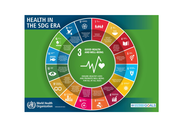
Ensuring healthy lives and promoting well-being for all is possible – but only if economically better-off and disadvantaged countries play their part
Aktualisierung nach der Publikation der vorläufigen ODA-Daten durch DAC/OECD mit Projektionen für das Jahr 2021 unter Berücksichtigung der kürzlich beschlossenen Haushaltspläne, 20.06.2021
Accessed 6th Mai 2019.
Déclaration d’Astana
recommended
Conférence internationale sur les soins de santé primaires d’Alma-Ata à la couverture sanitaire universelle et aux objectifs de développement durable , Astana, Kazakhstan, 25 et 26 octobre 2018
Астанинская декларация (Declarartion of Astana)
recommended
Глобальная конференция по первичной медико-санитарной помощи:от Алма-Атинской декларации к всеобщему охвату
услугами здравоохранения и Целям в области у стой чи
...
Our World in Data
recommended
Our World in Data is a non-profit website that brings together the data and research on the powerful, long-run trends reshaping our world: Through interactive data visualizations we show how the world has changed; by summarizing the scientific literature we explain why.
Accessed 26 February 2019.
...

