
Filter
2821
Text search:
health
and
rehabilitation
Featured
244
747
Language
2639
81
75
62
35
32
17
17
12
6
5
5
4
4
4
4
4
3
3
3
2
2
2
2
2
2
2
2
2
2
1
1
1
1
1
1
1
1
1
1
1
1
1
1
1
1
1
1
1
1
1
1
Document type
1841
312
250
150
125
46
36
34
11
6
5
4
Countries / Regions
140
89
87
69
61
58
57
56
54
54
53
50
48
39
39
37
36
35
34
34
32
31
30
30
27
27
26
25
25
24
23
22
21
20
17
17
16
14
14
13
12
12
11
11
11
11
11
10
10
10
10
9
9
9
9
9
8
8
8
8
8
7
7
6
6
6
6
5
5
5
4
4
4
4
3
3
3
3
3
3
3
3
3
3
3
3
2
2
2
2
2
2
2
2
2
2
2
2
2
2
2
2
2
2
1
1
1
1
1
1
1
1
1
1
1
1
1
1
1
1
1
1
1
1
1
1
1
1
1
1
1
1
1
Authors & Publishers
282
127
107
84
73
65
53
44
38
27
21
19
19
19
19
18
18
18
17
15
15
13
13
12
12
12
12
11
11
11
11
11
10
10
10
10
9
9
9
9
9
9
8
8
8
8
8
8
8
8
8
8
7
7
7
7
7
7
7
7
7
7
7
6
6
6
6
6
6
6
6
6
6
5
5
5
5
5
5
5
5
5
5
5
5
5
5
4
4
4
4
4
4
4
4
4
4
4
4
4
4
4
4
4
4
4
4
4
4
4
4
4
4
4
4
4
4
4
4
4
4
4
4
4
4
3
3
3
3
3
3
3
3
3
3
3
3
3
3
3
3
3
3
3
3
3
3
3
3
3
3
3
3
3
3
3
3
3
3
3
3
3
3
3
3
3
3
3
3
3
3
3
3
3
3
3
3
3
3
3
3
3
3
2
2
2
2
2
2
2
2
2
2
2
2
2
2
2
2
2
2
2
2
2
2
2
2
2
2
2
2
2
2
2
2
2
2
2
2
2
2
2
2
2
2
2
2
2
2
2
2
2
2
2
2
2
2
2
2
2
2
2
2
2
2
2
2
2
2
2
2
2
2
2
2
2
2
2
2
2
2
2
2
2
2
2
2
2
2
2
2
2
2
2
2
2
2
2
2
2
2
2
2
2
2
2
2
2
2
2
2
2
2
2
2
2
2
2
2
2
2
2
2
2
2
2
2
2
2
2
2
2
2
2
2
2
2
2
2
2
2
2
2
2
2
2
2
2
2
2
2
2
2
2
2
2
2
2
2
2
2
2
2
2
1
1
1
1
1
1
1
1
1
1
1
1
1
1
1
1
1
1
1
1
1
1
1
1
1
1
1
1
1
1
1
1
1
1
1
1
1
1
1
1
1
1
1
1
1
1
1
1
1
1
1
1
1
1
1
1
1
1
1
1
1
1
1
1
1
1
1
1
1
1
1
1
1
1
1
1
1
1
1
1
1
1
1
1
1
1
1
1
1
1
1
1
1
1
1
1
1
1
1
1
1
1
1
1
1
1
1
1
1
1
1
1
1
1
1
1
1
1
1
1
1
1
1
1
1
1
1
1
1
1
1
1
1
1
1
1
1
1
1
1
1
1
1
1
1
1
1
1
1
1
1
1
1
1
1
1
1
1
1
1
1
1
1
1
1
1
1
1
1
1
1
1
1
1
1
1
1
1
1
1
1
1
1
1
1
1
1
1
1
1
1
1
1
1
1
1
1
1
1
1
1
1
1
1
1
1
1
1
1
1
1
1
1
1
1
1
1
1
1
1
1
1
1
1
1
1
1
1
1
1
1
1
1
1
1
1
1
1
1
1
1
1
1
1
1
1
1
1
1
1
1
1
1
1
1
1
1
1
1
1
1
1
1
1
1
1
1
1
1
1
1
1
1
1
1
1
1
1
1
1
1
1
1
1
1
1
1
1
1
1
1
1
1
1
1
1
1
1
1
1
1
1
1
1
1
1
1
1
1
1
1
1
1
1
1
1
1
1
1
1
1
1
1
1
1
1
1
1
1
1
1
1
1
1
1
1
1
1
1
1
1
1
1
1
1
1
1
1
1
1
1
1
1
1
1
1
1
1
1
1
1
1
1
1
1
1
1
1
1
1
1
1
1
1
1
1
1
1
1
1
1
1
1
1
1
1
1
1
1
1
1
1
1
1
1
1
1
1
1
1
1
1
1
1
1
1
1
1
1
1
1
1
1
1
1
1
1
1
1
1
1
1
1
1
1
1
1
1
1
1
1
1
1
1
1
1
1
1
1
1
1
1
1
1
1
1
1
1
1
1
1
1
1
1
1
1
1
1
1
1
1
1
1
1
1
1
1
1
1
1
1
1
1
1
1
1
1
1
1
1
1
1
1
1
1
1
1
1
1
1
1
1
1
1
1
1
1
1
1
1
1
1
1
1
1
1
1
1
1
1
1
1
1
1
1
1
1
1
1
1
1
1
1
1
1
1
1
1
1
1
1
1
1
1
1
1
1
1
1
1
1
1
1
1
1
1
1
1
1
1
1
1
1
1
1
1
1
1
1
1
1
1
1
1
1
1
1
1
1
1
1
1
1
1
1
1
1
1
1
1
1
1
1
1
1
1
1
1
1
1
1
1
1
1
1
1
1
1
1
1
1
1
1
1
1
1
1
1
1
1
1
1
1
1
1
1
1
1
1
1
1
1
1
1
1
1
1
1
1
1
1
1
1
1
1
1
1
1
1
1
1
1
1
1
1
1
1
1
1
1
1
1
1
1
1
1
1
1
1
1
1
1
1
1
1
1
1
1
1
1
1
1
1
1
1
1
1
1
1
1
1
1
1
1
1
1
1
1
1
1
1
1
1
1
1
1
1
1
1
1
1
1
1
1
1
1
1
1
1
1
1
1
1
1
1
1
1
1
1
1
1
1
1
1
1
1
1
1
1
1
1
1
1
1
1
1
1
1
1
1
1
1
1
1
1
1
1
1
1
1
1
1
1
1
1
1
1
1
1
1
1
1
1
1
1
1
1
1
1
1
1
1
1
1
1
1
1
1
1
1
1
1
1
1
1
1
1
1
1
1
1
1
1
1
1
1
1
1
1
1
1
1
1
1
1
1
1
1
1
1
1
1
1
1
1
1
1
1
1
1
1
1
1
1
1
1
1
1
1
1
1
1
1
1
1
1
1
1
1
1
1
1
1
1
1
1
1
1
1
1
1
1
1
1
1
1
1
1
1
1
1
1
1
1
1
1
1
1
1
1
1
1
1
1
1
1
1
1
1
1
1
1
1
1
1
1
1
1
1
1
1
1
1
1
1
1
1
1
1
1
1
1
1
1
1
1
1
1
1
1
1
1
1
1
1
1
1
1
1
1
1
1
1
1
1
1
1
1
1
1
1
1
1
1
1
1
1
1
1
1
1
1
1
1
1
1
1
1
1
1
1
1
1
1
1
1
1
1
1
1
1
1
1
1
1
1
1
1
1
1
1
1
1
1
1
1
1
1
1
1
1
1
1
1
1
1
1
1
1
1
1
1
1
1
1
1
1
1
1
1
1
1
1
1
1
1
1
1
1
1
1
1
1
1
1
1
1
1
1
1
1
1
1
1
1
1
1
1
1
1
1
1
1
1
1
1
1
1
1
1
1
1
1
1
1
1
1
1
1
1
1
1
1
1
1
1
1
1
1
1
1
1
1
1
1
1
1
1
1
1
1
1
1
1
1
1
1
1
1
1
1
1
1
1
1
1
1
1
1
1
1
1
1
1
1
1
1
1
1
1
1
1
1
1
1
1
1
1
1
1
1
1
1
1
1
1
1
1
1
1
1
1
1
1
1
1
1
1
1
1
1
1
1
1
1
1
1
1
1
1
1
1
1
1
1
1
1
1
1
1
1
1
1
1
1
1
1
1
1
1
1
1
1
1
1
1
1
1
1
1
1
1
1
1
1
1
1
1
1
1
1
1
1
1
1
1
1
1
1
1
1
1
1
1
1
1
1
1
1
1
1
1
1
1
1
1
1
1
1
1
1
1
1
1
1
1
1
1
1
1
1
1
1
1
1
1
1
1
1
1
1
1
1
1
1
1
1
1
1
1
1
1
1
1
1
1
1
1
1
1
1
1
1
1
1
1
1
1
1
1
1
1
1
1
1
1
1
1
1
1
1
1
1
1
1
1
1
1
1
1
1
1
1
1
1
1
1
1
1
1
1
1
1
1
1
1
1
1
1
1
1
1
1
1
1
1
1
1
1
1
1
1
1
1
1
1
1
1
1
1
1
1
1
1
1
1
1
1
1
1
1
1
1
1
1
1
1
1
1
1
1
1
1
1
1
1
1
1
1
1
1
1
1
1
1
1
1
1
1
1
1
1
1
1
1
1
1
1
1
1
1
1
1
1
1
1
1
1
1
1
1
1
1
1
1
1
1
1
1
1
1
1
1
1
1
1
1
1
1
1
1
1
1
1
1
1
1
1
1
1
1
1
1
1
1
1
1
1
1
1
1
1
1
1
1
1
1
1
1
1
1
1
1
1
1
1
1
1
1
1
1
1
1
1
1
1
1
1
1
1
1
1
1
1
1
1
1
1
1
1
1
1
1
1
1
1
1
1
1
1
1
1
1
1
1
1
1
1
1
1
1
1
1
1
1
1
1
1
1
1
1
1
1
1
1
1
1
1
1
1
1
1
1
1
1
1
1
1
1
1
1
1
1
1
1
1
1
1
1
1
1
1
1
1
1
1
1
1
1
1
1
1
1
1
1
1
1
1
1
1
1
1
1
1
1
1
1
1
1
1
1
1
1
1
1
1
1
1
1
1
1
1
1
1
1
1
1
1
1
1
1
1
1
1
1
1
1
1
1
1
1
1
1
1
1
1
1
1
1
1
1
1
1
1
1
1
1
1
1
1
1
1
1
1
1
1
1
1
1
1
1
1
1
1
1
1
1
1
1
1
1
1
1
1
1
1
1
1
1
1
1
1
1
1
1
1
1
1
1
1
1
1
1
1
1
1
1
1
1
1
1
1
1
1
1
1
1
1
1
1
1
1
1
1
1
1
1
1
1
1
1
1
1
1
1
1
1
1
1
1
1
1
1
1
1
1
1
1
1
1
1
1
1
1
1
1
1
1
1
1
1
1
1
1
1
1
1
1
1
1
1
1
1
1
1
1
1
1
1
1
1
1
1
1
1
1
1
1
1
1
1
1
1
1
1
1
1
1
1
1
1
1
1
1
1
1
1
1
1
1
1
1
1
1
1
1
1
1
1
1
1
1
1
1
1
1
1
1
1
1
1
1
1
1
1
1
1
1
1
1
1
1
1
1
1
1
1
1
1
1
1
1
1
1
1
1
1
1
1
1
1
1
1
1
1
1
1
1
1
1
1
1
1
1
1
1
1
1
1
1
1
1
1
1
1
1
1
1
1
1
1
1
1
1
1
1
1
1
1
1
1
1
1
1
1
1
1
1
1
1
1
1
1
1
1
1
1
1
1
1
1
1
1
1
1
1
1
1
1
1
1
1
1
1
1
1
1
1
1
1
1
1
1
1
1
1
1
1
1
1
1
1
1
1
1
1
1
1
1
1
1
1
1
1
1
1
1
1
1
1
1
1
1
1
1
1
1
1
1
1
1
1
1
1
1
1
1
1
1
1
1
1
1
1
1
1
1
1
1
1
1
1
1
1
1
1
1
1
1
1
1
1
1
1
1
1
1
1
1
1
1
1
1
1
1
1
1
1
1
1
1
1
1
1
1
1
1
1
1
1
1
1
1
1
1
1
1
1
1
1
1
1
1
1
1
1
1
1
1
1
1
1
1
1
1
1
1
1
1
1
1
1
1
1
1
1
1
1
1
1
1
1
Publication Years
634
1810
347
29
1
Category
1129
197
174
144
102
53
7
Toolboxes
440
419
168
142
88
83
81
75
63
51
48
43
42
37
22
21
14
14
13
12
11
8
7
7
4
3
1
Although Kenyans enjoy comparatively good health, the prevalence of
chronic disease is increasing and our ageing population is placing evergrowing pressures on the finite resources of our
...
health system.
more

The guideline on Drug misuse: opioid detoxification, commissioned by NICE and developed by the National Collaborating Centre for Mental Health, sets out clear, evidence-based recommendations for hea
...
lthcare staff on how to work with people who misuse opioids to significantly improve their treatment and care, and to deliver detoxification safely and effectively. Of the estimated 4 million people in the UK who use illicit drugs each year, approximately 50,000 misuse opioids (such as heroin, opium, morphine, codeine and methadone). Opioid misuse presents a considerable health risk and can lead to significant social problems. This NICE guideline is an important tool in helping people to overcome their drug problem.
more
TUATION UPDATE
In the early morning of 6 February 2023, a magnitude 7.8 earthquake occurred in southern Türkiye near the
northern border of Syria. The earthquake was followed 11 minutes later by a magnitude 6.7 aftershock. Many
aftershocks are still being felt across the region. Whilst the imp
...
act is still being assessed, initial reports evidence
significant damage in the areas of southern Türkiye and northern Syria.
In response, the Syria Ministry of Health (MoH) activated its emergency operations centre (EOC) on 6 Feb 2023
under the chairmanship of the Deputy Minister. In all affected governorates, public and private health facilities
and medical convoys have been repurposed to support the response and are being managed by the National
Ministry of Health (MoH) and Directorate of Health (DoH) at governorate level. Support has been directed to
affected areas, with medical convoys including 28 ambulances and 7 mobile clinics, deployed from the health
directorates of Damascus, Rural Damascus, Quneitra, Homs, Tartous, Aleppo and Latakia. At the same time, 4
more

The Kenya Health Policy 2014-2030 aims at attaining the highest possible standard of health in a manner responsive to the health needs of our popul
...
ation. One of the major policy directions towards realizing the intentions of this policy is to halt and reverse the
rising burden of non-communicable diseases.
more

he National Department of Health (NDOH) presents this Malaria Elimination Strategic
Plan 2019-2023 for the Republic of South Africa. The strategy comes at an important time
as the Southern African Development Community (SADC) heads of state have r
...
ecently
renewed the commitment to eliminate malaria in Botswana, Eswatini, Namibia and South
Africa by 2020 and in the whole SADC region by 2030, with the target of zero local malaria
cases and deaths. South Africa has made steady progress towards this elimination goal
through the implementation of evidence-based malaria policies aligned to the World Health
Organization’s (WHO) Global Technical Strategy.
more
The World Health Organization recently redefined leprosy elimination as a phased process, with the first milestone being the
interruption of transmission, achieved when no new child cases (defined as younger than 15 years) are reported for five con
...
secutive years.
In Pakistan, the well-functioning leprosy programme, with effective case management, context-specific active case-finding strategies and
a robust data management system, has contributed to a decrease in new cases. Between 2001 and 2023, new adult cases dropped by 75%
(from 878 cases to 220 cases annually) and child cases by 83% (from 93 to 16). To support the country’s goal of no new child cases by 2030
and ultimately eliminate the disease, the nongovernmental organizations Marie Adelaide Leprosy Centre and Aid to Leprosy Patients, with
support from the German Leprosy and Tuberculosis Relief Association, have developed a zero leprosy roadmap. As part of this roadmap,
the leprosy elimination strategy emphasizes improving active case-finding and providing post-exposure prophylaxis for contacts of leprosy
cases, who are at the highest risk
more
Snakebite envenoming is a potentially life-threatening disease that typically results from the injection of a mixture of different toxins (“venom”) following the bite of a venomous snake. Envenoming can also be caused by venom being sprayed into a person’s eyes by certain species of snakes tha
...
t have the ability to spit venom as a defence measure. Not all snakebites result in envenoming: some snakes are non-venomous and venomous snakes do not always inject venom during a bite. About 50–55% of all snakebites result in envenoming. Snake venoms are complex mixtures of protein and peptide toxins, varying from one species to another, and even within species. The toxins in snake venoms are evolutionarily adapted to interact with a large variety of cellular targets in the organisms exposed to them. In humans and animals, snakebite envenoming affects multiple organ systems (depending on the particular species of snake and the classes of toxins present in the venom) and can cause, among other things: haemorrhage and prolonged disruption of haemostasis, neuromuscular paralysis, tissue necrosis, myolysis (muscle degeneration), cardiotoxicity, acute kidney injury, thrombosis and hypovolaemic shock.
more
In many humanitarian emergencies, there is a serious lack of access to even the most basic materials needed for managing the blood in addition to a lack of appropriate sanitation facilities (including water), which are critical for addressing menstrual hygiene. Privacy in emergencies is often scarc
...
e, and even if toilets are available they often lack locks, functioning doors, lighting and separation between genders. These barriers are often intensified by cultural beliefs and taboos surrounding menstruation which can restrict the movements and behaviors of girls and women
more
By December of 2019, an estimated 5.3 million Venezuelans would have left the country, migrating in search of opportunities, health services and an overall search to improve the socio-economic condi
...
tions of themselves and their families. This is the largest migration in the history of the Americas. Migrants are one of the most vulnerable populations, exposed to human trafficking, abuse, exploitation and violence.
This Emergency Appeal seeks funds to reach this vulnerable population through a range of services that are aimed at preserving the dignity of migrant populations and increasing their wellbeing. These services are: shelter; livelihoods and basic needs; health services; water, sanitation and hygiene services; protection gender and inclusion. T
more
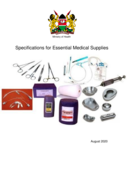
August 2020.
In December 2018, the President launched the UHC pilot covering four strategically selected counties-Isiolo, Kisumu, Machakos and Nyeri. It isplanned that by the year 2022, all persons in Kenya will be able to use the
...
essential services they need for their health and wellbeing through a single unified benefit package, without the risk of financial catastrophe. Essential health products are considered an integral part of UHC andare an indispensable element for delivery ofservices andare also a requirement for qualitycare. Despite this realization, a review of the UHC pilot in September 2019 established that whereas the Kenya Medical Supplies Authority (KEMSA) was able to fill up to 80% of pharmaceutical items, the order fill rate for medical supplies was less than 50%for level 2 and 3 facilities and as low as 30%for level 4 and 5 facilities.
more
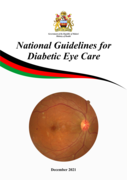
Diabetes mellitus (DM) is a global epidemic with significant morbidity. Diabetic
retinopathy (DR) is the specific microvascular complication of DM and affects 1 in 3 persons with DM. DR remains a leading cause of vision loss in working adult popula
...
tions. Patients with severe levels of DR are reported to have poorer quality of life and reduced levels of physical, emotional, and social well-being, and they utilize more health care resources.
Epidemiological studies and clinical trials have shown that optimal control of blood glucose, blood pressure, and blood lipids can reduce the risk of developing retinopathy and slow its progression. Timely treatment with laser photocoagulation, and increasingly, the appropriate use of intraocular administration of vascular endothelial growth factor (VEGF) inhibitors can prevent visual loss in vision- threatening retinopathy, particularly diabetic macular edema (DME). Since visual loss may not be present in the earlier stages of retinopathy, regular screening of persons with diabetes is essential to enable early intervention.
more

The International Federation of Red Cross and Red Crescent Societies (IFRC) is the world’s largest volunteer-based humanitarian network. With our 190 member National Red Cross and Red Crescent Soc
...
ieties worldwide, we are in every community reaching 160.7 million people annually through long-term services and development programmes, as well as 110 million people through disaster response and early recovery programmes. We act before, during and after disasters and health emergencies to meet the needs and improve the lives of vulnerable people. We do so with impartiality as to nationality, race, gender, religious beliefs, class and political opinions.
more

Conclusion: To ensure that people with disabilities can successfully access the necessary health services, the barriers on the demand side (the individuals requiring healthcare) as well as the barriers that are part of the healthcare system, should
...
be attended to.
more
Globally, the cancer burden is rising, exerting significant strain on
populations and health systems at all levels of income. There are
concerted efforts towards enhancing access to comprehensive
...
cancer prevention and control initiatives.
more
Future of Nursing 2020-2030
Wakefield, M.K.; et al.
National Academy of Medicine; National Academies of Sciences, Engineering, and Medicine
(2021)
C1
Charting a Path to Achieve Health Equity. The decade ahead will test the nation's nearly 4 million nurses in new and complex ways. Nurses live and
...
work at the intersection of health, education, and communities. Nurses work in a wide array of settings and practice at a range of professional levels. They are often the first and most frequent line of contact with people of all backgrounds and experiences seeking care and they represent the largest of the health care professions.
Free download available, register for free
more
The Haiti & Dominican Republic Cholera Operation Plan of Action outlines the Red Cross's strategy to combat cholera on the island of Hispaniola following the 2010 outbreak in Haiti. As part of a 10-year national strategy, the plan includes an initial two-year emergency response (2014-2016) with a bu
...
dget of 9.9 million Swiss francs. The approach focuses on three key areas: improving water and sanitation by repairing and expanding water systems and constructing sanitation facilities, prevention and hygiene promotion through community education and hygiene training, and preparedness and response by strengthening disease monitoring, training Red Cross volunteers, and prepositioning medical supplies. This initiative, led by the Haitian and Dominican Red Cross in collaboration with international partners and local governments, aims to reduce cholera infections and improve public health on the island.
more
A recent survey of the literature and experience identified five broad actions that development institutions and governments, as well as their partners an
...
d stakeholders, can take to improve disability-inclusive disaster risk management. Those five actions are:
- Include persons with disabilities as valued stakeholders in disaster risk management activities
- Help remove barriers to the full participation of persons with disabilities
- Increase awareness among governments and their partners of the safety and security needs of persons with disabilities
- Collect data that is disaggregated by disability
- Ensure that new construction, rehabilitation and reconstruction are accessible to persons with disabilities more
- Include persons with disabilities as valued stakeholders in disaster risk management activities
- Help remove barriers to the full participation of persons with disabilities
- Increase awareness among governments and their partners of the safety and security needs of persons with disabilities
- Collect data that is disaggregated by disability
- Ensure that new construction, rehabilitation and reconstruction are accessible to persons with disabilities more
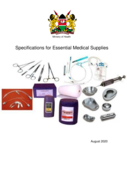
August 2020.
Essential diagnostic products areconsidered an integral part of UHC, they are an indispensable element for delivery ofservices andare also a requirement for qualitycare. Despite this realization, a review of the UHC pilot in September 2019 es
...
tablished that whereas the Kenya Medical Supplies Authority (KEMSA) was able to fill up to 80% of pharmaceutical items, the order fill rate for diagnostic products was less than 50 percent for level 2 and 3 facilities and as low as 30 percent for level 4 and 5 facilities.
more
In line with the National Mental Health Strategy for Lebanon (2015-2020), this guide answers the objective of the Mental Health and Psychosocial Su
...
pport task force: “Development and provision of staff care interventions for persons working in the MHPSS and Protection sectors”. It aims at preventing burnout, improving the wellbeing of staff, and managing difficult situations resulting from work conditions.
more
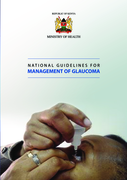
Glaucoma, a disease that gradually affects the optic nerve, is the second leading cause of vision loss globally, and it continues to pose a challenge to the eye health professionals.
