
Filter
1739
Text search:
Food
and
Drug
Administration
Featured
200
516
Language
Document type
985
321
217
102
51
25
21
8
3
2
2
2
Countries / Regions
105
67
60
55
52
49
40
39
38
35
34
33
30
30
29
28
24
22
21
18
15
14
14
13
12
11
10
9
9
9
8
7
7
7
7
7
6
6
6
5
5
5
5
5
5
4
4
4
4
4
4
3
3
3
3
3
3
3
3
2
2
2
2
2
2
2
2
2
2
2
2
2
1
1
1
1
1
1
1
1
1
1
1
1
1
1
1
1
1
1
1
1
1
1
1
1
1
1
1
Authors & Publishers
Publication Years
Category
778
182
77
71
56
24
24
Toolboxes
130
129
125
102
87
79
68
42
34
29
28
26
23
20
15
14
14
12
12
9
7
6
5
4
3
This document provides interim guidance on the management of the blood supply in response to the pandemic outbreak of coronavirus disease (COVID-19). It emphasizes the importance of being prepared and responding quickly
...
High prices, hard-to-access human insulin, few insulin producers, and weak health systems are just some of the barriers that people with diabetes face a century after insulin was discovered, WHO notes in a new report
The purpose of this document is to guide clinicians in the care of patients with or at risk of severe illness from influenza virus infection, including those caused by seasonal influenza viruses, pandemic influenza viruses and zoonotic (novel influe
...

The Committee discussed the implications for preparedness for smallpox-like events reflected by the ongoing COVID-19 pandemic. The Committee noted how quickly diagnostics and vaccines could be developed an
...
ABSTRACT
More than 500 million people worldwide live with cardiovascular disease (CVD). Health systems today face fundamental challenges in delivering optimal care due to ageing populations, healthcare workforce constraints, financing, availability and
...
The pharmacological management of asthma has changed considerably in recent decades, as it has come to be understood that it is a complex, heterogeneous disease with different phenotypes and endotypes. It is now clear that the goal of asthma treatme
...

About one fourth of the world’s population is estimated to have been infected with the tuberculosis (TB) bacilli, and about 5–10% of those infected develop TB disease in their lifetime. The risk for TB disease after infection depends on several
...

Trachoma is the leading infectious cause of blindness worldwide. In April 2023, it was a public health problem
in approximately 40 countries, with an estimated 116 million people at risk and 1.5 million people affected
by the late blinding stage o
...
This document provides technical guidance for manufacturers seeking World Health Organization (WHO) prequalification of in vitro diagnostic devices (IVDs) for malaria, with a focus on rapid diagnostic tests (RDTs) for symptomatic patients. It summarises the minimum performance requirements, includin
...
This document provides technical guidance for manufacturers seeking World Health Organization (WHO) prequalification of in vitro diagnostic devices (IVDs) for malaria, with a focus on rapid diagnostic tests (RDTs) for symptomatic patients. It summarises the minimum performance requirements, includin
...

2nd edition. The interagency field handbook on malaria control was developed to set out effective malaria control responses in humanitarian emergencies, particularly during the acute phase when reliance on international humanitarian assistance is greatest. This second edition represents a thorough u
...
Exciting new treatment approaches make the management of hepatitic C one of the most rapidly developing areas of medicine. The Flying Publisher short Guide to Hepatitis C is an up-to-date source of information for physicians, residents and advanced
...
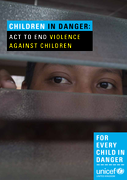
Every five minutes a child dies as the result of violence, according to a ground-breaking report from Unicef UK. The report reveals that the vast majority of children are killed outside warzones and that physical, sexual
...

The Global Burden of Disease (GBD) study, a collaborative endeavour of the World
Health Organization (WHO), the World Bank and the Harvard School of Public Health,
drew the attention of the international health community to the burden of neurologi
...
This National Health Policy has 5 objectives, namely
i. To strengthen the healthcare delivery system to be resilient
ii. To encourage the adoption of healthy lifestyles
iii. To improve the physical environment
iv. To improve the socio-economic status of the population
v. To ensure sustainable f
...

This companion document to Ending the neglect to attain the Sustainable Development Goals: a road map for neglected tropical diseases 2021-2030 ("the road map") aims to support a range of stakeholders - including countries in which neglected tropical diseases (NTDs) are endemic, international organi
...
Viral hepatitis is defined as inflammation of the liver cells due to viral infection. The burden of liver disease in South Africa is mostly underestimated as viral hepatitis, in particular chronic infection, is a silent and neglected cause of morbid
...

This document sets out, therefore, to explain the socioeconomic value of investing in the fight against NTDs and highlights priorities for global investment attention. Our work was guided by the need not only for
additional funding
...

This country cooperation strategy (CCS) outlines how the World Health Organization (WHO) will work with the Lao People’s Democratic Republic over the next five years (2024–2028), supporting the implementation of the five-year health sector development plans
...
WHO Model Formulary for Children
recommended
WHO Model Formulary for children based on the Second Model List of Essential Medicines for Children 2009.
In 2007, the World Health Assembly passed a Resolution titled ‘Better Medicines for Children’. This resolution recognized the need for research
...
