
Filter
1573
Text search:
Noncommunicable
Diseases
Featured
141
358
Language
Document type
631
442
190
107
79
44
20
19
14
9
8
6
2
1
Countries
187
48
45
42
39
30
29
26
25
24
23
19
19
19
19
19
18
17
16
16
16
15
13
12
11
11
11
11
11
10
9
9
9
8
8
7
6
6
6
5
5
5
4
4
4
4
4
4
4
4
3
3
3
3
3
3
3
3
3
3
2
2
2
2
2
2
2
2
2
2
2
2
2
2
2
2
2
2
1
1
1
1
1
1
1
1
1
1
1
1
1
1
1
1
1
1
1
1
1
1
1
1
1
1
1
1
1
1
Authors & Publishers
Publication Years
Category
543
290
157
72
55
25
12
1
Toolboxes
254
166
105
90
65
52
47
40
39
35
31
19
15
14
13
13
12
9
4
4
4
3
3
3
1
Regional situation analysis, practices, experiences, lessons learned and ways forward.
Technical guidance.
This technical guidance aims to inform policy and practice development specifically related to improving the health of older refugees and migrants within the European Union and the larger WHO European Region. Both ageing and migration are in themselves complex multidimensional p
...
At least half of the world’s population does not have full coverage of essential health services. Health expenses push more than 100 million people into extreme poverty each and every year, forcing them into terrible choices that no one should ever have to make: Buy medicine or food? Education or
...
This publication’s primary purpose is to provide a compilation of actions to address malnutrition in all its forms, in a concise and user-friendly format to help in decision-making processes for integration of nutrition interventions in national health policies, strategies, and plans based on coun
...
The Urban Health Equity Assessment and Response Tool (Urban HEART) is a user-friendly guide for policy- and decision-makers at national and local levels to: identify and analyse inequities in health between people living in various parts of cities, or belonging to different socioeconomic groups with
...
Stronger collaboration, better health: global action plan for healthy lives and well-being for all
recommended
The overall objective of the Global Action Plan is to enhance collaboration among 12 global organizations engaged in health, development and humanitarian responses to accelerate country progress on the health-related SDG targets. The Plan presents a new approach to strengthening collaboration among
...
Countries must invest at least 1% more of GDP on primary health care to eliminate glaring coverage gaps
At current rates of progress up to 5 billion people will miss out on health care in 2030
Countries must increase spending on primary healthcare by at least 1% of their gross domestic product (
...
he WHO Guidelines on Integrated Care for Older People (ICOPE) propose evidence-based recommendations for health care professionals to prevent, slow or reverse declines in the physical and mental capacities of older people. These recommendations require countries to place the needs and preferences of
...
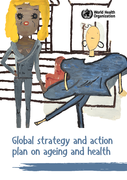
Specifically the Strategy focuses on five strategic objectives:
commitment to action on Healthy Ageing in every country;
developing age-friendly environments;
aligning health systems to the needs of older populations;
developing sustainable and equitable systems for providing lon
...
A systematic review informing a radical transformation of health workforce development
The aim of the people-centred framework is to help countries to develop fully prioritized and budgeted NSPs based on a culture of making full use of the available data, which are aligned with national planning cycles and which provide the basis for a robust national response that can accelerate prog
...
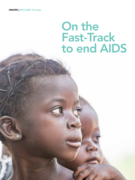
UNAIDS | 2016–2021 Strategy
Accessed: 20.11.2019
Stories of putting people at the centre
Accessed: 20.11.2019
Recommendations, resources and references
A publication of the Southern African HIV Clinicians Society
Manual for male circumcision under local anaesthesia and HIV prevention services for adolescent boys and men
recommended
This Manual takes into account those lessons to improve and maintain high quality services. It is aligned with updated recommendations on infection prevention and control -- a foundation for all health care services. Voluntary medical male circumcision for HIV prevention programs also afford a uniqu
...
Chapter 1 of the WHO manual for male circumcision as an HIV prevention strategy
provides an overview of how medical male circumcision (VMMC) can reduce the risk of female-to-male HIV transmission. It explains that VMMC is an effective and safe risk-reduction method that, according to three randomiz
...
The infectious disease burden in India is among the highest in the world. A large amount of antibiot-ics are consumed in fighting infections, some of them saving lives, but every use adding to antibiotic resistance in bacteria. Antibiotic use is increasing steadily (table 1), particularly
...

The State of the world’s nursing 2020 report provides the latest, most up-to-date evidence on and policy options for the global nursing workforce. It also presents a compelling case for considerable – yet feasible – investment in nursing education, jobs, and leadership.
The primary chapters
...
7 April 2021
The holy month of Ramadan (mid-April to mid-May 2021) is marked by social and religious gatherings. Because of the ongoing COVID-19 pandemic, it is imperative to observe the holiday with caution and care. This document provides up-to-date public health advice that can be applied across
...
Facing the COVID-19 (new coronavirus disease) pandemic, the countries of the world must take decisive action to stop the spread of the virus. In these critical circumstances, it is es- sential that everyone is informed about other health risks and hazards so that they can stay safe and healthy.
The
...
