
Filter
1663
Text search:
cardiovascular
risk
Featured
172
353
Language
Document type
712
425
265
82
67
56
26
9
8
6
4
1
1
1
Countries
133
100
46
43
40
39
29
27
21
21
20
19
19
17
17
16
16
16
16
15
15
14
14
13
13
12
12
11
10
10
9
9
8
8
8
7
7
7
7
7
7
6
6
6
6
5
5
4
4
4
4
3
3
3
3
3
3
3
3
3
3
3
3
3
2
2
2
2
2
2
2
2
2
2
2
2
2
2
2
2
2
2
2
2
1
1
1
1
1
1
1
1
1
1
1
1
1
1
1
1
1
1
1
1
1
1
1
1
1
1
1
1
Authors & Publishers
Publication Years
Category
639
240
181
61
40
32
7
1
Toolboxes
238
187
171
118
50
44
31
28
26
25
21
21
19
17
17
7
6
5
5
5
4
2
2
2
1
The World Health Organization's Global Health Observatory (GHO) provides comprehensive data on noncommunicable diseases (NCDs), including cardiovascular diseases, cancers, chronic respiratory diseases, and diabetes. The portal offers country-specifi
...
Noncommunicable diseases (NCDs) or Chronic noncommunicable diseases (NCDs) are the 1st cause of death and disability worldwide.
The term NCDs refers to a group of conditions that are not mainly caused by an acute infection, result in long-term health consequences and often create a need for long-
...
Obesity is a global health problem. Its worldwide prevalence has tripled between 1975 and 2016, reaching a prevalence in Chile of 34.4%, according to the National Health Survey 2016-2017. If this condition corresponds to a risk factor or primary dis
...
Psoriasis, which can involve the skin, nails and joints, is a chronic, painful, disfiguring and disabling noncommunicable disease (NCD) for which there is no cure. It negatively impacts on quality of life. Some of those who suffer from the disease develop chronic, inflammatory arthritis (psoriatic a
...

In 2015, 26% of the deaths of 5.9 million children who died before reaching their fifth birthday could have been prevented
through addressing environmental risks – a shocking missed opportunity. The prenatal and early childhood period represents
a window of particular vulnerability, where enviro
...

Almost all populations are consuming too much sodium. The global mean intake of adults is 4310 mg/day sodium (equivalent to 10.78 g/day salt). This is more than double the World Health Organization recommendation for adults of less than 2000 mg/day sodium (equivalent to < 5 g/day salt).
- The primary health effect associated with diets high in sodium is raised blood pressure, increasing the
...

Although air pollution is well known to be harmful to the lung and airways, it can also damage most other organ systems of the body. It is estimated that about 500,000 lung cancer deaths and 1.6 million COPD deaths can be attributed to air pollution, but air pollution may also account for 19% of all
...
The Our World in Data webpage on air pollution provides an extensive overview of the global impact of air pollution on health and the environment. It presents data on sources of pollution, such as industry, vehicles, and domestic energy use, and highlights the associated health risks, including resp
...
With the advent and ongoing development of novel antiretroviral agents, people living with HIV (PLWHIV) are living longer and experiencing the effects of HIV infection on aging. The success of antiretroviral therapy (ART) has transformed HIV from a fatal disease into a manageable chronic condition,
...

Background: Peripheral artery disease is a growing public health problem. We aimed to estimate the global disease burden of peripheral artery disease, its risk factors, and temporospatial trends to inform policy and public measures.
Methods: Data o
...
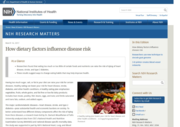
The NIH webpage discusses how dietary habits influence the risk of heart disease, stroke, and type 2 diabetes. It highlights that both excessive and insufficient intake of certain foods and nutrients can increase mortality
...
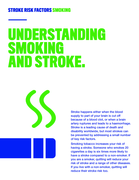
Stroke happens either when the blood supply to part of your brain is cut off because of a blood clot, or when a brain
artery ruptures and leads to a haemorrhage. Stroke is a leading cause of death and disability worldwide, but most strokes can
be prevented by addressing a small number of key
...

Two decades of epidemiological research shows that silent cerebrovascular disease is common and is associated with future risk for stroke and dementia. It is the most common incidental finding on brain scans. To summarize evidence on the diagnosis a
...

Each year, ≈795 000 individuals in the United States experience a stroke, of which 87% (690 000) are ischemic and 185 000 are recurrent.1 Approximately 240 000 individuals experience a transient ischemic attack (TIA) each year.2 The risk o
...
The materials focus on promoting healthy eating habits and reducing risk factors for non-communicable diseases such as obesity, diabetes, and heart disease. They emphasize actions to limit sugar, salt, and fat intake, including policy recommendation
...

Prevention of stroke and transient ischemic attack includes both conventional approaches to vascular risk factor management (blood pressure lowering, cholesterol reduction with statins, smoking cessation and antiplatelet therapy)
and more specific
...

This global status report on prevention and control of NCDs (2014), is framed around the nine voluntary global targets. The report provides data on the current situation, identifying bottlenecks as well as opportunities and priority actions for attaining the targets. The 2010 baseline estimates on N
...
The incidence of circulatory disorders is increasing worldwide, affecting both low- and middle-income countries and some high-income countries. There is evidence of rising incidence and prevalence rates, even among younger individuals, along with an increasing prevalence of
...
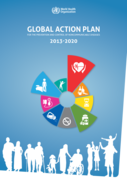
The "Global Action Plan for the Prevention and Control of Noncommunicable Diseases 2013-2020," published by the World Health Organization (WHO), provides a roadmap to reduce premature deaths from noncommunicable diseases (NCDs) like heart disease, cancer, and diabetes. It emphasizes strengthening he
...
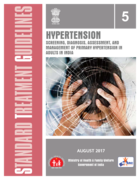
Hypertension is the number one health related risk factor in India, with the largest contribution to burden of disease and mortality. It contributes to an estimated 1.6 million deaths, due to ischemic heart disease and stroke, out of a total of abou
...
