
Filter
665
Text search:
World
Health
Organization
WHO
Western-Pacific
Region
Featured
Recommendations
86
New Publications
153
Language
Document type
No document type
267
Studies & Reports
170
Guidelines
123
Manuals
39
Strategic & Response Plan
29
Resource Platforms
9
Training Material
8
Fact sheets
8
Situation Updates
7
Infographics
5
Countries / Regions
Global
60
Western Pacific Region
27
Philippines
25
South–East Asia Region
23
Asia
16
Cambodia
14
Africa
11
India
10
Western and Central Europe
10
China
7
Myanmar / Burma
7
Nepal
6
Bangladesh
6
Latin America and the Carribbean
6
Nigeria
5
Kenya
5
Thailand
5
Russia
5
South Sudan
4
Tanzania
4
South Africa
4
Eastern Europe
4
Liberia
3
Ethiopia
3
Ghana
3
Yemen
3
Vietnam
3
Sierra Leone
2
Afghanistan
2
Zambia
2
Syria
2
Indonesia
2
Malawi
2
Ukraine
2
Middle East and North Africa
2
Eastern Europe and Central Asia
2
Fiji
2
Mongolia
2
Laos
2
Guinea
1
Burkina Faso
1
Congo, Democratic Republic of
1
USA
1
Uganda
1
Zimbabwe
1
Somalia
1
Pakistan
1
Egypt
1
Rwanda
1
Mozambique
1
Papua New Guinea
1
Sudan
1
Benin
1
Central African Republic
1
Namibia
1
Serbia
1
Ecuador
1
Botswana
1
Madagascar
1
Mexico
1
Sri Lanka
1
East and Southern Africa
1
West and Central Africa
1
Venezuela
1
Palestine
1
Iran
1
Authors & Publishers
Publication Years
Category
Countries
107
Clinical Guidelines
98
Public Health
68
Women & Child Health
49
Key Resources
34
Capacity Building
16
Pharmacy & Technologies
13
Toolboxes
Mental Health
57
HIV
53
COVID-19
48
TB
40
NTDs
39
Rapid Response
32
AMR
32
Planetary Health
32
Global Health Education
28
Caregiver
26
Pharmacy
20
Malaria
19
NCDs
18
2.0 Rapid Response
17
Disability
14
Zika
12
Polio
8
Conflict
8
Ebola & Marburg
7
Refugee
7
Natural Hazards
5
Health Financing Toolbox
4
Cholera
2
Specific Hazards
2

Self-care interventions are among the most promising and exciting new approaches to improve health and well-being, both from a health systems perspective and for people
...

WHO guideline on health policy and system support to optimize community health worker programmes
recommended
The guideline uses state-of-the-art evidence to identify effective policy options to strengthen community health worker (CHW) programme performance through their proper integration in health systems
...

People younger than 20 years comprise 35% of the global population and 40% of the global population of least-developed nations. The number of children - neonates, infants, children, and adolescents up to 19 years of age - who need pediatric palliati
...
This report has been prepared in response to informal requests by SIDS Member States and territories for WHO assistance in confronting the stark and dire situation which climate change has created in their countries and the impact it is having on th
...

Inequality of access to palliative care and symptom relief is one of the greatest disparities in global health care (1). Currently, there is avoidable suffering on a massive scale due to lack of access to palliative care and symptom relief in low- a
...
Self-care interventions are among the most promising and exciting new approaches to improve health and well-being, both from a health systems perspective and for people
...

This fourth WHO report on neglected tropical diseases (NTDs) reviews the progress made towards achieving the Roadmap targets for 2020, noting the remaining challenges, then looks beyond 2020 to evaluate the changing global
...
The World health statistics report is the annual compilation of health and health-related indica
...
The 2024 World Malaria Report shows that the malaria burden remains overwhelmingly concentrated in Africa. The continent accounted for 94% of global cases and 95% of malaria-related deaths in 2023. Although the number of malaria cases increased glob
...

Public health emergencies, including pandemics, highlight the need for health systems and services that are prepared, resilient and ready to respond to he
...
This document is a guide for national authorities who are responsible for managing public health responses to COVID-19
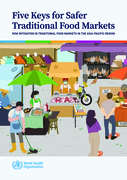
Traditional food markets play important economic, cultural, and social role and are sources of livelihood for millions of people in urban and rural areas. The manual Five keys for safer traditional food markets: risk mitigation in traditional food markets in the Asia-Pacific
...
An information package for school staff
Training Modules for climate change and Health - WHO
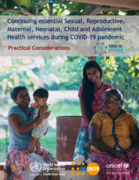
Practical considerations
It provides more detailed and practical guidance for continuing services for each life stage across the life-course continuum. As such, both documents should be read and used together. The countries in South-East Asia and the Pacific regions would like to adapt the guidance
...
People living with HIV depend on life-saving antiretroviral therapy (ART) and access to ART must be maintained during periods of travel restrictions and lockdowns resulting from the COVID-19 pandemic. The Information note on HIV and COVID-19 addresses common concerns people living with HIV have rega
...
Primary care can play a significant role in the COVID-19 response by differentiating patients with respiratory symptoms from those with COVID-19, making an early diagnosis, helping vulnerable people cope with their anxiety about the virus, and reducing the demand for hospital services. This document
...
Algorithm for COVID-19 triage and referral
recommended
Efficient triage of patients with COVID-19 at all health facility levels (primary, secondary and tertiary) will help the national response planning and case management system cope with patient influx, direct necessary medical resources to efficientl
...

This global status report on prevention and control of NCDs (2014), is framed around the nine voluntary global targets. The report provides data on the current situation, identifying bottlenecks as well as opportunities and priority actions for attaining the targets. The 2010 baseline estimates on N
...
