Filter
254
Text search:
World
Health
Organization
(WHO),
United
Nations
Populations
Fund
(UNFPA)
Featured
Recommendations
17
New Publications
80
Language
Document type
No document type
169
Studies & Reports
37
Guidelines
21
Strategic & Response Plan
11
Manuals
9
Training Material
3
Situation Updates
3
Resource Platforms
1
Countries / Regions
Global
12
Sierra Leone
8
Liberia
8
Nigeria
8
Nepal
7
Kenya
7
Myanmar / Burma
6
Uganda
5
Zambia
5
Syria
5
Bangladesh
5
Ukraine
5
Rwanda
4
Malawi
4
Guinea
3
Zimbabwe
3
Yemen
3
Latin America and the Carribbean
3
Western and Central Europe
3
Asia
3
Ethiopia
2
Ghana
2
Philippines
2
Jordan
2
Tanzania
2
South Africa
2
Benin
2
Lesotho
2
East and Southern Africa
2
Middle East and North Africa
2
South–East Asia Region
2
Africa
2
Moldova
2
Haiti
1
India
1
South Sudan
1
Afghanistan
1
Cambodia
1
Indonesia
1
Namibia
1
Brazil
1
Botswana
1
Sri Lanka
1
West and Central Africa
1
Eastern Europe and Central Asia
1
Albania
1
Tajikistan
1
Mauritius
1
Authors & Publishers
Publication Years
Category
Countries
96
Women & Child Health
38
Key Resources
15
Clinical Guidelines
11
Public Health
6
Capacity Building
5
Pharmacy & Technologies
1
Toolboxes
HIV
58
COVID-19
17
Conflict
14
Health Financing Toolbox
8
Disability
5
Mental Health
5
Caregiver
5
Refugee
4
Global Health Education
4
Planetary Health
4
TB
3
Ebola & Marburg
2
Natural Hazards
2
Rapid Response
2
Zika
2
Polio
1
AMR
1
Pharmacy
1
2.0 Rapid Response
1

UNAIDS 2016 / Meeting Report
Asia-Pacific Human Development Report

This report started with a simple question—“How can we tell how much funding is devoted to global health programs?”—and ended (more than two years later) with an answer that is far from simple. As those
...
Financing Global Health 2013: Transition in an Age of Austerity, IHME’s fifth annual report on global health expenditure, depicts financing trends that underline the resilience of development assi
...
Gender-based violence, including rape is a problem throughout the world, occurring in every society, country and region. Refugees and internally displaced people are particularly at risk of this violation during every phase of an emergency situation
...
In 2014, the Ministry of Health (MOH) in Malawi conducted a nationwide assessment of emergency obstetric and newborn care (EmONC) services. This cross-sectional facility-based survey used 10 data collection modules. Data collection began on 23rd Sep
...
In 2017, $37.4 billion of development assistance was provided to low- and middleincome countries to maintain or improve health. This amount is down slightly compared to 2016, and since 2010, development assistance for
...
This programmatic brief explores how to expand HIV and STI prevention and contraceptive method options in contraceptive services and, thus, to reduce HIV and STI incidence among adolescent girls and women. It focuses on settings with extremely high HIV prevalence and incidence. This brief complement
...
January – December 2014
Republic of Moldova South‐East European Region National Coordination Council
Declaration of Commitment of the United Nations General Assembly Special Session on HIV
...
The uneven distribution of HIV risks and burdens across populations is a well-substantiated fact, though seldom publicly acknowledged. Gay men and other men who have sex with men, people
...
Section One
summarizes UNHCR’s mandate of international protecdtion and the aim and principles of emergency
response;
Section Two
deals with emergency management;
Section Three
covers the vital sectors and problem areas in refugee emergencies, including
...
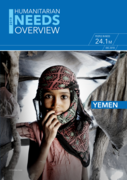
The humanitarian crisis in Yemen remains the worst in the world. Nearly four years of conflict and severe economic decline are driving the country to the brink of famine and exacerbating needs in all sectors. An estimated 80 per cent of the populati
...
Scant data exists on the prevalence of violence against children worldwide. However, available information, including the United Nations Secretary-General’s Study on Violence against Children, sho
...

The well-being of children in sub-Saharan Africa is under siege from all directions since the advent of the COVID-19 pandemic. The region is now suffering its first-ever economic recession, pushing about 50 million people into extreme poverty, a majority of whom are children.