
Filter
778
Text search:
World
Health
Organization
(Cambodia)
Featured
Recommendations
49
New Publications
201
Language
Document type
No document type
481
Studies & Reports
132
Guidelines
82
Manuals
29
Strategic & Response Plan
14
Fact sheets
13
Resource Platforms
7
Infographics
7
Situation Updates
6
Training Material
4
Brochures
1
Countries / Regions
Cambodia
69
Global
58
Myanmar / Burma
30
Asia
29
Vietnam
13
Philippines
12
South–East Asia Region
12
Nepal
11
Kenya
11
Laos
11
Ethiopia
10
India
10
Thailand
7
Western Pacific Region
7
Liberia
6
Indonesia
6
Bangladesh
6
Tanzania
5
China
5
Africa
5
Sierra Leone
4
Senegal
4
Cameroon
4
Rwanda
4
Latin America and the Carribbean
4
Russia
4
Nigeria
3
Ghana
3
Pakistan
3
Zambia
3
South Africa
3
Malawi
3
Ukraine
3
Western and Central Europe
3
Guinea
2
Burkina Faso
2
Uganda
2
South Sudan
2
Benin
2
Namibia
2
Yemen
2
West and Central Africa
2
Eastern Europe
2
Congo, Democratic Republic of
1
USA
1
Zimbabwe
1
Haiti
1
Jordan
1
Afghanistan
1
Egypt
1
Syria
1
Chad
1
Malaysia
1
Mozambique
1
Eswatini/ Swaziland
1
Brazil
1
Switzerland
1
Honduras
1
Ecuador
1
Lesotho
1
Mexico
1
Sri Lanka
1
East and Southern Africa
1
Middle East and North Africa
1
Eastern Europe and Central Asia
1
Palestine
1
Turkmenistan
1
Authors & Publishers
Publication Years
Category
Countries
182
Clinical Guidelines
65
Public Health
56
Key Resources
48
Women & Child Health
47
Capacity Building
16
Pharmacy & Technologies
13
Toolboxes
HIV
125
TB
65
Disability
58
Mental Health
54
NTDs
31
Malaria
29
Planetary Health
28
COVID-19
22
Global Health Education
19
AMR
18
Rapid Response
14
Pharmacy
14
Caregiver
12
NCDs
10
Conflict
9
Health Financing Toolbox
9
Ebola & Marburg
7
Natural Hazards
7
Specific Hazards
6
2.0 Rapid Response
5
Polio
4
Refugee
4
Zika
4
Typhoon
1
WHO REPORT ON THE GLOBAL TOBACCO EPIDEMIC, 2017

The Strategic Framework for Emergency Preparedness is a unifying framework which identifies the principles and elements of effective country health emergency preparedness. It adopts the major lessons of previous initiatives and lays out the planning
...

Safe sanitation is essential for health, from preventing infections to improving and maintaining mental and social
well-being. Lack of adequate sanitation contributes to diarrhoeal diseases, parasitic infections, and undernutrition, as
well as pos
...
This report includes analysis from informal regional consultations in the African Region, the Caribbean and North America, Latin America, South-East Asia Region, European Region, Eastern Mediterranean Region, alongside three forums in the Western Pacific Region. It analyses the overarching similarit
...

WHO Technical Report Series, No. 961, 2011, Annex 8 - These guidelines are intended to provide a description of ways in which pharmacists can improve access to health care, health promotion and the
...
Systematic screening for active tuberculosis: an operational guide.
Discussion paper initially prepared in April 2015 to facilitate feedback, and finalized after the
June 2015 meeting of WHO’s Strategic and Technical Advisory Group for TB (STAG-TB).
The Compendium of data and evidence-related tools for use in TB planning and programming was developed as a companion document to the People-centred framework for tuberculosis programme planning and prioritization – user guide, published by the
...
Monitoring of implementation of collaborative TB/HIV activities and evaluation of impact is critically important. This requires efficient monitoring and evaluation system so as to establish accountability mechanisms between programmes, the population they serve, and donors. The Guide to monitoring a
...
ПРАКТИЧЕСКИЕ ШАГИ ПО ОБЕСПЕЧЕНИЮ ВСЕОБЩЕГО ДОСТУПА К КАЧЕСТВЕННОЙ ПОМОЩИ
Fact Sheet, May 2018.
Nipah virus (NiV) is a zoonotic virus (it is transmitted from animals to humans) and can also be transmitted through contaminated food or directly between people. In infected people, it causes a range of illnesses from asymptomatic (subclinical) infection to acute respiratory
...
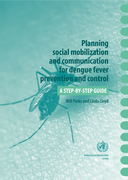
A Step-by-Step Guide.
It is intended for health planners, dengue or vector control programme managers and individuals, nongovernmental organizations (NGOs) and other agencies with interests and/or expertise in developing biological, chemical, envir
...
Anaemia is a serious global public health problem that particularly affects young children, menstruating adolescent girls and women, and pregnant and postpartum women. It is a condition in which the number of red blood cells or the haemoglobin conce
...
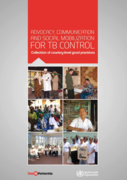
Collection of country-level good practices

Launch of the WHO Report on antimalarial drug efficacy, resistance and response: 10 years of surveillance (2010–2019). Key findings

Offering additional pre-exposure prophylaxis (PrEP) choices has the potential to increase uptake and effective use of PrEP, and of HIV prevention overall, as it allows people to choose a method that they prefer.
In this guideline, WHO recommends an offering long-acting injectable lenacapavir (LEN
...

Guidelines on lenacapavir for HIV prevention and testing strategies for long-acting injectable pre-exposure prophylaxis. Web Annex B
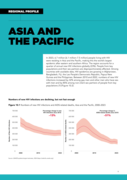
In 2023, 6.7 million [6.1 million–7.5 million] people living with HIV were residing in Asia and the Pacific, making this the world’s largest epidemic after eastern and southern Africa. The region accounts for a quarter of annual new HIV infectio
...
