Filter
640
Text search:
Shelter
Cluster
Featured
Recommendations
63
New Publications
213
Language
Document type
No document type
355
Studies & Reports
90
Manuals
50
Guidelines
50
Strategic & Response Plan
44
Situation Updates
33
Fact sheets
13
Training Material
2
Brochures
1
Resource Platforms
1
Online Courses
1
Countries / Regions
Syria
39
South Sudan
27
Ukraine
27
Myanmar / Burma
27
Global
21
Bangladesh
20
Yemen
20
Congo, Democratic Republic of
18
Mozambique
18
Nepal
16
Philippines
15
Haiti
12
Nigeria
11
India
11
Uganda
10
Central African Republic
9
Venezuela
9
Kenya
8
Ethiopia
7
Lebanon
7
Malawi
7
Sudan
7
West and Central Africa
7
Sierra Leone
6
Zimbabwe
6
Jordan
6
Afghanistan
6
Africa
6
Liberia
5
Somalia
5
Indonesia
5
Zambia
4
Turkey
4
Rwanda
4
South Africa
4
Brazil
4
Colombia
4
South–East Asia Region
4
Latin America and the Carribbean
4
Palestine
4
Vietnam
4
Burkina Faso
3
Mali
3
Cameroon
3
Iraq
3
Germany
3
Namibia
3
Burundi
3
Middle East and North Africa
3
Western and Central Europe
3
Laos
3
Guinea
2
Pakistan
2
Tanzania
2
Cambodia
2
Papua New Guinea
2
Vanuatu
2
Peru
2
Croatia
2
Libya
2
Madagascar
2
Lesotho
2
East and Southern Africa
2
Western Pacific Region
2
Paraguay
2
Asia
2
Moldova
2
Iran
2
Portugal
2
Spain
2
USA
1
Ghana
1
Niger
1
Togo
1
China
1
Malaysia
1
Singapore
1
Serbia
1
Hungary
1
Sri Lanka
1
Eastern Europe and Central Asia
1
Fiji
1
Bhutan
1
Poland
1
Eastern Europe
1
Russia
1
Romania
1
Kyrgyzstan
1
Turkmenistan
1
Japan
1
France
1
United Kingdom
1
Azerbaijan
1
Belarus
1
Bosnia and Herzegovina
1
Authors & Publishers
Publication Years
Category
Countries
246
Key Resources
121
Women & Child Health
28
Public Health
19
Clinical Guidelines
12
Capacity Building
8
Toolboxes
Conflict
122
COVID-19
77
Natural Hazards
69
Disability
35
Mental Health
28
Refugee
26
HIV
23
Rapid Response
16
Ebola & Marburg
13
Specific Hazards
12
Planetary Health
10
2.0 Rapid Response
9
TB
5
Typhoon
4
Global Health Education
4
Malaria
4
NTDs
3
NCDs
3
Cholera
2
Caregiver
2
Health Financing Toolbox
2
Polio
1
South Sudan
1
Zika
1
AMR
1
Pharmacy
1
Learning from earthquake relief and recovery operations
The Minimum Standards for Protection Mainstreaming are a set of international standards designed to provide practical assistance to humanitarian actors to mainstream protection in the assessment, design, implementation, monitoring and evaluation of humanitarian programmes, projects and activities.
...
Since the end of 2018, there has been a significant upsurge in violence in Rakhine State after armed conflict broke out between the Arakan Army (AA) and the Myanmar Military. The violence escalated following attacks by the AA against military sites in January 2019 and subsequent counter-attacks by t
...
This briefing pack serves this purpose by sharing RCCE/humanitarian coordination experience from country level, feedback from global consultations and addressing frequently asked questions. In parallel, the RCCE Core Group has been working to revise the RCCE Collective Service Strategy. Where possib
...
Guidelines.
The guidelines set out essential actions that humanitarian actors must take in order to effectively identify and respond to the needs and rights of persons with disabilities who are most at risk of being left behind in humanitarian settings.
The recommended actions in each chapter pl
...
March – June 2020
This update: 3 April 2020

This document provides information for WHO Member States, particularly low-income and middle-income countries, to strengthen preparedness and response plans with regard to the social and mental health consequences of biological and chemical attacks.
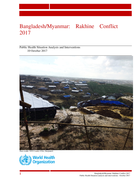
Public Health Situation Analysis and Interventions 10 October 2017

The MHPSS MSP is an easy-to-follow intersectoral package, which spells out the activities and actions that all humanitarian actors should put in place in all emergencies for an effective MHPSS response. It speaks to different actors at the global, regional, national, and local levels to plan, coordi
...
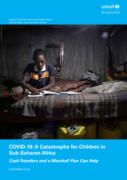
The well-being of children in sub-Saharan Africa is under siege from all directions since the advent of the COVID-19 pandemic. The region is now suffering its first-ever economic recession, pushing about 50 million people into extreme poverty, a majority of whom are children.