
Filter
220
Text search:
Ministry
of
Health
Ethiopia,
WHO
Regional
Office
for
Africa
Featured
Recommendations
16
New Publications
55
Language
Document type
No document type
107
Studies & Reports
57
Guidelines
18
Manuals
15
Strategic & Response Plan
15
Training Material
3
Situation Updates
3
Resource Platforms
1
Fact sheets
1
Countries / Regions
Ethiopia
31
Kenya
14
Global
13
Africa
11
Uganda
5
Guinea
4
Sierra Leone
4
Liberia
4
South Sudan
4
East and Southern Africa
4
Western and Central Europe
4
Tanzania
3
Sudan
3
West and Central Africa
3
Somalia
2
South Africa
2
Madagascar
2
Middle East and North Africa
2
Latin America and the Carribbean
2
Nigeria
1
Senegal
1
Congo, Democratic Republic of
1
Togo
1
Zimbabwe
1
Philippines
1
Pakistan
1
Zambia
1
Chad
1
Cambodia
1
Thailand
1
China
1
Malawi
1
Namibia
1
Peru
1
Brazil
1
North Macedonia
1
Colombia
1
Botswana
1
Yemen
1
Eastern Europe
1
Gabon
1
Authors & Publishers
Publication Years
Category
Countries
68
Public Health
21
Clinical Guidelines
17
Key Resources
17
Women & Child Health
14
Pharmacy & Technologies
2
Capacity Building
1
Toolboxes
HIV
24
COVID-19
13
Mental Health
12
AMR
11
Planetary Health
11
TB
9
Disability
8
Conflict
8
Refugee
7
Caregiver
7
Pharmacy
7
2.0 Rapid Response
7
Rapid Response
6
Ebola & Marburg
5
Global Health Education
5
NTDs
5
Health Financing Toolbox
4
Natural Hazards
2
NCDs
2
Cholera
1
Polio
1
Journal of Infection and Public Health 12 (2019) 213–223

While epidemiological data for type 1 diabetes (T1D) in low/middle-income countries, and particularly low-income countries (LICs) including Liberia is lacking, prevalence in LICs is thought to be increasing. T1D care in LICs is often impacted by cha
...
Value in Health Regional Issues 4 C (2014) 37-40

Refugee protection in the country is provided within the framework of these international and national refugee laws as well as the core international human rights treaties that have been ratified by the country. Continued insecurity within neighbour
...
Updated Guideline.
The Emergency Triage Assessment and Treatment (ETAT) guidelines provide guidance on the most common emergency conditions in children presenting at the health facility. These include but are not limited to airway obstruction and o
...
In 2024, we need US$1.5 billion to provide live-saving health care to millions of people in emergencies. An alarming combination of conflict, clima
...
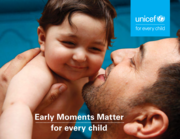
This report presents data and outlines best practices and policies that can put governments on the path to providing every child with the best start in life. It outlines the neuroscience of early childhood development (ECD), including the importance
...
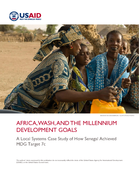
Nationally, Senegal met the MDG target for water supply access. It did this by engaging the public and private sectors to effectively invest and report on investments. It focused on larger population centers, less on remote regions
...
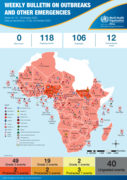
The WHO Health Emergencies Programme is currently monitoring 118 events in the region. This week’s main articles cover the following events:
Coronavirus disease 2019 (COVID-19) in Togo
M
...

The 2018 global health financing report presents health spending data for all WHO Member States
...
Sepsis contributes significantly to preventable mortality and is the final common pathway to death for severe infectious diseases; it can also arise as a complication of injuries and non-communicabl
...

2nd edition. Essential guideline for humanitarian assistance

The ninth WHO report on the global tobacco epidemic tracks the progress made by countries in tobacco control since 2008 and, marks 15 years since the introduction of the MPOWER technical package whi
...
