
Filter
2181
Text search:
Lessons
learned
Featured
187
592
Language
2077
65
62
43
33
25
18
8
4
4
4
2
2
2
1
1
1
1
1
1
1
1
1
1
1
1
1
1
1
Document type
1108
430
231
176
139
42
19
15
10
4
3
1
1
Countries
109
74
70
53
51
49
45
42
38
37
35
34
33
31
31
30
30
30
27
26
26
24
24
20
18
17
17
16
16
15
15
15
13
12
12
12
11
11
11
10
10
10
10
10
10
9
8
8
8
8
7
7
7
7
7
6
6
6
6
6
5
5
5
5
5
5
5
5
4
3
3
3
3
3
3
3
3
3
3
2
2
2
2
2
2
2
2
2
2
2
1
1
1
1
1
1
1
1
1
1
1
1
1
1
1
1
1
1
1
1
1
1
1
1
1
1
1
1
1
Authors & Publishers
301
68
60
57
56
52
49
25
22
19
18
16
15
15
13
13
13
12
12
12
12
12
11
11
11
11
10
10
10
10
9
8
8
8
8
8
8
8
8
8
8
7
7
7
7
6
6
6
6
6
6
6
6
6
6
6
6
5
5
5
5
5
5
5
5
5
5
5
5
5
5
4
4
4
4
4
4
4
4
4
4
4
4
4
4
4
4
4
4
4
4
4
4
4
4
3
3
3
3
3
3
3
3
3
3
3
3
3
3
3
3
3
3
3
3
3
3
3
3
3
3
3
3
3
3
3
3
3
3
3
3
3
3
3
3
3
3
3
3
3
3
2
2
2
2
2
2
2
2
2
2
2
2
2
2
2
2
2
2
2
2
2
2
2
2
2
2
2
2
2
2
2
2
2
2
2
2
2
2
2
2
2
2
2
2
2
2
2
2
2
2
2
2
2
2
2
2
2
2
2
2
2
2
2
2
2
2
2
2
2
2
2
2
2
2
2
2
2
2
2
2
2
2
2
2
2
2
2
2
2
2
2
2
2
2
2
2
2
2
2
2
2
2
2
2
2
2
2
2
2
2
2
2
2
2
2
2
2
2
2
2
2
2
2
2
2
2
2
2
2
2
2
2
2
2
2
2
2
2
2
2
2
1
1
1
1
1
1
1
1
1
1
1
1
1
1
1
1
1
1
1
1
1
1
1
1
1
1
1
1
1
1
1
1
1
1
1
1
1
1
1
1
1
1
1
1
1
1
1
1
1
1
1
1
1
1
1
1
1
1
1
1
1
1
1
1
1
1
1
1
1
1
1
1
1
1
1
1
1
1
1
1
1
1
1
1
1
1
1
1
1
1
1
1
1
1
1
1
1
1
1
1
1
1
1
1
1
1
1
1
1
1
1
1
1
1
1
1
1
1
1
1
1
1
1
1
1
1
1
1
1
1
1
1
1
1
1
1
1
1
1
1
1
1
1
1
1
1
1
1
1
1
1
1
1
1
1
1
1
1
1
1
1
1
1
1
1
1
1
1
1
1
1
1
1
1
1
1
1
1
1
1
1
1
1
1
1
1
1
1
1
1
1
1
1
1
1
1
1
1
1
1
1
1
1
1
1
1
1
1
1
1
1
1
1
1
1
1
1
1
1
1
1
1
1
1
1
1
1
1
1
1
1
1
1
1
1
1
1
1
1
1
1
1
1
1
1
1
1
1
1
1
1
1
1
1
1
1
1
1
1
1
1
1
1
1
1
1
1
1
1
1
1
1
1
1
1
1
1
1
1
1
1
1
1
1
1
1
1
1
1
1
1
1
1
1
1
1
1
1
1
1
1
1
1
1
1
1
1
1
1
1
1
1
1
1
1
1
1
1
1
1
1
1
1
1
1
1
1
1
1
1
1
1
1
1
1
1
1
1
1
1
1
1
1
1
1
1
1
1
1
1
1
1
1
1
1
1
1
1
1
1
1
1
1
1
1
1
1
1
1
1
1
1
1
1
1
1
1
1
1
1
1
1
1
1
1
1
1
1
1
1
1
1
1
1
1
1
1
1
1
1
1
1
1
1
1
1
1
1
1
1
1
1
1
1
1
1
1
1
1
1
1
1
1
1
1
1
1
1
1
1
1
1
1
1
1
1
1
1
1
1
1
1
1
1
1
1
1
1
1
1
1
1
1
1
1
1
1
1
1
1
1
1
1
1
1
1
1
1
1
1
1
1
1
1
1
1
1
1
1
1
1
1
1
1
1
1
1
1
1
1
1
1
1
1
1
1
1
1
1
1
1
1
1
1
1
1
1
1
1
1
1
1
1
1
1
1
1
1
1
1
1
1
1
1
1
1
1
1
1
1
1
1
1
1
1
1
1
1
1
1
1
1
1
1
1
1
1
1
1
1
1
1
1
1
1
1
1
1
1
1
1
1
1
1
1
1
1
1
1
1
1
1
1
1
1
1
1
1
1
1
1
1
1
1
1
1
1
1
1
1
1
1
1
1
1
1
1
1
1
1
1
1
1
1
1
1
1
1
1
1
1
1
1
1
1
1
1
1
1
1
1
1
1
1
1
1
1
1
1
1
1
1
1
1
1
1
1
1
1
1
1
1
1
1
1
1
1
1
1
1
1
1
1
1
1
1
1
1
1
1
1
1
1
1
1
1
1
1
1
1
1
1
1
1
1
1
1
1
1
1
1
1
1
1
1
1
1
1
1
1
1
1
1
1
1
1
1
1
1
1
1
1
1
1
1
1
1
1
1
1
1
1
1
1
1
1
1
1
1
1
1
1
1
1
1
1
1
1
1
1
1
1
1
1
1
1
1
1
1
1
1
1
1
1
1
1
1
1
1
1
1
1
1
1
1
1
1
1
1
1
1
1
1
1
1
1
1
1
1
1
1
1
1
1
1
1
1
1
1
1
1
1
1
1
1
1
1
1
1
1
1
1
1
1
1
1
1
1
1
1
1
1
1
1
1
1
1
1
1
1
1
1
1
1
1
1
1
1
1
1
1
1
1
1
1
1
1
1
1
1
1
1
1
1
1
1
1
1
1
1
1
1
1
1
1
1
1
1
1
1
1
1
1
1
1
1
1
1
1
1
1
1
1
1
1
1
1
1
1
1
1
1
1
1
1
1
1
1
1
1
1
1
1
1
1
1
1
1
1
1
1
1
1
1
1
1
1
1
1
1
1
1
1
1
1
1
1
1
1
1
1
1
1
1
1
1
1
1
1
1
1
1
1
1
1
1
1
1
1
1
1
1
1
1
1
1
1
1
1
1
1
1
1
1
1
1
1
1
1
1
1
1
1
1
1
1
1
1
1
1
1
1
1
1
1
1
1
1
1
1
1
1
1
1
1
1
1
1
1
1
1
1
1
1
1
1
1
1
1
1
1
1
1
1
1
1
1
1
1
1
1
1
1
1
1
1
1
1
1
1
1
1
1
1
1
1
1
1
1
1
1
1
1
1
1
1
1
1
1
1
1
1
1
1
1
1
1
1
1
1
1
1
1
1
1
1
1
1
1
1
1
1
1
1
1
1
1
1
1
1
1
1
1
1
1
1
1
1
1
1
1
1
1
1
1
1
1
1
1
1
1
1
1
1
1
1
1
1
1
1
1
1
1
1
1
1
1
1
1
1
1
1
1
1
1
1
1
1
1
1
1
1
1
1
1
1
1
1
1
1
1
1
1
1
1
1
1
1
1
1
1
1
1
1
1
1
1
1
1
1
1
1
1
1
1
1
1
1
1
1
1
1
1
1
1
1
1
1
1
1
1
1
1
1
1
1
1
1
1
1
1
1
1
1
1
1
1
1
1
1
1
1
1
1
1
1
1
1
1
1
1
1
1
1
1
1
1
1
1
1
1
1
1
1
1
1
1
1
1
1
1
1
1
1
1
1
1
1
1
1
1
1
1
1
1
1
1
1
1
1
1
1
1
1
1
1
1
1
1
1
1
1
1
1
1
1
1
1
1
1
1
1
1
1
1
1
1
1
1
1
1
1
1
1
1
1
1
1
1
1
1
1
1
1
1
1
1
1
1
1
1
1
1
1
1
1
1
1
1
1
1
1
1
1
1
1
1
1
1
1
1
1
1
1
1
1
1
1
1
1
1
1
1
1
1
1
1
1
1
1
1
1
1
1
1
1
1
1
1
1
1
1
1
1
1
1
1
1
1
1
1
1
1
1
1
1
1
1
1
1
1
1
1
1
1
1
1
1
1
1
1
1
1
1
1
1
1
1
1
1
1
1
1
1
1
1
1
1
1
1
1
1
1
1
1
1
1
1
1
1
1
1
1
1
1
1
1
1
1
1
1
1
1
1
1
1
1
1
1
1
1
1
1
1
1
1
1
1
1
1
1
1
1
1
1
1
1
1
1
1
1
1
1
1
1
1
1
1
1
1
1
1
1
1
1
1
1
1
1
1
1
1
1
1
1
1
1
1
1
1
1
1
1
1
1
1
1
1
1
1
1
1
1
1
1
1
1
1
1
1
1
1
1
1
1
1
1
1
1
1
1
1
1
1
1
1
1
1
1
1
1
1
1
1
1
1
1
1
1
1
1
1
1
1
1
1
1
1
1
1
1
1
1
1
1
1
1
1
1
1
1
1
1
1
1
1
1
1
1
1
1
1
1
1
1
1
1
1
1
1
1
1
1
1
1
1
1
1
1
1
1
1
1
1
1
1
1
1
1
1
1
1
1
1
1
1
1
1
1
1
1
1
1
1
1
1
1
1
1
1
1
1
1
1
1
1
1
1
1
1
1
1
1
1
1
1
1
1
1
1
1
1
1
1
1
1
1
1
1
1
1
1
1
1
1
1
1
1
1
1
1
1
1
1
Publication Years
753
1257
166
5
Category
714
263
144
114
77
71
11
Toolboxes
223
154
122
118
87
80
73
71
69
65
53
49
49
49
41
35
32
29
24
20
18
17
14
11
10
3
1
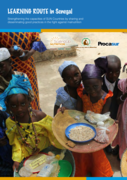
Strengthening the capacities of SUN Countries by sharing and disseminating good practices in the fight against malnutrition.
This report is a summary of the results of the preparation and implementation of the Learning Route (LR) organized jointly by the SUN (Scaling Up Nutrition) Movement’s S
...
ecretariat, the Fight Against Malnutrition Unit (CLM, Cellule de Lutte contre la Malnutrition) and PROCASUR Corporation; this Learning Route was held in Senegal from the 26th of May to the 1st of June, 2014. The aim of this publication is to illustrate the experience, its main outcomes, and the lessons learned.
more
The goal of this assessment is to determine how far USAID/Senegal’s HIV/AIDS and TB programs have achieved their specific objectives with regard to identifying potential leads for improvement that are likely to make it easier to reach the planned results. After responding to the issues developed i
...
n various themes of the assessment, the results are placed in context and specific conclusions to each component are provided. The assessment also identifies the lessons learned from USAID/Senegal’s HIV/AIDS and TB programs and provides recommendations for future intervention.
more

Review of Community-Based Management of Acute Malnutrition Implementation in Burkina Faso
Deconinck H., S. Diene, P. Bahwere
Food and Nutrition Technical Assistance II Project (FANTA-2)
(2010)
C2
The United States Agency for International Development (USAID) Bureau for Democracy, Conflict, and Humanitarian Assistance Office of U.S. Foreign Disaster Assistance (DCHA/OFDA) requested Food and Nutrition Technical Assistance II Project (FANTA-2) assistance to review Community-Based Management of
...
Acute Malnutrition (CMAM) in four West African countries—Burkina Faso, Mali, Mauritania, and Niger—to help identify DCHA/OFDA 2010 and 2011 program priorities, including where DCHA/OFDA investment should be directed to support CMAM. The goal was to review CMAM program implementation and its integration into national health systems to provide DCHA/OFDA a status report for each country; draw lessons learned; and make recommendations on challenges, promising practices, gaps, and priority areas for DCHA/OFDA support during 2010 and 2011. The review was intended for DCHA/OFDA program planning purposes and also potentially as an advocacy tool to guide other donors in planning CMAM support in the region. After all four countries have been reviewed, FANTA-2 will develop a synthesis report. The current document presents a summary report on CMAM in Burkina Faso only.
more
This working paper was conceived to offer practical tips and suggestions on how to establish and sustain the multisectoral coordination needed to develop and implement National Action Plans on AMR (NAPs). It is intended for anyone with responsibility for addressing AMR at country level. Drawing on b
...
oth the published literature and the operational experience of four ‘focal countries’ (Ethiopia, Kenya, Philippines and Thailand), it summarizes lessons learned and the latest thinking on multisectoral working to achieve effective AMR action. The experience in focal countries points to a number of tools and tactics that can be used to help establish and enhance sustainable multisectoral collaboration for AMR action. These can be grouped into four categories: political commitment, resources, governance mechanisms, and practical management.
more
Guidance Note: Protection of Children during Infectious Disease Outbreaks
Arii M., F. Baele, J. Bedford et al.
The Alliance for children protection in humanitarian action
(2020)
C2
Accessed on 31.03.2020
This Guidance Note aims to provide humanitarian child protection practitioners, particularly child protection advisors and program managers, with guidance on how to engage in responses to infectious disease outbreaks to ensure children’s protection needs are taken into ac
...
count in preparedness for, and during responses to, the outbreaks. The Guidance Note draws upon lessons learned during infectious disease outbreaks globally in a variety of contexts.
more
Recognizing the extent to which the COVID-19 outbreaks affects women and men differently is hugely important. Some preliminary data suggested that more men than women are dying, potentially due to sex-based immunological differences, higher rates of cardiovascular disease for men and lifestyle choic
...
es, such as smoking. However, the experiences and lessons learned from the Zika and Ebola outbreaks and the HIV pandemic demonstrate that robust gender analysis and informed, gender-integrated response are vital to strengthen the access and acceptability of the humanitarian services needed to meet the distinct needs of women and girls, as well as men and boy and LGBTI people.
more
Recognizing the extent to which the COVID-19 outbreaks affects women and men differently is hugely important. Some preliminary data suggested that more men than women are dying, potentially due to sex-based immunological differences, higher rates of cardiovascular disease for men and lifestyle choic
...
es, such as smoking. However, the experiences and lessons learned from the Zika and Ebola outbreaks and the HIV pandemic demonstrate that robust gender analysis and informed, gender-integrated response are vital to strengthen the access and acceptability of the humanitarian services needed to meet the distinct needs of women and girls, as well as men and boy and LGBTI people.
more
Recognizing the extent to which the COVID-19 outbreaks affects women and men differently is hugely important. Some preliminary data suggested that more men than women are dying, potentially due to sex-based immunological differences, higher rates of cardiovascular disease for men and lifestyle choic
...
es, such as smoking. However, the experiences and lessons learned from the Zika and Ebola outbreaks and the HIV pandemic demonstrate that robust gender analysis and informed, gender-integrated response are vital to strengthen the access and acceptability of the humanitarian services needed to meet the distinct needs of women and girls, as well as men and boy and LGBTI people.
more
This global guidance provided the framework for over 100 countries to develop their NDVPs. This updated (second) version supersedes the previous version published in 16 November 2020. New information has been added on the following areas:
the COVID-19 Partners Platform;
the use of COVID
...
-19 simulation exercises to test deployment strategies;
the indemnity agreement and no-fault compensation programme for vaccines secured through the COVAX Facility in the Advance Market Commitment (AMC) eligible economies;
the availability and use of the WHO-UNICEF COVID-19 Vaccine Introduction and deployment Costing (CVIC) tool;
the COVAX Facility’s humanitarian buffer that enables allocation of vaccine to cover high-risk populations in humanitarian settings;
recommendations for vaccination of pregnant and lactating women;
supplementary information on infection prevention and control (IPC) measures to be used to deliver COVID-19 vaccines safely;
the WHO licensed COVID-19 vaccines product-specific information;
use of geospatial data and digital micro plans for equitable access and delivery of COVID-19 vaccines;
lessons learned from the development of NDVPs and early experiences in COVID-19 vaccine deployment in countries; and
updated additional resources at the end of each chapter.
more
This rapid review report has identified the wastewater treatment plant (WWTP) options used in emergency settings, with decentralised wastewater treatment systems (DEWATS) and mobile wastewater treatment units performing most effectively and with minimal costs. Examples are taken from refugee camps a
...
nd internally displaced people (IDP) settlements due to the Iraq war, the Israeli-Palestine conflict, and the civil wars in Syria and Sudan. WWTP options used in Finland, Haiti, Iraq, Jordan, Palestine, Sudan and Turkey are discussed. Lessons learned from China and suggestions for the Rohingya crisis are also included.
more
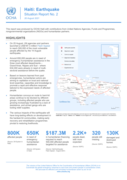
On 25 August, UN agencies and partners launched a US$187.3 million Flash Appeal to reach 500,000 of the most vulnerable people affected by the 14 August earthquake.
Around 650,000 people are in need of emergency humanitarian assistance in the three most affected departments – Grand’Anse, Nipp
...
es and Sud – where 634,000 were already in need of multisectoral assistance before the quake.
Based on lessons learned from past emergencies, humanitarian actors are aiming to capitalize on local and national level expertise, capacities and knowledge to promote a rapid and effective response tailored to the expressed needs of affected people.
more
Global Biodiversity Outlook (GBO) is the flagship publication of the Convention on Biological Diversity (CBD). It is a periodic report that summarizes the latest data on the status and trends of biodiversity and draws conclusions relevant to the further implementation of the Convention.
GBO-5 provi
...
des global summary of progress towards the Aichi Biodiversity Targets and is based on a range of indicators, research studies and assessments (in particular the IPBES Global Assessment on Biodiversity and Ecosystem Services), as well as the national reports provided by countries on their implementation of the CBD. The national reports provide rich information about the steps taken in countries worldwide in support of biodiversity conservation, sustainable use, and the fair and equitable sharing of benefits. This body of Information provides a wealth of information on the successes and challenges in implementing the Strategic Plan for Biodiversity 2011-2020 and in reaching the Aichi Biodiversity Targets.
This Outlook draws on the lessons learned during the first two decades of this century to clarify the transitions needed if we are to realize the vision agreed by world governments for 2050, ‘Living in Harmony with Nature’. You can download the report in several languages
more
Global Biodiversity Outlook (GBO) is the flagship publication of the Convention on Biological Diversity (CBD). It is a periodic report that summarizes the latest data on the status and trends of biodiversity and draws conclusions relevant to the further implementation of the Convention.
GBO-5 pro
...
vides global summary of progress towards the Aichi Biodiversity Targets and is based on a range of indicators, research studies and assessments (in particular the IPBES Global Assessment on Biodiversity and Ecosystem Services), as well as the national reports provided by countries on their implementation of the CBD. The national reports provide rich information about the steps taken in countries worldwide in support of biodiversity conservation, sustainable use, and the fair and equitable sharing of benefits. This body of Information provides a wealth of information on the successes and challenges in implementing the Strategic Plan for Biodiversity 2011-2020 and in reaching the Aichi Biodiversity Targets.
This Outlook draws on the lessons learned during the first two decades of this century to clarify the transitions needed if we are to realize the vision agreed by world governments for 2050, ‘Living in Harmony with Nature’.
more

To support countries in adapting their response to different COVID-19 scenarios, the World Health Organization (WHO) Department of Maternal, Newborn, Child and Adolescent Health and Ageing commissioned this scoping review of published and grey literature. The objective was to identify interventions
...
implemented to maintain the provision and use of essential services for MNCAAH during disruptive events and to summarize lessons learned during these interventions. The review included outbreaks of Ebola virus disease (EVD), severe acute respiratory syndrome (SARS), Zika virus disease (ZVD), the ongoing COVID-19 pandemic, and natural disasters and humanitarian emergencies that caused disruption to services, transport and other activities.
more

This guidance provides interim guidance for the integration of SARS-CoV-2 and influenza virologic and genomic surveillance, from sentinel site case enrolment and sampling to the eventual sharing of the virus sequence data, a process known as end-to-end surveillance. This guidance builds on experienc
...
es and lessons learned as countries adapted their influenza surveillance systems in the context of the COVID-19 pandemic and reviews new evidence to provide guidance on end-to-end surveillance. The guidance includes new algorithms and strategies to adapt sentinel systems to make them resilient and agile for addressing global and national surveillance needs for influenza and COVID-19.covid-
more

The Committee discussed the implications for preparedness for smallpox-like events reflected by the ongoing COVID-19 pandemic. The Committee noted how quickly diagnostics and vaccines could be developed and deployed when resources and political will were abundant. This rapidity was also due to the f
...
act that the genetic sequence of the severe acute respiratory syndrome coronavirus 2 (SARS-CoV-2) had been shared worldwide. It was noted that in one country SARS-CoV-2 had been reconstructed in a laboratory from the viral genome sequence before the first case of COVID-19 had been reported, highlighting the benefits of synthetic biology technologies for accelerated development of diagnostics as well as the oft-described potential risks. Lessons learned about clinical care during the COVID-19 pandemic were also discussed.
more

The document “Guidance on Law and Public Health Emergency Preparedness and Response” provides recommendations for governments on how laws and policies can support effective preparation for and response to public health emergencies such as epidemics or pandemics. It explains the role of legal fra
...
meworks in enabling governments and institutions to prevent, detect and manage health crises while protecting human rights and supporting coordinated action across sectors. The guidance highlights lessons learned from the COVID-19 pandemic and examines how national laws, policies and emergency powers were used in many countries. It also identifies common gaps in legal preparedness and proposes key elements that should be included in national legislation, such as clear roles and responsibilities, early warning systems, protection of vulnerable groups and cooperation with humanitarian actors. Overall, the document serves as a practical tool to help countries review and strengthen their legal and policy frameworks for managing public health emergencies.
more
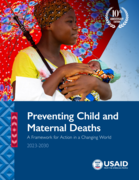
Improving the survival chances and quality of life of women, newborns, and children remains an urgent global challenge. Since 2012, substantial progress has been made in reducing maternal and under-5 deaths, and a only handful of countries are on target to meet the SDG targets in 2030. Yet, 5 millio
...
n children still die each year under the age of 5, and nearly half of those are newborns less than a month old. Worse still, the global maternal mortality ratio is going in the wrong direction.
A Decade of Progress and Action for the Future will examine the tenacity and innovation that helped us make gains, the lessons learned through monitoring, country-led adaptation and leadership, analysis, and reflection, as well as the approaches we must take to reinvigorate the momentum and global commitment to improving maternal and child survival. Increasing coverage, strengthening the quality of care, and enhancing equity will be tantamount to our global progress.
more
Through the USAID-funded Organized Network of Services for Everyone’s Health (ONSE) Activity, MSH is assisting Malawi’s National Malaria Control Program to provide high-quality malaria services at the facility and community levels in 10 districts, covering nearly a third of the country.
Our
...
team in Malawi share recent results on strengthening malaria services through Outreach Training and Supportive Supervision (OTSS).
Designed to provide ongoing support to clinicians, data, and laboratory staff, OTSS combines a standardized checklist with targeted mentorship and supportive supervision to identify areas for improvement and strengthen clinical and diagnostic services in health facilities.
This webinar shares lessons learned on how the application of OTSS, as part of broader quality assurance systems, impacts staff performance and improves the provision and quality of malaria services.
more
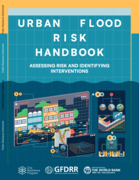
This Urban Flood Risk Handbook: Assessing Risk and Identifying Interventions is a roadmap for conducting an urban flood risk assessment in any city in the world. It includes practical guidance for a flood risk assessment project, covering the key hazard and risk modeling stages as well as the evalua
...
tion of different flood-mitigating infrastructure intervention options and management of the project. The Handbook has been developed based on lessons learned from implementing urban flood risk assessments around the world in a diversity of contexts. It is intended for a wide variety of practitioners: project managers, city officials, and anyone else interested in conducting a strategic study of a city's flood risk and developing potential solutions for it. We expect this Handbook tocontribute to the understanding of urban flood risk, make this specialized knowledge more accessible to a wider public, and support the process of building cities that are not only capable of withstanding floods but also provide safe, inclusive, and sustainable environments for all their residents.
more
