
Filter
444
Text search:
Flood,
D.
Featured
Recommendations
36
New Publications
140
Language
Document type
No document type
220
Studies & Reports
108
Manuals
43
Guidelines
33
Strategic & Response Plan
14
Training Material
13
Situation Updates
8
Fact sheets
4
Dashboards/Maps
1
Countries / Regions
Global
30
Myanmar / Burma
25
India
19
Bangladesh
11
Nepal
10
Philippines
8
South Sudan
7
South–East Asia Region
6
Nigeria
5
Ethiopia
5
Ghana
5
Sierra Leone
4
Liberia
4
Kenya
4
Indonesia
4
Mozambique
4
Brazil
4
Western Pacific Region
4
Haiti
3
Malawi
3
Namibia
3
Asia
3
Guinea
2
Congo, Democratic Republic of
2
Uganda
2
Pakistan
2
Afghanistan
2
Tanzania
2
South Africa
2
Papua New Guinea
2
Colombia
2
Ecuador
2
Yemen
2
Western and Central Europe
2
Africa
2
Eastern Europe
2
Laos
2
Vietnam
2
USA
1
Zimbabwe
1
Somalia
1
Germany
1
Zambia
1
Chad
1
Cambodia
1
Thailand
1
China
1
Sudan
1
Argentina
1
Eswatini/ Swaziland
1
Ukraine
1
Greece
1
Angola
1
Lesotho
1
Sri Lanka
1
Chile
1
West and Central Africa
1
Middle East and North Africa
1
Latin America and the Carribbean
1
Eastern Europe and Central Asia
1
Paraguay
1
Fiji
1
Bhutan
1
Venezuela
1
Palestine
1
Authors & Publishers
Publication Years
Category
Countries
149
Key Resources
102
Public Health
17
Clinical Guidelines
13
Capacity Building
7
Women & Child Health
5
Pharmacy & Technologies
4
Toolboxes
Planetary Health
90
Natural Hazards
50
Mental Health
25
Global Health Education
20
COVID-19
17
Conflict
14
2.0 Rapid Response
11
NTDs
9
Disability
8
Rapid Response
8
TB
8
Pharmacy
8
Health Financing Toolbox
7
Refugee
6
Specific Hazards
4
Caregiver
4
Ebola & Marburg
3
Cholera
3
HIV
3
AMR
3
NCDs
3
South Sudan
2
Malaria
2
Typhoon
1

CIPH Curriculum for Best Practices. Putting Principles to Work
No publication year indicated.
Original file: 21,5 MB
Original file: 21,5 MB
As of 6:00 PM, 21 November 2013, 4,011 individuals were reported dead, 18,567 injured and 1,602 are still missing
The Republic of the Union of Myanmar is at a historic moment, with a new civilian government assuming power in 2016. The country graduated to lower-middle-income status in 2015, and has made significant progress in reducing poverty, improving food security and addressing malnutrition.
The remai ...
The remai ...
The purpose of the report is to present some first recommendation for the development of Myanmar ecological quality criteria using the system of the EU Water Framework Directive (EU WFD) as baseline, with main focus on the characterization and classification processes. As background for the recommen
...
Accessed: 16.04.2020
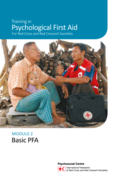
It aims to enable participants to:
know more about reactions to distress
know what psychological first aid is and what it is not
understand the three action principles of ‘Look, Listen and Link’
have practised providing PFA to someone in distress
have considered comple
...
Water, sanitation and hygiene education in schools – WASH in Schools – provides safe drinking water, improves sanitation facilities and promotes lifelong health. WASH in Schools enhances the well-being of children and their families, and paves the way for new generations of healthy children.
f
...
In order to maintain daily operations and patient care services, health care facilities need to develop an Emergency Water Supply Plan (EWSP) to prepare for, respond to, and recover from a total or partial interruption of the facilities’ normal water supply. Water supply interruption can be caused
...
This half-day training module introduces participants to basic skills in psychological first aid (PFA). It is suitable for all Red Cross and Red Crescent staff and volunteers working in any sector. It aims to enable participants to:
know what psychological first aid is and what it is not
...

Myanmar has made significant progress in its disaster management policies, plans, and procedures since 2008, when Cyclone Nargis impacted the country leaving devastation in its aftermath. The Government of Myanmar (GoM) has modified the government structure and created new authorities and plans to i
...
The new WHO guidelines provide recommended steps for safe phlebotomy and reiterate accepted principles for drawing, collecting blood and transporting blood to laboratories/blood banks.
