
Filter
3410
Text search:
World
Health
Organization
WHO,
Unicef
Featured
Recommendations
362
New Publications
1005
Language
Document type
No document type
1886
Studies & Reports
520
Guidelines
432
Manuals
165
Strategic & Response Plan
138
Fact sheets
102
Training Material
77
Situation Updates
54
Resource Platforms
13
Brochures
9
Infographics
8
Online Courses
4
App
1
Countries / Regions
Global
149
Sierra Leone
106
Liberia
105
Kenya
86
Ethiopia
85
Nepal
83
India
78
Uganda
76
Nigeria
73
Syria
65
Zambia
59
Bangladesh
59
Myanmar / Burma
59
Malawi
51
Congo, Democratic Republic of
49
Latin America and the Carribbean
47
South Sudan
46
Tanzania
45
Ukraine
44
Africa
43
Rwanda
38
Mozambique
37
Guinea
33
Indonesia
32
Namibia
31
Ghana
30
Yemen
30
Zimbabwe
28
Cambodia
28
Senegal
27
Western and Central Europe
27
Philippines
26
Lesotho
26
South Africa
25
Asia
24
Middle East and North Africa
23
Russia
23
Pakistan
22
Haiti
21
Afghanistan
18
South–East Asia Region
18
Venezuela
18
Burkina Faso
17
Cameroon
17
Brazil
17
Somalia
15
Madagascar
15
West and Central Africa
15
Mali
14
Lebanon
14
East and Southern Africa
14
Jordan
13
Sudan
13
Côte d’Ivoire / Ivory Coast
12
Eastern Europe and Central Asia
11
Niger
9
Benin
9
Central African Republic
9
Botswana
9
Angola
9
Colombia
8
Western Pacific Region
8
Togo
7
Germany
7
Eastern Europe
7
Guinea-Bissau
6
Turkey
6
Thailand
6
China
6
Eswatini/ Swaziland
6
Laos
6
Moldova
6
Iraq
5
Burundi
5
Mexico
5
Sri Lanka
5
Paraguay
5
Albania
5
Portugal
5
Spain
5
Chad
4
Malaysia
4
Papua New Guinea
4
Argentina
4
Peru
4
Timor Leste/ East Timor
4
Vietnam
4
Greece
3
Libya
3
Tajikistan
3
Japan
3
Belarus
3
Egypt
2
Gambia
2
Hungary
2
Ecuador
2
El Salvador
2
Bolivia
2
Poland
2
Italy
2
Bulgaria
2
Romania
2
Slovakia
2
Iran
2
Georgia
2
Gabon
2
Turkmenistan
2
France
2
Morocco
1
Saudi Arabia
1
Mauritania
1
Singapore
1
Vanuatu
1
North Macedonia
1
Croatia
1
Honduras
1
Guatemala
1
Nicaragua
1
Chile
1
Other region
1
Fiji
1
Solomon Islands
1
Bhutan
1
Palestine
1
North Korea
1
Southern Africa
1
Congo-Brazzaville
1
Kyrgyzstan
1
Kazakhstan
1
Uruguay
1
Denmark
1
Tunisia
1
Authors & Publishers
Publication Years
Category
Countries
1349
Women & Child Health
367
Key Resources
261
Clinical Guidelines
217
Public Health
135
Capacity Building
70
Pharmacy & Technologies
24
Toolboxes
COVID-19
379
HIV
271
Disability
162
Mental Health
156
Conflict
139
Ebola & Marburg
125
Caregiver
116
Planetary Health
92
Global Health Education
60
Refugee
55
Rapid Response
54
TB
48
AMR
48
Health Financing Toolbox
47
Cholera
42
Pharmacy
38
Natural Hazards
36
Polio
32
Malaria
30
NTDs
29
2.0 Rapid Response
29
Zika
20
Specific Hazards
10
NCDs
7
Social Ethics
4
South Sudan
1
The Priority medicines for mothers and children 2011 list was updated following the 18th Expert Committee Meeting
on Selection and Use of Medicines, the release of new treatment guidelines and feedback from partners following
the 2011 version. In alignment with the UN Global strategy f
...
Known avoidable environmental risks to health cause at least 12.6 million deaths every year, and account for about one quarter of the global burden of disease (2016 data) (1). Air pollution alone causes about 7 million
deaths a year, placing it amo
...
(pop. 621 240)

This document is an output of a WHO cross-programme initiative aiming to improve the prevention, diagnosis and management of anaemia and thereby accelerate reduction in its prevalence. It comes at an important time, midway through the era of the Sus
...
This guideline provides global, evidence-informed recommendations on a number of specific issues related to the management of severe acute malnutrition in infants and children, including in the context of HIV.
Fever Diagnostic Technology Landscape
recommended
1st edition.
Unitaid’s report describes a slate of new devices that can more efficiently identify dangerously ill children so that they can be treated immediately. These tools make it easier to recognize danger signs, and support integrated approaches to reducing childhood deaths from the three
...
Coordinated Use of Anthelminthic Drugs in Control Interventions: a Manual for Health Professionals and Programme Managers

Cholera is a major health risk in many parts of the world, affecting millions of people every year. Since mid-2021, the world has been facing an ac
...
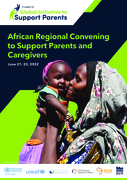
The African Regional Convening of the Global Initiative to Support Parents (GISP) stimulated the interest or engagement of almost 1500 individuals from 742 unique organizations in the fields of health, education, social welfare, women’s affairs, e
...
Undernutrition increases the risk of tuberculosis (TB) and in turn TB can lead to malnutrition. Undernutrition is therefore highly prevalent among people with TB. It has been demonstrated that undernutrition is a risk factor for progression from TB infection to active TB disease and that undernutrit
...
Education material for teachers of midwifery
Midwifery education modules - second edition
The report aims to capture lessons from the COVID-19 pandemic and to highlight the opportunity for more ambitious global action: expanding sustainable access to vaccines for all towards the Immunization Agenda 2030 and pandemic prevention, preparedness and response efforts. The report is organized i
...
More than 700 000 people lose their life to suicide every year. A core foundation of suicide prevention is the timely registration and regular monitoring of suicide and self-harm. Surveillance data can be used to show important progress towards reaching global targets, such as reducing the suicide r
...
The WHO continuously reviews available data on SARS-CoV-2 variants of concern. For this version, the global epidemiological
situation of the COVID-19 pandemic as of 21 January 2022 – at a time when the Omicron VOC had been identified in 171
coun
...

Promoting health and preventing disease is a critical component of the effort required to achieve Universal Health Coverage (UHC). to date, efforts to achieve UHC have focused mostly on strengthenin
...
Diets are changing everywhere, and the burden of disease associated with unhealthy diets is a worldwide concern. Measurement and monitoring of diets across countries and population groups is critical. However, there are no harmonized metrics for tracking how the healthfulness of diets around the
...
