
Filter
1889
Text search:
humanitarian
practice
Featured
215
519
Language
Document type
934
345
264
150
94
37
33
15
10
3
1
1
1
Countries
133
71
59
54
47
38
34
33
32
32
32
31
30
27
21
20
20
18
15
15
14
14
13
13
13
13
12
12
12
12
12
11
9
9
9
8
8
8
7
7
7
7
6
6
6
6
6
6
6
5
5
5
5
5
5
5
5
4
4
4
4
4
4
3
3
3
3
3
3
3
2
2
2
2
2
2
2
2
2
2
1
1
1
1
1
1
1
1
1
1
1
1
1
1
1
1
1
1
1
1
1
1
1
1
1
1
1
1
1
Authors & Publishers
Publication Years
Category
450
356
171
107
91
43
7
3
Toolboxes
212
177
171
123
115
75
71
69
66
38
37
35
32
30
22
20
19
18
13
13
13
10
7
6
6
4
1

These guidelines are informed by evidence of ‘what works’ and lessons learned in the field. They are designed to accelerate UNICEF regional and country offices’ programming on social service workforce strengthening, and support work to better plan, develop and support the social services workf
...
The present report, which covers the period from January to December 2018, is submitted pursuant to Security Council resolution 2427 (2018). The preparation of the report involved broad consultations within the United Nations, in the field and at Headquarters, and with relevant Member States. It hig
...
Health Evidence Network Synthesis Report, No. 47
The increasing number of refugees, asylum seekers and irregular migrants poses a challenge for mental health services in Europe. This review found that these groups are exposed to risk factors for mental disorders before, during and after migration.
...

This paper was commissioned by the German Federal Ministry for Economic Cooperation and Development (BMZ) in 2015, and produced by the Deutsche Gesellschaft für Internationale Zusammenarbeit (GIZ) GmbH, in cooperation with German civil society actors and freelance psychologists working in the field
...
he Guidelines are an example of the support that UNDP provides to practically integrate international human rights commitments into national, regional and global policy and programmes.
27 May 2021
All countries should increase their level of preparedness, alert and response to identify, manage and care for new cases of COVID-19. Countries should prepare to respond to different public health scenarios, recognizing that there is no one-size-fits-all approach to managing cases and o
...

How we respond both now and going forward will help mitigate the impact of COVID-19, and to the extent possible preserve children’s rights to Survive, Learn, and Be Protected. We will focus our efforts on the most critical work essential to maintaining these commitments to the extent possible.
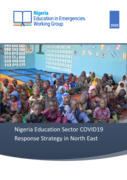

Introduction The novel Coronavirus (nCoV) epidemic in 2019 -2020 has recently emerged. The route of transmission is not totally known, although it is known that it can spread from person to person, and local health care systems may be ill-equipped to handle a large-scale outbreak. Furthermore, misco
...
The guide seeks to address questions about how we can face local communication challenges presented by the pandemic, and how communicators respond effectively to the situation through supporting our communities to cope and to protect themselves. This guide aims to provide insights for a wide range o
...

UNFPA aims to achieve three world-changing results by 2030, the deadline for achieving the Sustainable Development Goals. These are: Ending unmet need for family planning, ending gender-based violence including harmful practices such as female genital mutilation and child marriage, and ending all pr
...
This note provides a few ideas to a challenging problem of reaching survivors who cannot easily access phone-based GBV support. It is very much a living document given the evolving nature of the pandemic and may be adapted as more evidence, insights and lessons become available. It is intended to sp
...
The Feedback Starter-Kit responds to key questions ( ) and provides the most important tips ( ) for setting up and running a simple feedback mechanism. At the end of this document there is an overview of the templates needed to plan the mechanism and collect, answer, analyse and share community feed
...
This is a short technical brief with important steps and resources on how country programs can track and address rumors around COVID-19 (as needed). The guide includes a number of great resources and links while also sharing nuggets from global, collective thinking around rumors.

Coronavirus Disease-19 (COVID-19) was declared a global pandemic on 11 March 2020, and Malawi declared its first case on 2 April. As of 30 April, there were 36 confirmed positive cases of COVID-19 and 3 deaths. A State of Disaster was declared by President Arthur Peter Mutharika on 20 March and a 21
...
This guidance note aims to ensure continuity of case management service provision as well as appropriate response to cases associated with the disease during the COVID-19 crisis in Myanmar. Outlined below are priority areas that Child Protection Case Management agencies should focus on
