
Filter
1113
Text search:
Organisation
mondiale
de
Santé
Featured
Recommendations
122
New Publications
247
Language
Document type
No document type
496
Guidelines
218
Studies & Reports
131
Strategic & Response Plan
60
Fact sheets
58
Manuals
50
Training Material
30
Infographics
18
Situation Updates
15
Videos
14
Online Courses
9
Resource Platforms
8
Brochures
6
Countries / Regions
Congo, Democratic Republic of
120
Senegal
107
Burkina Faso
81
Benin
60
Guinea
48
Global
45
Mali
44
Côte d’Ivoire / Ivory Coast
41
Haiti
34
Cameroon
29
Madagascar
26
Central African Republic
23
Niger
21
Chad
16
Africa
16
Togo
14
Rwanda
13
West and Central Africa
7
Latin America and the Carribbean
5
Somalia
4
France
4
Morocco
3
Brazil
3
Burundi
3
Sri Lanka
3
Congo-Brazzaville
3
Russia
3
Nigeria
2
Ethiopia
2
Iraq
2
Syria
2
Kenya
2
Tanzania
2
Cambodia
2
Indonesia
2
Mozambique
2
Angola
2
Portugal
2
India
1
Jordan
1
Germany
1
Zambia
1
Turkey
1
China
1
Mauritania
1
Malawi
1
Argentina
1
East and Southern Africa
1
Middle East and North Africa
1
South–East Asia Region
1
Eastern Europe
1
Laos
1
Timor Leste/ East Timor
1
Vietnam
1
Gabon
1
Tunisia
1
Authors & Publishers
Publication Years
Category
Countries
370
Clinical Guidelines
97
Women & Child Health
75
Key Resources
64
Public Health
50
Capacity Building
23
Pharmacy & Technologies
19
Toolboxes
COVID-19
146
Ebola & Marburg
100
Mental Health
71
Rapid Response
55
Caregiver
49
Malaria
44
NTDs
36
TB
30
HIV
24
AMR
23
Pharmacy
23
Zika
20
Planetary Health
20
2.0 Rapid Response
19
Cholera
18
Disability
15
Polio
9
Refugee
9
Global Health Education
8
Conflict
7
Natural Hazards
6
NCDs
2
Specific Hazards
1
Health Financing Toolbox
1

Driving progress towards rabies elimination: Results of Gavi’s Learning Agenda on rabies and new WHO position on rabies immunization
At present at least 2.2 billion people around the world have a vision impairment, of whom at least 1 billion have a vision impairment that could have been prevented or is yet to be addressed. The world faces considerable challenges in terms of eye care, including inequalities in the coverage and qua
...

Benchmarking is a strategic process often used by businesses and institutes to standardize performance in relation to the best practices of their sector. The World Health Organization (WHO) and partners have developed a tool with a list of benchmarks and corresponding suggested actions that can be a
...
The Global Reference List of 100 Core Health Indicators is a standard set of core indicators prioritized by the global community to provide concise information on the health situation and trends, including responses at national and global levels.
This second (2018) edition builds on the previous
...
Extraced from the full version of WDI 2016

Lessons learned from recent public health events such as the COVID-19 pandemic, Ebola virus disease, Zika virus disease outbreaks, and other public health threats, including earthquakes and floods, have highlighted the need for countries to continuously develop, strengthen, and maintain capacities r
...
Despite the increasing population of refugees stuck in protracted situations and our awareness of the vulnerability of children and adolescents growing in up these contexts, relatively little is known about community based child protection mechanisms (CBCPMs) in refugee communities. CBCPMs, defined
...
In 2022, a total of 6,131 confirmed malaria cases were reported across the EU/EEA. Of these, 5,375 had a known importation status and nearly all (99.8%) were travel-related. Only 13 infections were acquired within Europe, with seven occurring in France, three in Germany, two in Spain and one in Irel
...
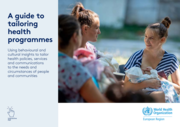
WHO/Europe has launched a new guide, providing support to countries on how to apply behavioural and cultural insights (BCI) for health. It presents a simple step-wise approach, complemented by a rich collection of detailed considerations, tools and exercises. The guide is the first of its kind, spec
...
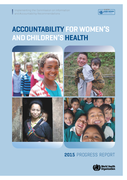
Progress Report

In Control: A Practical Handbook for Professionals Working in Health Emergencies Internationally RKI
The greatest risk to persons engaging in international medical emergency response is poor preparation.
The In Control handbook hopes to provide a remedy.
At the time of writing, we are living through the Coronavirus (COVID-19) pandemic, a health emergency that disregards physical borders, brin
...
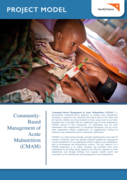
Community-Based Management of Acute Malnutrition (CMAM) is a decentralised community-based approach to treating acute malnutrition. Treatment is matched to the nutritional and clinical needs of the child, with the majority children receiving treatment at home using ready-to-use foods. In-patient car
...
