
Filter
1136
Text search:
parasites
Featured
104
233
Language
Document type
373
267
173
74
66
52
40
26
18
16
14
5
5
3
2
Countries
83
35
27
23
22
22
21
19
19
16
16
16
15
14
12
12
12
10
10
10
9
9
9
9
8
8
7
7
7
7
6
6
6
5
5
5
5
5
4
4
4
4
4
3
3
3
3
3
3
2
2
2
2
2
2
2
2
2
2
2
2
2
2
2
2
2
2
2
2
2
1
1
1
1
1
1
1
1
1
1
1
1
1
1
1
1
1
1
1
1
1
1
1
1
1
1
1
1
1
1
1
1
1
1
1
Authors & Publishers
Publication Years
Category
377
98
69
65
40
36
33
Toolboxes
297
153
88
58
19
19
18
14
12
12
11
10
9
9
8
8
7
7
5
4
3
3
2
2
2

10 Lines on National Deworming Day in English/Essay On National Deworming Day /#nationaldewormingday
Accessed on 28.02.2023
Youtube-Video
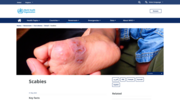
Human scabies is a parasitic infestation caused by Sarcoptes scabiei var hominis. The microscopic mite burrows into the skin and lays eggs, eventually triggering a host immune response that leads to intense itching and rash. Scabies infestation may be complicated by bacterial infection, leading to t
...

Scabies is an itchy skin condition caused by a tiny burrowing mite. This eight-legged bug is so small which makes it hard to see on the skin. Approximately 300 million cases of scabies are reported worldwide each year.
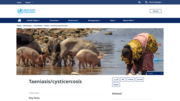
Humans can become infected with T. saginata or T. asiatica when they consume infected beef meat or pig liver tissue, respectively, which has not been adequately cooked, but taeniasis due to T. saginata or T. asiatica has no major impact on human health. Therefore, this fact sheet refers to the trans
...
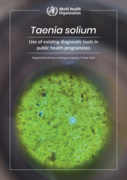
Taeniasis and cysticercosis caused by the parasite T. solium affect vulnerable populations,
mainly in Latin America, sub-Saharan Africa and Asia, where pigs (the intermediate host) roam
free and poor sanitation allows pigs access to human faeces.

Cutaneous leishmaniasis (CL) is a parasitic disease caused by infection with a vector-borne protozoan parasite of the genus Leishmania spp. The parasite is transmitted by the bite of an infected phlebotomine sand fly. Infection results in skin lesions which take a long time to heal and may leave per
...
The term leishmaniasis encompasses multiple clinical syndromes, including the cutaneous, mucosal, and visceral forms, which result from infection of macrophages in the dermis, in the naso-orpharyngeal mucosa, and throughout the reticuloendothelial system, respectively. The infection can range from a
...
La equinococosis humana es una zoonosis (es decir, una enfermedad transmitida al ser humano por los animales) provocada por tenias parásitas del género Echinococcus que se presenta en cuatro formas:
Эхинококкоз человека является зоонозом (болезнью, передаваемой от животных человеку), вызываемым паразитами, а именно ленточными червями рода Echinococcus. Существует ч
...
人类棘球蚴病是由一种寄生虫,即棘球绦虫属绦虫所引起的人畜共患病(由动物传染给人类的疾病)。棘球蚴病有四种形式:
حقائق رئيسية
إن دواء المشوكات البشري هو مرض طفيلي تتسبب به شريطيات من جنس الشريطيات المشوكة.
وأهم شكلين لهذا المرض لدى الإنسان هما داء المشوكات الكيسي ( داء التكيس Ø
...
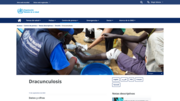
La dracunculosis rara vez es mortal, pero las personas infectadas quedan incapacitadas durante semanas o meses. Afecta a personas de comunidades rurales, desfavorecidas y aisladas que para beber dependen principalmente de fuentes superficiales abiertas en que el agua se estanca, como charcas o estan
...
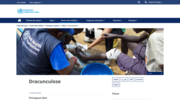
La dracunculose est rarement mortelle, mais les personnes touchées peuvent souffrir d’invalidité pendant plusieurs semaines, voire plusieurs mois. La maladie sévit dans des communautés rurales défavorisées et isolées qui sont essentiellement tributaires de points d’eau stagnante superfici
...
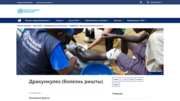
Дракункулез редко приводит к смертельному исходу, но на много недель и месяцев нарушает нормальное функционирование пораженных инвазией лиц. Проблема затрагиваеÑ
...
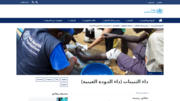
ونادراً ما يسبب داء التنينات الوفاة، بيد أن المصابين به يعجزون عن القيام بأعمالهم على مدى أسابيع وأشهر من الزمن. ويصيب الداء الناس الذين يعيشون في مجتمعات ريفية ومحØ
...
Background: Despite several cycles of Mass Drug Administration (MDA), however, the prevalence of Soil-transmitted helminthiasis (STH) remains high in Bangladesh. A clear understanding of local knowledge, attitudes, and practices (KAP) related to the acceptance and utilization of MDA is critical for
...
Objetivos:
• Brindar lineamientos conceptualessobre la Fasciolosis e Hidatidosis.
• Conocer el ciclo de transmisión de la Fasciolosis e Hidatidosis.
• Describir la epidemiología y vía de transmisión de la fasciolosis e hidatidosis.
• Conocer y aplicar las medidas de prevención y
...
This is a summary of the following peer-reviewed, scientific article:
Comparative Evaluation of Immunoassays to Improve Access to Diagnosis for Chagas Disease in Colombia.

Research and Reports in Tropical Medicine 2022:13 25–40
Chagas disease (CD) or American trypanosomiasis is a neglected parasitic disease associated with significant mortality and morbidity that includes long-term disability, social stigma and a mental health toll. Perceived as a disease of the ve
...
Chagas disease, or American trypanosomiasis, is an illness that can cause serious heart and stomach problems. It is caused by a parasite. Chagas disease is common in Latin America, especially in poor, rural areas. It can also be found in the United States, most often in people who were infected befo
...
