
Filter
2527
Text search:
adverse
health
outcomes
Featured
298
632
Language
2455
65
63
36
34
25
17
4
3
2
1
1
1
1
1
1
Document type
1247
471
466
145
91
43
41
13
3
1
1
1
1
1
Countries
124
101
64
61
54
52
35
35
35
33
33
32
30
29
29
28
23
23
23
21
19
18
16
15
14
14
14
14
10
9
9
9
8
8
8
8
8
7
7
7
7
7
6
6
6
5
5
5
5
5
5
5
5
4
4
4
4
4
3
3
3
3
3
3
3
3
2
2
2
2
2
2
2
2
2
2
2
2
2
1
1
1
1
1
1
1
1
1
1
1
1
1
1
1
1
1
1
1
1
1
1
1
1
1
1
1
1
1
1
1
Authors & Publishers
487
150
97
75
71
46
42
29
28
19
19
17
14
12
12
11
11
11
11
10
10
10
9
9
9
8
8
8
8
8
7
7
7
7
7
7
6
6
6
6
6
6
6
6
6
5
5
5
5
5
5
5
5
5
5
5
5
5
5
5
4
4
4
4
4
4
4
4
4
4
4
4
4
4
4
4
4
4
4
4
4
4
4
4
4
4
4
4
4
4
3
3
3
3
3
3
3
3
3
3
3
3
3
3
3
3
3
3
3
3
3
3
3
3
3
3
3
3
3
3
3
3
3
3
3
3
3
3
3
3
3
3
3
3
3
3
3
3
2
2
2
2
2
2
2
2
2
2
2
2
2
2
2
2
2
2
2
2
2
2
2
2
2
2
2
2
2
2
2
2
2
2
2
2
2
2
2
2
2
2
2
2
2
2
2
2
2
2
2
2
2
2
2
2
2
2
2
2
2
2
2
2
2
2
2
2
2
2
2
2
2
2
2
2
2
2
2
2
2
2
2
2
2
2
2
2
2
2
2
2
2
2
2
2
2
2
2
2
2
2
2
2
2
2
2
2
2
2
2
2
2
2
2
2
2
2
2
2
2
2
2
2
2
2
2
2
2
2
2
1
1
1
1
1
1
1
1
1
1
1
1
1
1
1
1
1
1
1
1
1
1
1
1
1
1
1
1
1
1
1
1
1
1
1
1
1
1
1
1
1
1
1
1
1
1
1
1
1
1
1
1
1
1
1
1
1
1
1
1
1
1
1
1
1
1
1
1
1
1
1
1
1
1
1
1
1
1
1
1
1
1
1
1
1
1
1
1
1
1
1
1
1
1
1
1
1
1
1
1
1
1
1
1
1
1
1
1
1
1
1
1
1
1
1
1
1
1
1
1
1
1
1
1
1
1
1
1
1
1
1
1
1
1
1
1
1
1
1
1
1
1
1
1
1
1
1
1
1
1
1
1
1
1
1
1
1
1
1
1
1
1
1
1
1
1
1
1
1
1
1
1
1
1
1
1
1
1
1
1
1
1
1
1
1
1
1
1
1
1
1
1
1
1
1
1
1
1
1
1
1
1
1
1
1
1
1
1
1
1
1
1
1
1
1
1
1
1
1
1
1
1
1
1
1
1
1
1
1
1
1
1
1
1
1
1
1
1
1
1
1
1
1
1
1
1
1
1
1
1
1
1
1
1
1
1
1
1
1
1
1
1
1
1
1
1
1
1
1
1
1
1
1
1
1
1
1
1
1
1
1
1
1
1
1
1
1
1
1
1
1
1
1
1
1
1
1
1
1
1
1
1
1
1
1
1
1
1
1
1
1
1
1
1
1
1
1
1
1
1
1
1
1
1
1
1
1
1
1
1
1
1
1
1
1
1
1
1
1
1
1
1
1
1
1
1
1
1
1
1
1
1
1
1
1
1
1
1
1
1
1
1
1
1
1
1
1
1
1
1
1
1
1
1
1
1
1
1
1
1
1
1
1
1
1
1
1
1
1
1
1
1
1
1
1
1
1
1
1
1
1
1
1
1
1
1
1
1
1
1
1
1
1
1
1
1
1
1
1
1
1
1
1
1
1
1
1
1
1
1
1
1
1
1
1
1
1
1
1
1
1
1
1
1
1
1
1
1
1
1
1
1
1
1
1
1
1
1
1
1
1
1
1
1
1
1
1
1
1
1
1
1
1
1
1
1
1
1
1
1
1
1
1
1
1
1
1
1
1
1
1
1
1
1
1
1
1
1
1
1
1
1
1
1
1
1
1
1
1
1
1
1
1
1
1
1
1
1
1
1
1
1
1
1
1
1
1
1
1
1
1
1
1
1
1
1
1
1
1
1
1
1
1
1
1
1
1
1
1
1
1
1
1
1
1
1
1
1
1
1
1
1
1
1
1
1
1
1
1
1
1
1
1
1
1
1
1
1
1
1
1
1
1
1
1
1
1
1
1
1
1
1
1
1
1
1
1
1
1
1
1
1
1
1
1
1
1
1
1
1
1
1
1
1
1
1
1
1
1
1
1
1
1
1
1
1
1
1
1
1
1
1
1
1
1
1
1
1
1
1
1
1
1
1
1
1
1
1
1
1
1
1
1
1
1
1
1
1
1
1
1
1
1
1
1
1
1
1
1
1
1
1
1
1
1
1
1
1
1
1
1
1
1
1
1
1
1
1
1
1
1
1
1
1
1
1
1
1
1
1
1
1
1
1
1
1
1
1
1
1
1
1
1
1
1
1
1
1
1
1
1
1
1
1
1
1
1
1
1
1
1
1
1
1
1
1
1
1
1
1
1
1
1
1
1
1
1
1
1
1
1
1
1
1
1
1
1
1
1
1
1
1
1
1
1
1
1
1
1
1
1
1
1
1
1
1
1
1
1
1
1
1
1
1
1
1
1
1
1
1
1
1
1
1
1
1
1
1
1
1
1
1
1
1
1
1
1
1
1
1
1
1
1
1
1
1
1
1
1
1
1
1
1
1
1
1
1
1
1
1
1
1
1
1
1
1
1
1
1
1
1
1
1
1
1
1
1
1
1
1
1
1
1
1
1
1
1
1
1
1
1
1
1
1
1
1
1
1
1
1
1
1
1
1
1
1
1
1
1
1
1
1
1
1
1
1
1
1
1
1
1
1
1
1
1
1
1
1
1
1
1
1
1
1
1
1
1
1
1
1
1
1
1
1
1
1
1
1
1
1
1
1
1
1
1
1
1
1
1
1
1
1
1
1
1
1
1
1
1
1
1
1
1
1
1
1
1
1
1
1
1
1
1
1
1
1
1
1
1
1
1
1
1
1
1
1
1
1
1
1
1
1
1
1
1
1
1
1
1
1
1
1
1
1
1
1
1
1
1
1
1
1
1
1
1
1
1
1
1
1
1
1
1
1
1
1
1
1
1
1
1
1
1
1
1
1
1
1
1
1
1
1
1
1
1
1
1
1
1
1
1
1
1
1
1
1
1
1
1
1
1
1
1
1
1
1
1
1
1
1
1
1
1
1
1
1
1
1
1
1
1
1
1
1
1
1
1
1
1
1
1
1
1
1
1
1
1
1
1
1
1
1
1
1
1
1
1
1
1
1
1
1
1
1
1
1
1
1
1
1
1
1
1
1
1
1
1
1
1
1
1
1
1
1
1
1
1
1
1
1
1
1
1
1
1
1
1
1
1
1
1
1
1
1
1
1
1
1
1
1
1
1
1
1
1
1
1
1
1
1
1
1
1
1
1
1
1
1
1
1
1
1
1
1
1
1
1
1
1
1
1
1
1
1
1
1
1
1
1
1
1
1
1
1
1
1
1
1
1
1
1
1
1
1
1
1
1
1
1
1
1
1
1
1
1
1
1
1
1
1
1
1
1
1
1
1
1
1
1
1
1
1
1
1
1
1
1
1
1
1
1
1
1
1
1
1
1
1
1
1
1
1
1
1
1
1
1
1
1
1
1
1
1
1
1
1
1
1
1
1
1
1
1
1
1
1
1
1
1
1
1
1
1
1
1
1
1
1
1
1
1
1
1
1
1
1
1
1
1
1
1
1
1
1
1
1
1
1
1
1
1
1
1
1
1
1
1
1
1
1
1
1
1
1
1
1
1
1
1
1
1
1
1
1
1
1
1
1
1
1
1
1
1
1
1
1
1
1
1
1
1
1
1
1
1
1
1
1
1
1
1
1
1
1
1
1
1
1
1
1
1
1
1
1
1
1
1
1
1
1
1
1
1
1
1
1
1
1
1
1
1
1
1
1
1
1
1
1
1
1
1
1
1
1
1
1
1
1
1
1
1
1
1
1
1
1
1
1
1
1
1
1
1
1
1
1
1
1
1
1
1
1
1
1
1
1
1
1
1
1
1
1
1
1
1
1
1
1
1
1
1
1
1
1
1
1
1
1
1
1
1
1
1
1
1
1
1
1
1
1
1
1
1
1
1
1
1
1
1
1
1
1
1
1
1
1
1
1
1
1
1
1
1
1
1
1
1
1
1
1
1
1
1
1
1
1
1
1
1
1
1
1
1
1
1
1
1
1
1
1
1
1
1
1
1
1
1
1
1
1
1
1
1
1
1
1
1
1
1
1
1
1
1
1
1
1
1
1
1
1
1
1
1
1
1
1
1
1
1
1
1
1
1
1
1
1
1
1
1
1
1
1
1
1
1
1
1
1
1
1
1
1
1
1
1
1
1
1
1
1
1
1
1
1
1
1
1
1
1
1
1
1
1
1
1
1
1
1
1
1
1
1
1
1
1
1
1
1
1
1
1
1
1
1
1
1
1
1
1
1
1
1
1
1
1
1
1
1
1
1
1
1
1
1
1
1
1
1
1
1
1
1
1
1
1
1
1
1
1
1
1
1
1
1
1
1
1
1
1
1
1
1
1
1
1
1
1
1
1
1
1
1
1
1
1
1
1
1
1
1
1
1
1
1
1
1
1
1
1
1
1
1
1
1
1
1
1
1
1
1
1
1
1
1
1
1
1
1
1
1
1
1
1
1
1
1
1
1
1
1
1
1
1
1
1
1
1
1
1
1
1
1
1
1
1
1
1
1
1
1
1
1
1
1
1
1
1
1
1
1
1
1
1
1
1
1
1
1
1
1
1
1
1
1
1
1
1
1
1
1
1
1
1
1
1
1
1
1
1
1
1
1
1
1
1
1
1
1
1
1
1
1
1
1
1
1
1
1
1
1
1
1
1
1
1
1
1
1
1
1
1
1
1
1
1
Publication Years
822
1544
156
4
1
Category
758
291
167
166
144
41
27
Toolboxes
300
195
177
155
101
84
84
74
73
68
56
49
44
44
39
39
32
31
24
22
21
13
9
9
4
1
One important application of digital health in TB patient care is the support that it can lend to medication adherence. TB programmes have already been using short message service (SMS), video-supported treatment (VOT)
...
and event monitoring device for medication support (EMM)1 to help patients complete treatment and health-care workers to monitor both daily dosing and treatment continuity
more
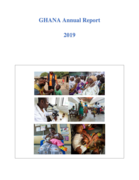
The WHO country office for Ghana, began the year 2019 with a 4-day staff retreat at the Busua Beach Resort in the Western Region from 04 to 08 March 2019. The theme for the retreat was ‘Impacting the Health and Lives of the people of Ghana through
...
the Triple Billion Goal”. The staff outlined priorities and strategies to strengthen WHO’s contribution to the national health agenda during the year. Working in collaboration with the Ministry of Health/Ghana Health Service and other allied health institutions and stakeholders, the WHO country office, provided support aimed at achieving its
mission which is attaining the highest level of health by the people in the country though its six operational areas which are (i) Communicable Diseases (ii) Non-Communicable Diseases, (iii) Promoting Health through the Life Course (iv), Health Systems, (v) Preparedness, Surveillance and Response (vi) Corporate services and enabling functions.
more
The World Health Organization’s comprehensive antenatal care (ANC) guideline WHO recommendations on antenatal care for a positive pregnancy experience was first published in 2016 with the objective of improving the quality of routine
...
health care that all women and adolescent girls receive during pregnancy. The overarching principle – to provide pregnant service users with a positive pregnancy experience – aims to encourage countries to expand their health-care agendas beyond survival, with a view to maximizing health, human rights and the potential of their populations. Recognizing that ANC provides a strategic platform for important health-care functions, including health promotion and disease prevention, 14 out of the 49 recommendations in the WHO 2016 ANC guideline relate to nutritional interventions in pregnancy.
more
Quality of care in fragile, conflict-affected and vulnerable settings: tools and resources compendium
recommended
This compendium represents a curated, pragmatic and non-prescriptive collection of tools and resources to support the implementation of interventions to improve quality of care in such contexts. Relevant tools and resources are listed under five areas: Ensuring access and basic infrastructure for qu
...
ality; shaping the system environment; reducing harm; improving clinical care; and engaging and empowering patients, families and communities.
more
In fragile, conflict-affected and vulnerable settings, delivery of quality health services faces significant challenges, including disruption of a routine health service organization and delivery sy
...
stems, increased health needs, complex and unpredictable resourcing issues, and vulnerability to multiple public health crises. Despite the difficulty of addressing quality in such settings, the necessity for action is acute, given the significant health needs of the populations in these environments and the increasing numbers of people for whom such settings are home.
This manual has been developed to provide a starting point for multi-actor efforts and actions to address quality of care in the most challenging settings. This includes practical approaches to action planning and implementation of a contextualised set of quality interventions.
more
These guidelines provide new and updated recommendations on the use of point-of-care testing in children under 18 months of age and point-of-care tests to monitor treatment in people living with HIV; the treatment monitoring algorithm; and timing of antiretroviral therapy (ART) among people living w
...
ith HIV who are being treated for tuberculosis.
New recommendations launched today outline key new actions that countries can take to improve the delivery of HIV testing, treatment and care services by providing greater options for differentiated approaches such as, supporting HIV treatment start in the community, ensuring that children are diagnosed and treated early, and that viral load treatment monitoring is more accessible, focused and triggers clinical action
more
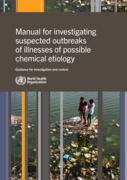
This manual describes methods for investigating clusters or outbreaks that may be of chemical origin and describes the importance of a structured, coordinated, collaborative multidisciplinary, multi-agency approach at local, regional, national and international levels.
The primary audience for this guidance is persons
working directly in vector-borne disease prevention
and control, including programme managers,
researchers and field workers. A brief technical
background is provided for the benefit of persons
without expertise in vector-borne diseases; readers
...
working in the field may wish to skip the background
section and begin with the discussion of ethical
issues and values in Chapter 3. The guidance cannot
offer universally applicable answers to the complex
ethical issues raised, nor can it provide a checklist of
issues that are necessarily relevant in all situations.
Rather, its goal is to help readers recognize aspects
of their work that raise significant ethical challenges
and to respond to these challenges in accordance
with internationally accepted values and norms.
more
July 2021. This publication brings together important clinical and programmatic updates produced by WHO since 2016 and provides comprehensive, evidence-informed recommendations and good practice statements within a public health, rights-based and pe
...
rson-centred approach.
These guidelines bring in the most recent guidance on HIV testing strategies - the entry point for HIV prevention and treatment - and include comprehensive guidance on infant diagnosis. Key recommendations are presented on rapid antiretroviral therapy (ART) initiation and the use of dolutegravir. Updated recommendations are included on the timing of ART for people with TB, and the use of point-of-care technologies for treatment monitoring.
more
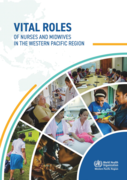
This document outlines why and how nurses and midwives are important, not only for individual health optimization but also to achieve the thematic priorities of For the Future. More specifically, it provides case studies to showcase the amazing work
...
that nurses and midwives across the Region are doing to improve health. The document also provides future policy directions to strengthen the scope and leadership of the nursing and midwifery workforce, alongside actions to accelerate investment in their education, skills and employment.
more
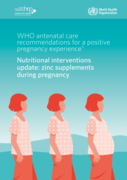
Evidence from a systematic review on antenatal zinc supplementation was evaluated as part of the World Health Organization (WHO) antenatal care (ANC) guideline development process in 2016, and the following recommendation on zinc supplementation was
...
made: “Zinc supplementation for pregnant women is only recommended in the context of rigorous research.” The Guideline Development Group (GDG) made this recommendation because it felt that the evidence on the intervention was incomplete and that more research was necessary.
more
The World Health Organization’s comprehensive antenatal care (ANC) guideline WHO recommendations on antenatal care for a positive pregnancy experience was published in 2016 with the objective of improving the quality of routine
...
health care that all women and adolescent girls receive during pregnancy. The overarching principle – to provide pregnant service users with a positive pregnancy experience – aims to encourage countries to expand their health-care agendas beyond survival, with a view to maximizing health, human rights and the potential of their populations. Recognizing that ANC provides a strategic platform for important health-care functions, including health promotion and disease prevention, 14 out of the 49 recommendations in the WHO 2016 ANC guideline relate to nutrition in pregnancy.
more
Unhealthy diets and excess body weight are leading risk factors for death and disability in the WHO European Region. Addressing malnutrition in all its forms is essential to ensure health and well-being for all and, consequently, sustainable develop
...
ment. It requires coherent and innovative actions covering the entire food system and across other sectors to ensure access to a diversified, balanced and healthy diet for all.
more

Global guidance on criteria and processes for validation: elimination of mother-to-child transmission of HIV, syphilis and hepatitis B virus
EMTCT Global Validation Advisory Committee, Global HIV, Hepatitis and Sexually Transmitted Infections Programmes
World Health Organization WHO
(2021)
C_WHO
Validation of elimination of mother-to-child transmission, or vertical transmission, of HIV, syphilis and hepatitis B virus (HBV), is an attestation that a country has successfully met standard criteria for elimination, or for being at 1 of the 3 levels of achievement on the ‘Path to Eliminationâ€
...
™ while delivering quality services for women, girls and their children, through the life-course, respecting human rights and ensuring gender equality and community engagement.
This document, the third version, adds on EMTCT of hepatitis B virus (HBV), bringing together a package of interventions and metrics to support integrated management and monitoring of vertical transmission across a wide range of epidemiological and programmatic contexts.
This document, the third version, adds on EMTCT of hepatitis B virus (HBV), bringing together a package of interventions and metrics to support integrated management and monitoring of vertical transmission across a wide range of epidemiological and programmatic contexts.
more
Adolescent girls and young women (AGYW) remain disproportionately affected by HIV in Eastern and Southern Africa (ESA), with 26 per cent of new infections attributed to this population. AGYW face many personal, social and structural barriers to access, uptake and use of traditional HIV prevention me
...
thods. Oral Pre-exposure Prophylaxis (PrEP) is proven to be highly effective as an additional prevention choice for reducing the risk of HIV acquisition, including for AGYW. Successful uptake and adherence to PrEP is critical in its effectiveness as an HIV prevention method, however, the current demand for PrEP by AGYW is low with suboptimal adherence.
Within the ESA region, there is currently great impetus to address these challenges and scale up PrEP for AGYW. A critical aspect of this is to leverage the learnings and evidence from implementation of how to improve the demand and quality of PrEP programming for this population. Improving the Quality of Pre-Exposure Prophylaxis Implementation for Adolescent Girls and Young Women in Eastern and Southern Africa examines the current efforts in the region to accelerate and scale up evidence-based PrEP delivery platforms. The implementation brief provides current knowledge and builds on WHO guidance to provide key considerations for implementation, including driving demand and improving quality, as well as focus on wider combination prevention and integration agendas.
more

3rd edition. In 2001, Uganda adapted the Integrated Disease Surveillance and Response (IDSR) developed by World Health Organization (WHO) for member states in African region. The Ministry of Health
...
has been implementing the IDSR strategy since then with success across the country. This strategy provides the opportunity for rational use of resources and maximises investments in health surveillance systems. The 3rd edition IDSR guidelines incorporates lessons learnt from previous
epidemics, new frameworks like the Global Health Security Agenda (GHSA), One Health, Disaster Risk Management (DRM), the WHO regional strategy for health security and emergencies, and the rising non-communicable diseases, and aims to strengthen implementation of IHR (2005) core surveillance and response capacities. These guidelines have been adapted to reflect national priorities, policies and public health structures; and shall be used in conjunction with other similar
guidelines/strategies or initiatives.
Overall, the 3rd edition technical guidelines will incorporate the following:
• Strengthening Indicator Based Surveillance
• Strengthening Event Based Surveillance
• Improving community-based disease surveillance
• Improving Cross Border Surveillance and response
• Scaling up e-IDSR implementation
• Improving reporting and information sharing platforms
• Improved data sharing across sectors
• Tailoring IDSR to Emergency or Disaster contexts
The 3rd edition guidelines are intended for use as:
• A general reference for surveillance activities across all levels
• A set of definitions for thresholds that trigger some action for response
• A stand-alone reference for level-specific guidelines on surveillance and response
• A resource for developing training, supervision and evaluation of surveillance activities
• A guide for improving early detection and preparedness for outbreak response.
more

A summary of health effects, resources, and adaptation examples from health departments funded by CDC’s Climate and Health Program

This guideline covers indoor air quality in residential buildings. It aims to raise awareness of the importance of good air quality in people's homes and how to achieve this.
