
Filter
1705
Text search:
operating
department
practice
Featured
162
558
Language
Document type
950
280
230
142
59
25
8
4
3
3
1
Countries
86
66
54
51
50
47
47
47
43
36
36
34
29
29
29
23
23
22
20
19
18
17
14
13
12
12
11
11
11
10
9
9
9
8
8
8
7
7
7
7
7
6
6
6
6
5
5
5
5
5
5
4
4
4
4
4
4
3
3
3
3
3
3
3
3
3
2
2
2
2
2
2
2
2
2
2
2
2
2
1
1
1
1
1
1
1
1
1
1
1
1
1
1
1
1
1
1
1
1
1
Authors & Publishers
Publication Years
Category
737
204
127
92
80
33
31
Toolboxes
108
78
76
70
69
64
59
55
48
44
42
38
37
37
31
30
19
17
17
16
11
7
5
5
3
2
This report on progress achieved in the WHO European Region and Member States in implementing the European food and nutrition action plan 2015–2020 presents selected epidemiological data on the nutritional status of populations throughout the Region and on implementation of policies recommended in
...
This technical report describes the results of a cross-sectional survey conducted in Dushanbe, Tajikistan, between April and May 2016, as part of the FEEDcities Project – Eastern Europe and Central Asia. The aim was to describe the local street food environment: the characteristics of the vending
...
Updated 28 December 2020
In fragile, conflict-affected and vulnerable settings, delivery of quality health services faces significant challenges, including disruption of a routine health service organization and delivery systems, increased health needs, complex and unpredictable resourcing issues, and vulnerability to multi
...
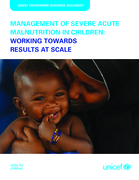
This Guidance Document provides practical assistance to Country Offices scaling up programmes to manage SAM in young children. It outlines a step-by-step process through which countries can analyse their current situation, identify barriers and bottlenecks through the MoRES approach, and plan action
...

This checklist helps to identify the necessary measures to be implemented to mitigate infection transmission among travellers and ground-crossing staff in the context of the COVID-19 pandemic. It features key questions and considerations for gauging the capacity of responding to COVID-19 transmissio
...
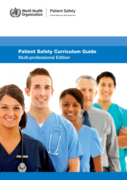
The Multi-professional Patient Safety Curriculum Guide (2011) was developed to assist in the teaching of patient safety in universities and schools in the fields of dentistry, medicine, midwifery, nursing and pharmacy. It also supports the on-going training of all health care professionals.
The C
...
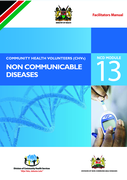
This training module is meant to strengthen the capacity of CHVs to prevent the Non Communicable Diseases at the community level . The Government of Kenya is committed to supporting community health initiatives and accelerating the achievement of the KHSS&IP goals, Millennium Development G
...

A Resource Guide for Country Offices
This report offers a summary of the provided support and recommendations on priority activities for IPC improvement at national and facility levels. The COVID-19 pandemic spotlighted areas for improvement in the IPC programme at national and facility levels. Improvements in the IPC programme were ac
...
2nd edition. This document describes the latest methods and procedures for disinsection of internal areas of passenger, military and cargo aircraft to prevent international transport of mosquito vectors of human diseases and protect aircraft passengers and airline crew. It provides updates on insect
...
23 March 2021
The meeting addressed the last key area, that is, determining the best method or combination of diagnostic methods for a control programme for S. stercoralis infections in humans.
Dr Montresor’s presentation highlighted that while there is currently no “gold standard” for the
...
Pharmaceutical regulators are at the forefront of ensuring that only safe and effective medicines are authorized and available in the market. This document builds on the recommendations in the above publication and has been prepared to specifically assist national medicines regulatory authorities to
...

This update of the Guidelines for poison control, entitled Guidelines for establishing a poison centre, reflects the development of the role of poison centres in public health and the sound management of chemicals, described in section 1, and the opportunities provided by new technology. Assessments
...

Against this background of nearly 20 years of experience of research, development and
improvement in patient safety, the role of incident and adverse event reporting, as well as the
benefits that derive from it, is still a work in progress.This document has two main purposes:
• to provide an up
...
