Filter
551
Text search:
vector
technology
Featured
Recommendations
62
New Publications
150
Language
Document type
No document type
218
Studies & Reports
153
Guidelines
66
Manuals
43
Strategic & Response Plan
42
Training Material
13
Fact sheets
12
Situation Updates
3
Resource Platforms
1
Countries / Regions
Global
34
India
23
Kenya
19
Ethiopia
14
Latin America and the Carribbean
14
Africa
14
Uganda
12
Myanmar / Burma
11
Liberia
9
Ghana
8
Sierra Leone
7
Nigeria
7
Nepal
7
South Africa
7
Malawi
7
Brazil
7
South–East Asia Region
6
Zimbabwe
5
Rwanda
5
Bangladesh
4
Colombia
4
East and Southern Africa
4
Asia
4
Philippines
3
Zambia
3
West and Central Africa
3
Middle East and North Africa
3
Laos
3
USA
2
Cameroon
2
South Sudan
2
Lebanon
2
Syria
2
Thailand
2
Mozambique
2
Argentina
2
Peru
2
Honduras
2
Chile
2
Western Pacific Region
2
Western and Central Europe
2
Paraguay
2
Vietnam
2
Guinea
1
Burkina Faso
1
Senegal
1
Congo, Democratic Republic of
1
Haiti
1
Somalia
1
Jordan
1
Tanzania
1
Cambodia
1
Indonesia
1
Papua New Guinea
1
Dominican Republic
1
Namibia
1
Eswatini/ Swaziland
1
Ukraine
1
Ecuador
1
Botswana
1
Bolivia
1
Madagascar
1
Lesotho
1
Sri Lanka
1
Yemen
1
Venezuela
1
Eastern Europe
1
Palestine
1
Russia
1
Mauritius
1
United Kingdom
1
Authors & Publishers
Publication Years
Category
Countries
201
Key Resources
52
Public Health
45
Clinical Guidelines
29
Women & Child Health
11
Capacity Building
10
Pharmacy & Technologies
10
Toolboxes
Planetary Health
77
NTDs
65
COVID-19
37
Malaria
28
Global Health Education
25
Natural Hazards
21
Rapid Response
17
Zika
16
2.0 Rapid Response
14
AMR
10
Health Financing Toolbox
9
Ebola & Marburg
7
Conflict
7
Pharmacy
6
HIV
5
Refugee
4
Caregiver
4
Mental Health
3
NCDs
3
Disability
2
Specific Hazards
2
Cholera
1
TB
1
The internationally recognized criteria for diagnosis of neurocysticercosis include a requirement for neuroimaging techniques, such as computerized tomography (CT) and/or magnetic resonance imaging (MRI), ideally supported by serology. These facilities are not available in all settings, especially i
...
Ahead of World Malaria Day, the WHO Global Malaria Programme published a new operational strategy outlining its priorities and key activities up to 2030 to help change the trajectory of malaria trends, with a view to achieving the global malaria targets. The strategy outlines 4 strategic objectives
...
Since the start of the pandemic, the region has been hit by multiple natural and biological disasters. At the same time, climate change has continued to warm the world, exacerbating the impacts of many of these disasters. The *Asia-Pacific Disaster Report 2021, *also launched today, shows that the p
...
Thirty years ago, the United Nations General Assembly adopted the Convention on the Rights of the Child at a moment of rapid global change marked by the end of apartheid, the fall of the Berlin Wall and the birth of the World Wide Web. These developments and more brought momentous and lasting evolut
...
Not long ago, on the occasion of the 100th anniversary of the discovery of Chagas disease, several campaigns denounced the scant progress has been made in diffrent spheres- medical, scientific and politcal- but major challanges still remain. This is an appropriate time to celebrate what has been ach
...
National Essential Diagnostic List
recommended
Chromoblastomycosis (CBM), represents one of the primary implantation mycoses caused by melanized fungi widely found in nature. It is characterized as a Neglected Tropical Disease (NTD) and mainly affects populations living in poverty with significant morbidity, including stigma and discrimination.
This fourth WHO report on neglected tropical diseases (NTDs) reviews the progress made towards achieving the Roadmap targets for 2020, noting the remaining challenges, then looks beyond 2020 to evaluate the changing global health and development landscape, considering the implications of integrating
...
PLoS Negl Trop Dis 14(1): e0007999. January 30, 2020 is the first-ever World Neglected Tropical Diseases Day (World NTD Day), a day when we celebrate the achievements made towards control of the world’s NTDs, yet recognize the daunting challenges we face in the control and elimination of these con
...
Lancet Planet Health 2022;6: e760–68
The emergence of COVID-19 has drawn the attention of health researchers sharply back to the role that food systems can play in generating human disease burden. But emerging pandemic threats are just one dimension of the complex relationship between agriculture
...
Safe excreta disposal is a top priority in an emergency, but one that takes time and extensive resources to implement. This Technical Briefing Note examines the use of poo bags for safe excreta containment and disposal in urban emergency settings. The Brief also explores ways of building more comple
...
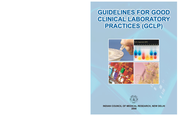
Guidelines for Good Clinical Laboratory Practices (GCLP) outlines the principles and procedures to be followed by medical laboratories involved in clinical research and/or patient care so as to provide quality data which can be used for health research and patient treatment. As the use of laboratory
...
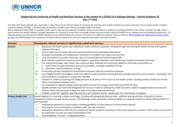
Supporting the continuity of health and nutrition services in the context of COVID-19 in refugee settings
recommended
The 2014–2015 Ebola outbreak was catastrophic in West Africa but the indirect impact of increasing the mortality rates of other conditions was also substantial. The increased number of deaths caused by malaria, HIV/AIDS, and tuberculosis attributable to health system failures exceeded deaths from
...
Towards universal access