
Filter
832
Text search:
skin
cancer
Featured
133
242
Language
Document type
423
183
96
63
26
16
13
7
1
1
1
1
1
Countries
84
40
30
30
21
19
18
16
16
14
13
12
10
10
10
9
9
9
7
7
6
6
5
4
4
4
4
4
4
4
3
3
2
2
2
2
2
2
1
1
1
1
1
1
1
1
1
1
1
1
1
1
1
1
1
1
1
1
1
Authors & Publishers
Publication Years
Category
338
105
62
57
31
29
8
Toolboxes
52
43
40
37
32
32
31
28
26
24
23
21
13
12
12
11
7
6
4
3
3
1
1

Accessed Febr. 6, 2020

Disability Prevention. Informational manual for
Schweizerische Fachgesellschaft für Tropen‐ und Reisemedizin FMH
High Transmission Areas: Key Populations
Information sheet for asylum seekers: Hepatitis B
Tropical Medicine and Infectious Disease 2017, 2(4), 50
This is a cross-sectional analysis of baseline data in a longitudinal study on asymptomatic, LF antigen-positive and -negative young people in Myanmar. Rapid field screening was used to identify antigen-positive cases and a group of antige ...
This is a cross-sectional analysis of baseline data in a longitudinal study on asymptomatic, LF antigen-positive and -negative young people in Myanmar. Rapid field screening was used to identify antigen-positive cases and a group of antige ...
These Guidelines are intended to provide knowledge to the treating ophthalmologists, pediatricians, ocular oncologists, pediatric oncologists, and general physicians to arrive at an early diagnosis of retinoblastoma in the settings of district hospital, in private clinics and hospitals. The guidelin
...
Report of the 23rd WHO Expert Committee on the selection and use of essential medicines
This executive summary reports the recommendations made by the Expert Committee for the 2021 update of the WHO Model List of Essential Medicines (EML) and the Model List of Essential Medicine for Children (EMLc)
...
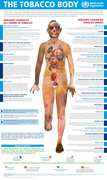
This Poster is available in English, French, Spanish, Russian, Chinese, Portuguese, Hausa and Arabic

Schistosomiasis, also known as bilharzia, is a disease caused by parasitic worms that require two hosts: humans and certain species of snails. There are two forms of the disease, namely, intestinal schistosomiasis, caused by Schistosoma mansoni and S. japonicum, and urogenital schistosomiasis, cause
...
This policy brief explores the impact of air pollution on health and address the air quality issue in the response to noncommunicable diseases (NCDs). It also provides key actions that policy makers, NGOs and health professionals can take to ensure that every one can breathe clean air.
Mpox is a zoonotic disease caused by a double-stranded DNA virus that belongs to the Orthopoxvirus genus of the Poxviridae family. The disease presents with symptoms similar to smallpox but with a lesser severity. It was first discovered in 1958 when two outbreaks of a poxlike disease occurred in co
...
IAS–USA Topics in Antiviral Medicine. September 22, 2025

Where there is no doctor Chapter 3
