
Filter
1812
Text search:
malnutrition
rates
Featured
151
640
Language
Document type
1133
327
129
84
73
29
20
14
2
1
Countries
99
65
63
58
52
47
41
40
39
39
36
36
35
35
33
33
29
28
24
23
23
21
20
18
18
18
17
16
16
15
14
14
13
11
10
10
9
9
9
9
8
8
8
7
7
7
6
6
5
5
5
5
5
5
4
4
4
3
3
3
3
3
2
2
2
2
2
2
2
2
2
2
2
2
2
2
2
1
1
1
1
1
1
1
1
1
1
1
1
1
1
1
1
1
1
1
1
1
1
Authors & Publishers
Publication Years
Category
911
158
127
116
94
32
4
1
Toolboxes
97
94
86
82
64
62
46
42
34
31
27
27
26
26
26
26
17
16
15
12
12
8
2
2
1
1
1
Disease Control Priorities –3rdEdition, Volume 2.
This book focuses on maternal conditions, childhood illness, and malnutrition. Specifically, the chapters address acute illness and undernutrition in children, principally under age 5. It also cov
...

Notable progress has also been made on other key health indicators such as reducing maternal, infant and child deaths and malnutrition, increasing immunization coverage, eliminating infectious diseases such as polio and reducing the incidence of mal
...

WHO’s Ambition and Action in Nutrition 2016-2025 is anchored in the six global targets for improving maternal, infant and young child nutrition and the global diet-related NCD targets.
In support of the 2030 Agenda for Sustainable Development, particularly SDG2 and SDG3, and in concert w ...
In support of the 2030 Agenda for Sustainable Development, particularly SDG2 and SDG3, and in concert w ...

The Republic of the Union of Myanmar is at a historic moment, with a new civilian government assuming power in 2016. The country graduated to lower-middle-income status in 2015, and has made significant progress in reducing poverty, improving food security and addressing
...
In recent years Terre des Hommes Netherlands observed the steady rise of a new form of child sexual exploitation. One that is enabled and fuelled by rapid technological advances, increasing global connectivity, persisting poverty rates, and growing
...
Compared to the previous five-year assessment period 2011–2015, the current five-year period 2015–2019 has seen a continued increase in carbon dioxide (CO2 ) emissions and an accelerated increase in the atmospheric concentration of major greenhouse gases (GHGs), with growth
...
As the COVID-19 pandemic continues to threaten health and food systems around the world, the 2020 Global Nutrition Report calls on governments, businesses and civil society to step up efforts to address malnutrition in all its forms.

While many of the countries hit by the COVID-19 in the first few months of the year are now beginning to relax lockdown measures as infection and death rates fall, in the regions most affected by HIV, TB and malaria, such as Africa, South Asia and L
...
Recognizing the extent to which the COVID-19 outbreaks affects women and men differently is hugely important. Some preliminary data suggested that more men than women are dying, potentially due to sex-based immunological differences, higher rates of
...
Recognizing the extent to which the COVID-19 outbreaks affects women and men differently is hugely important. Some preliminary data suggested that more men than women are dying, potentially due to sex-based immunological differences, higher rates of
...
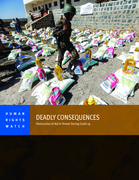
With about 24 million of Yemen’s 30 million people in need of some form of assistance, the United Nations calls Yemen the world’s worst humanitarian crisis. Cholera and other disease outbreaks are common, malnutrition is widespread, water is sca
...
By almost any measure, human health is better now than at any time in history. Life expectancy has soared from 47 years in 1950–1955, to 69 years in 2005–2010, and death rates in children younger than 5 years of age have decreased substantially,
...

Cancer in sub-Saharan Africa
recommended
Lancet Oncol 2022; 23: e251–312Published OnlineMay 9, 2022 https://doi.org/10.1016/S1470-2045(21)00720-8
In sub-Saharan Africa (SSA), urgent action is needed to curb a growing crisis in cancer incidence and mortality.
Without rapid interventions, data estimates show a major increase in cancer mo
...
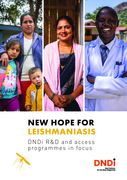
Leishmaniasis is a climate-sensitive disease. Changes in temperature, rainfall, and humidity can have strong impacts on
the sandfly vector, altering their distribution and influencing their survival and population sizes. Increased temperatures shorten vector development time, reduce Leishmania para
...
As a high-burden neglected tropical disease, soil-transmitted helminth (STH) infections remain a major problem in the world, especially among children under five years of age. Since young children are at high risk of being infected, STH infection can have a long-term negative impact on their life, i
...
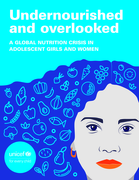
There has been important progress for the rights of adolescent girls and women in recent decades, yet millions still struggle to
access the nutritious diets, essential nutrition services and nutrition and care practices they need to prevent malnutrition
...
South Sudan continues to struggle with a severe health crisis affecting 8.9 million people, primarily in flood- and conflict-affected regions with population movements (displacement and returns), and disease outbreaks. The nation's health system, heavily reliant on international aid, faces staffing
...

J Fungi (Basel) . 2019 Aug 16;5(3):75. doi: 10.3390/jof5030075 . Namibia is a sub-Saharan country with one of the highest HIV infection rates in the world. Although care and support services are available that cater for opportunistic infections rela
...

Namibia recorded its first COVID-19 case on 14 March 2020, with cumulative cases reaching 15,773 and 118 deaths by 10 December 2020. Namibia has done relatively well to contain the outbreak.
However, positivity rates have shown a consistent increas
...
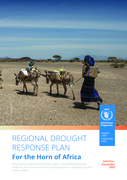
After five consecutive below-average rains, the humanitarian crisis in the Horn of Africa is expanding and deepening.
Combined with insecurity and macroeconomic volatility, the impact of the drought on food and nutrition security has been devastating. Across Ethiopia, Kenya and Somalia, an estima
...
