
Filter
1619
Text search:
informal
settings
Featured
171
392
Language
Document type
774
346
221
115
93
28
22
13
5
1
Countries
96
36
36
35
34
32
32
28
28
27
26
26
25
25
20
18
17
17
16
14
14
14
14
13
13
13
11
10
9
9
9
9
9
8
8
8
8
7
7
6
6
6
6
6
6
4
4
4
4
4
4
4
4
4
3
3
3
3
3
3
3
3
3
3
3
2
2
2
2
2
2
2
2
1
1
1
1
1
1
1
1
1
1
1
1
1
1
1
1
1
1
1
1
1
1
1
1
1
1
Authors & Publishers
Publication Years
Category
492
150
110
103
70
35
11
Toolboxes
208
202
109
78
70
61
58
50
49
48
42
39
38
31
26
24
24
20
17
17
10
8
5
4
2
1
In 2017, 3.6 million of the estimated 10 million people with TB worldwide were “missed” by national TB programmes (NTPs). Two thirds of them are thought to access TB treatment of questionable quality from public and private providers who are not engaged by the NTP. The quality of care provided i
...
mhGAP Training Manual for the mhGAP Intervention Guide for mental, neurological and substance use disorders in non-specialized health settings – version 2.0 (for field testing)
Accessed 06.03.2019
mhGAP is based on evidence-based technical guidelines (4) and provides a set of tools and
training packages to extend service provision. The mhGAP Intervention Guide (mhGAP-IG)
for MNS disorders in non-specialized health settings (8) is a clinical
...
The ICOPE Implementation Framework provides a score card to help assess the overall capacity of health and social care services and systems to deliver integrated care in community settings and support the development of ICOPE implementation action p
...
Three billion people – 40 per cent of the world’s population – do not have a place in their homes to wash their hands with water and soap. Three quarters of those who lack access to water and soap live in the world’s poorest countries and are amongst the most vulnerable: children and familie
...
This document was designed to inform educators, amongst others, about enhancing the pre-service curriculum with mental health Gap Action Programme Intervention Guide (mhGAP-IG) materials, which can provide future professionals with the theoretical and clinical knowledge they need to provide mental h
...
An evidence-informed approach for non-formal, out-of-school CSE programmes that aims to reach young people from left-behind populations
This guidance is intended to assist anyone designing and/or implementing CSE in out-of-school settings, especial
...
This toolkit was developed by the Centers for Disease Control and Prevention (CDC) Division for Heart Disease and Stroke Prevention (DHDSP) to provide healthcare organizations, including those in resource-constrained settings, with the information a
...
mhGAP Humanitarian Intervention Guide (mhGAP-HIG) training of health-care providers. Training manual
recommended
The mhGAP Humanitarian Intervention Guide (mhGAP-HIG) Training of Health-Care Providers manual is designed to guide facilitators in training non-specialist health care providers to manage mental, neurological and substance use conditions in humanitarian emergency
...

Obesity in all age groups, including children and adolescents, is a public health challenge across all settings. Obesity is now classified as a complex multifactorial chronic disease and not just a risk factor for other noncommunicable diseases and
...
People with disabilities experience significant health inequalities. In Malawi, where most individuals live in low-income rural settings, many of these inequalities are exacerbated by restricted access to health care services. This qualitative study
...

The paper “Artificial Intelligence for Public Health Surveillance in Africa: Applications and Opportunities” examines how artificial intelligence (AI) can improve public health systems across Africa, particularly in low-resource settings. It exp
...
The revised guidelines present two major changes to existing guidelines: (A) there are now just 2 categories of pneumonia instead of 3 (“pneumonia” which is treated at home with oral amoxicillin and “severe pneumonia” which requires injectable antibiotics) and (B) oral amoxicillin replaces o
...
This toolkit is intended to support GBV staff to build disability inclusion into their work, and to strengthen the capacity of GBV practitioners to use a survivor-centered approach when providing services to survivors with disabilities.
The tools are designed to complement existing guidelines, prot
...
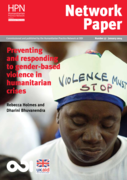
The aim of this paper is to map and critically analyse evidence of good practice in prevention and response to gender-based violence (GBV) in humanitarian contexts which can support humanitarian practitioners and policy makers to improve the quality of GBV programming in the field. The paper is stru
...
The substantial burden of death and disability that results from interpersonal violence, road traffic injuries, unintentional injuries, occupational health risks, air pollution, climate change, and inadequate water and sanitation falls disproportionally on low- and middle-income countries. Injury Pr
...
The scope of this PPC document is to serve as a guide to address the unmet public health need for a PPE system that protects the HW-F in tropical climate
s while caring for patients and providing heavy duty essential health services.
The characteristics described in this guidance are targeted fo
...
The framework is to be used as a reference guide, applied according to local priorities and needs, and targeted at academic institutions, educators, accreditation bodies, regulatory agencies and other users. The ultimate aim is to ensure that all health workers are equipped with the requisite compet
...

Lesotho’s predominantly rural population faces significant health challenges within a setting of inadequate human resources for health. It is essential that nurses and nurse-midwives, who together make up the largest health workforce in the country, be adequately prepared to address Lesotho’s He
...
BMC Medicine201210:107
https://doi.org/10.1186/1741-7015-10-107© Katchanov and Birbeck; licensee BioMed Central Ltd. 2012
Received: 10 July 2012Accepted: 24 September 2012Published: 24 September 2012
In 2011, the World Health Organization’s (WHO) mental health Gap Action Programme (mhGAP) r
...
