
Filter
307
Text search:
World
Health
Organization
(
WHO),
Regional
Office
for
South-East-Asia
Featured
Recommendations
45
New Publications
84
Language
Document type
No document type
141
Studies & Reports
62
Guidelines
57
Manuals
20
Strategic & Response Plan
12
Training Material
4
Situation Updates
3
Fact sheets
3
Resource Platforms
2
Infographics
2
Online Courses
1
Countries / Regions
South–East Asia Region
28
Global
21
India
14
Asia
13
Myanmar / Burma
9
Bangladesh
6
Nepal
4
Western and Central Europe
4
Philippines
3
Western Pacific Region
3
Uganda
2
Cambodia
2
Thailand
2
Congo, Democratic Republic of
1
Syria
1
Tanzania
1
Rwanda
1
Indonesia
1
Sudan
1
Eswatini/ Swaziland
1
Brazil
1
Yemen
1
Middle East and North Africa
1
Eastern Europe and Central Asia
1
Other region
1
Africa
1
Venezuela
1
Eastern Europe
1
Tajikistan
1
Russia
1
Kazakhstan
1
Authors & Publishers
Publication Years
Category
Countries
56
Clinical Guidelines
52
Women & Child Health
29
Public Health
25
Key Resources
19
Capacity Building
9
Pharmacy & Technologies
4
Toolboxes
HIV
36
TB
25
Mental Health
21
COVID-19
18
NTDs
17
Planetary Health
16
AMR
15
Caregiver
15
Rapid Response
12
Global Health Education
7
Disability
6
Pharmacy
6
2.0 Rapid Response
6
Zika
4
NCDs
4
Conflict
3
Natural Hazards
3
Malaria
3
Ebola & Marburg
2
Polio
2
Specific Hazards
2
Cholera
1
Typhoon
1
Refugee
1
Training in monitoring and epidemiological assessment of mass drug administration for eliminating lymphatic filariasis: learners’ guide. World Health
...

The Guidelines for the Diagnosis, Treatment and Prevention of Leprosy provide state-of-the-art knowledge and evidence on leprosy diagnosis, treatment and prevention based on a public health approach
...
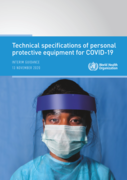
The document "Priority medical devices list for the COVID-19 response and associated technical specifications" complements this guideline.
This document provides interim guidance on the quality, performance characteristics and related standards
...

Rreport of a WHO Consultative Meeting Kolkata India 2012
The "Assessing National Capacity for the Prevention and Control of Noncommunicable Diseases: Report of the 2021 Global Survey" by WHO examines the global state of readiness and infrastructure
...
This document provides guidance for countries on how to implement activities to achieve the interruption of yaws transmission. It is intended for use by national yaws eradication programmes, partner
...
More than 700 000 people lose their life to suicide every year. The world is not on track to reach the 2030 suicide reduction targets. WHO advocates for
...
This document is part of the process for improving the quality of care in family planning. Medical eligibility criteria for contraceptive use (MEC), the first edition of which was published in 1996,
...
The document provides guidance on the tools, activities and strategies required to achieve malaria elimination and prevent re-establishment of transmission in countries, regardless of where they lie across the spectrum of transmission intensity. It is intended to inform national malaria elimination
...
Interim guidanceAnnex to: Policy considerations for implementing a risk-based approach to international travel in the context of COVID-19, 2 July 2021
Effective malaria prevention is threatened by widespread and increasing vector insecticide resistance. Failure to mitigate this threat will likely result in an increased burden of disease, with significant cost implications. This new framework provides support
...
Guidelines for malaria vector control
recommended
Vector control is a vital component of malaria prevention, control and
elimination strategies because it can be highly effective in providing
personal protection and/or reducing disease transmission.
These guidelines provide new and updated recommendations on the use of point-of-care testing in children under 18 months of age and point-of-care tests to monitor treatment in people living with HIV; the treatment monitoring algorithm; and timing of antiretroviral therapy (ART) among people living w
...

Mpox continues to affect people around the world. A new framework released today by WHO will guide health authorities, communities and other stakeh
...

Water, sanitation and hygiene (WASH) are critical in the prevention and care for all of the 17 neglected tropical diseases (NTDs) scheduled for intensified control or elimination by 2020.
Provi ...
Provi ...
