Filter
269
Text search:
UNICEF
Madagascar
Featured
Recommendations
15
New Publications
93
Language
Document type
No document type
160
Studies & Reports
53
Guidelines
23
Training Material
11
Strategic & Response Plan
9
Manuals
6
Situation Updates
5
Fact sheets
2
Countries / Regions
Madagascar
42
Global
26
Africa
10
Ethiopia
8
Congo, Democratic Republic of
7
Uganda
7
Burkina Faso
6
Senegal
6
Kenya
6
Malawi
6
Mozambique
6
Benin
6
East and Southern Africa
6
Guinea
5
Cameroon
5
Haiti
5
Zambia
5
West and Central Africa
5
Sierra Leone
4
Ghana
4
South Africa
4
France
4
Mali
3
Côte d’Ivoire / Ivory Coast
3
Niger
3
Zimbabwe
3
Afghanistan
3
Tanzania
3
Rwanda
3
Eswatini/ Swaziland
3
Burundi
3
Liberia
2
Togo
2
Somalia
2
Pakistan
2
Namibia
2
Angola
2
Lesotho
2
Congo-Brazzaville
2
Nigeria
1
Philippines
1
South Sudan
1
Iraq
1
Jordan
1
Germany
1
Lebanon
1
Thailand
1
Indonesia
1
Bangladesh
1
Papua New Guinea
1
Vanuatu
1
Brazil
1
Botswana
1
Middle East and North Africa
1
Western and Central Europe
1
Paraguay
1
Luxembourg
1
Asia
1
Solomon Islands
1
North Korea
1
Djibouti
1
Southern Africa
1
Canada
1
Iran
1
Vietnam
1
Gabon
1
Belgium
1
Authors & Publishers
Publication Years
Category
Countries
98
Women & Child Health
32
Key Resources
31
Public Health
19
Clinical Guidelines
13
Capacity Building
4
Pharmacy & Technologies
3
Toolboxes
COVID-19
31
Disability
17
Caregiver
15
Natural Hazards
14
Rapid Response
13
HIV
11
AMR
10
Planetary Health
10
Refugee
6
Mental Health
5
Global Health Education
5
Health Financing Toolbox
5
Malaria
5
NTDs
4
Cholera
3
Polio
3
Conflict
3
TB
3
2.0 Rapid Response
3
Ebola & Marburg
2
Pharmacy
2
Specific Hazards
1
NCDs
1
The role of community health workers in the vaccination against COVID-19: guide to support the implementation of the vaccination programme
This document provides an overview of the evidence of nutrition gains that can be achieved with improved WASH, a description of key WASH practices, and practical knowledge and guidance on how to integrate WASH into nutrition programmes, including important monitoring and evaluation (M&E) aspects. Th
...
In 2014, the Ministry of Health (MOH) in Malawi conducted a nationwide assessment of emergency obstetric and newborn care (EmONC) services. This cross-sectional facility-based survey used 10 data collection modules. Data collection began on 23rd September 2014 and concluded on 17th October 2014, in
...
This document addresses preparedness as an important investment against natural and man-made disasters. Through good practices, it urges the humanitarian community, governments and regional bodies to use preparedness thinking to be aware of risks, to reduce them and to plan ahead to combat them in o
...
The backsliding of immunization coverage during the COVID-19 pandemic, combined with delayed catch-up efforts has resulted in a large and growing immunity gap. There is an urgent need to close this gap, and enable millions of missed children to be vaccinated. The Essential Immunization Recovery Plan
...
El Niño conditions persisting during the 2015/16 planting season have caused the worst drought in 35 years in Southern Africa, resulting in a second consecutive failed harvest. This has created severe food shortages and compounded existing vulnerabilities. Since July 2016, Namibia and Botswana have
...
This is the seventeenth annual publication of the Global Hunger Index (GHI), a report jointly published by Concern Worldwide and Welthungerhilfe.
The 2022 Global Hunger Index (GHI) brings us face to face with a grim reality. The toxic cocktail of conflict, climate change, and the COVID-19 pandemi
...
This is the seventeenth annual publication of the Global Hunger Index (GHI), a report jointly published by Concern Worldwide and Welthungerhilfe.
The 2022 Global Hunger Index (GHI) brings us face to face with a grim reality. The toxic cocktail of conflict, climate change, and the COVID-19 pandemi
...
As the global community aims to fulfill its commitments to the UN Sustainable Development Goals, and the achievement of universal health coverage, dozens of countries have committed to the expansion of community health workers (CHWs) as the front line of their healthcare systems [1, 2]. Robust resea
...
DHS Analytical Studies No. 39
La protection des enfants et des établissements d’enseignement s’avère particulièrement importante. Il est nécessaire de prendre des précautions pour éviter la propagation éventuelle de la COVID-19 en milieu scolaire. Cependant, il faut également veiller à ne pas stigmatiser les élève
...
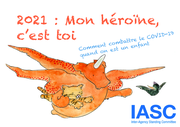
Un nouveau livre d'histoires visant à aider les enfants à comprendre et à accepter le COVID-19 a été publié.
Avec l'aide d'une créature fantastique, Ario, "My Hero is You, How kids can fight COVID-19 !" explique comment les enfants peuvent se protéger, protéger leur famille et leurs amis c
...
In 2020, the COVID-19 pandemic impacted the world beyond imagination. To date, it has infected more than 135 million people, killed over 2.9 million people, and is projected to plunge up to 115 million people into extreme poverty.1 As countries have gone into lockdown, gender-based violence has incr
...
A wide range of potential enablers and barriers were identified for influencing progress for the scale-up of severe wasting services within national health systems. Findings were categorised according to the six pillars of WHO’s health system strengthening framework.
This guide is intended to support national governments developing their national deployment and vaccination plans (NDVPs) for COVID-19 vaccines by outlining the roles, needs and opportunities for community health workers (CHWs) to contribute. This note builds on and is structured to align with the G
...
Further Analysis of the 2000, 2005, and 2011 Demographic and Health Surveys. DHS Further Analysis Reports No. 80
The compendium provides guidance on low-cost handwashing facilities that can be widely used in low and middle-income countries. We hope that this can be shared extensively as governments and agencies tackle the crisis in low and middle-income countries where handwashing facilities are urgently neede
...

The findings of the report are both urgent and devastating. At the current rate of progress, by 2040 we would still have 1.9 million new HIV infections and 990,000 AIDS-related deaths in children. But if funding for HIV prevention and treatment continues to fall as current trends suggest, the world
...